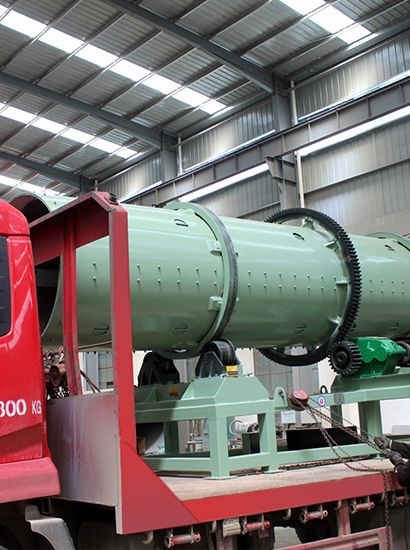
Rotary drum granulators are core equipment for large-scale compound fertilizer production due to their stable rolling molding and uniform nutrient mixing. The key to production lies in raw material matching and parameter control to ensure granule quality and nutrient content meet standards. The overall process is clear and easy to scale up.
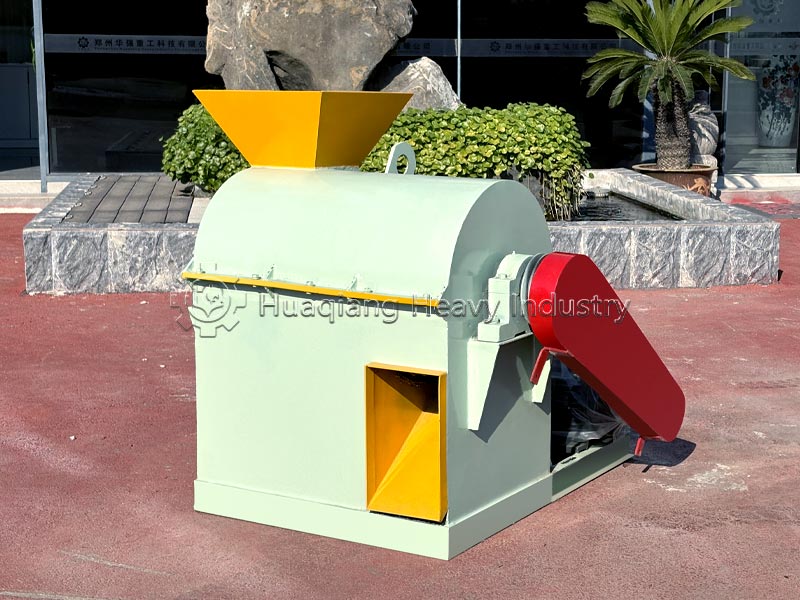
Raw material pretreatment is fundamental. Raw materials such as urea, monoammonium phosphate, and potassium chloride are selected and precisely measured according to preset nutrient ratios. They are then processed by a fertilizer crusher to a fineness of 80 mesh or higher to avoid large particles affecting molding. Simultaneously, the moisture content is adjusted to 15%-20%, and appropriate binders such as bentonite are added to increase material viscosity, preventing loose and brittle granules and preparing them for subsequent granulation.
Rotary drum granulation is the crucial step. The pretreated material is fed into the equipment, where the centrifugal force and friction generated by rotation drive the material to roll and granulate. Precise control of the rotation speed (15-25 r/min) and inclination angle (3°-5°) is necessary. Too high a speed results in excessively fine granules, while too low a speed leads to low efficiency. The inclination angle must be adapted to the material’s flowability to ensure sufficient residence time of the granules within the drum for uniform molding.
Post-processing determines the quality of the finished product. The formed granules are dried to control the moisture content to 2%-5% to prevent clumping during storage. They are then graded by a fertilizer screener machine; qualified granules (2-4mm) enter the cooling stage, while unqualified granules are crushed and returned to the pre-treatment process for recycling, improving raw material utilization. Finally, they are quantitatively packaged and sealed for storage, completing the entire production process.
During production, the amount of binder and drum parameters need to be fine-tuned according to the characteristics of the raw materials to avoid nutrient loss, while maintaining the cleanliness of the equipment’s inner walls to prevent material adhesion from affecting granulation stability.