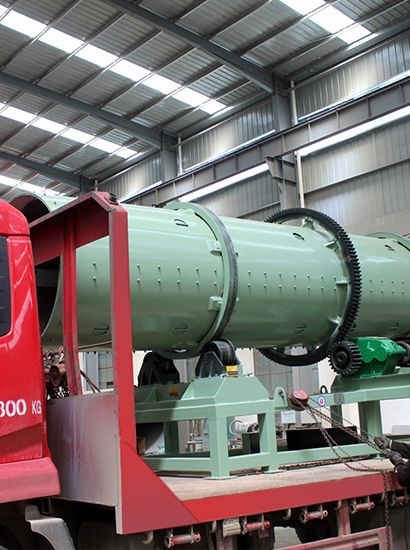
The flexible proportioning characteristic of NPK fertilizer production lines is a key advantage that distinguishes them from single-nutrient fertilizer production, allowing for customized fertilizer formulations based on crop and soil needs. The core module of the production line includes a batching system that can handle nitrogen sources (such as ammonium nitrate), phosphorus sources (such as superphosphate), and potassium sources (such as potassium sulfate), adjusting the proportions through computer algorithms. Firstly, this characteristic is reflected in its versatility. The production line supports a variety of formulations, from low-concentration 5-5-5 to high-concentration 30-10-10, adapting to crops such as rice (requiring high nitrogen) or fruit trees (requiring high potassium).
Automated weighing scales and mixers ensure proportioning accuracy within 1%, preventing nutrient imbalances. The addition of a trace element module further enhances flexibility, allowing for the production of micronutrient-fortified compound fertilizers by adding elements such as zinc or boron. The environmentally friendly design allows for the incorporation of slow-release coatings, extending fertilizer effectiveness and reducing leaching losses.
In applications, an NPK fertilizer production line in Australia customized a 20-20-0 formulation for cotton fields, increasing yield by 15%. In sub-Saharan Africa, flexible production lines help impoverished farmers use local raw materials, reducing costs.
Challenges include raw material compatibility and quality control, but these issues can be addressed through spectroscopic analysis. In the future, AI-driven proportioning optimization will make production lines more adaptable to climate change.
In summary, the flexible proportioning characteristic makes NPK fertilizer production lines a powerful tool for precision agriculture, promoting crop yield and sustainability. (Approximately 610 words)
The innovative characteristics of NPK fertilizer production lines are driving transformation in the fertilizer industry, focusing on intelligent technology and sustainable materials. While the traditional basis of production lines is chemical synthesis, innovations are introducing nanotechnology and bio-fermentation to enhance fertilizer efficiency. Firstly, intelligent monitoring is a key characteristic. Using IoT sensors and big data analysis, the production line can optimize process parameters in real time, such as granulation temperature, reducing energy waste by 20%.
Another innovation is controlled-release technology. Through polymer coatings, the fertilizer release rate matches the crop growth cycle, reducing the frequency of fertilization. Bio-based NPK fertilizer production lines use renewable materials such as sodium alginate, reducing the environmental burden.
In global applications, an innovative NPK factory in Norway uses hydrogen energy, resulting in near-zero carbon emissions. China’s new production lines integrate drone data to provide feedback on soil needs, achieving closed-loop production.
Challenges include high technology costs and regulatory adaptation, but these obstacles are being overcome through international cooperation. In the future, by 2040, NPK fertilizer production lines will widely adopt quantum computing to optimize formulations, supporting global food security.
In summary, innovative features are transforming NPK fertilizer production lines from traditional manufacturing to intelligent and sustainable processes, contributing to an agricultural revolution.