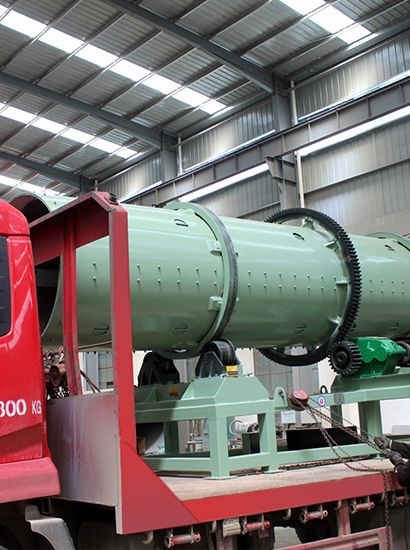
Many professionals in the fertilizer processing industry often wonder: can rotary drum granulators be used for processing urea fertilizers? The answer is a resounding yes. Rotary drum granulators are highly compatible with urea processing; however, given that urea is highly hygroscopic, has a low melting point, and is prone to caking, specific process adjustments are required to achieve high-quality and efficient granulation.
Thanks to their adjustable rotational speed and inclination angle—combined with their ability to ensure uniform mixing—rotary drum granulators are perfectly suited to the unique characteristics of urea. The machine’s inclined, rotating drum allows the urea raw materials to tumble and bind thoroughly, effectively preventing issues such as melting and caking caused by localized overheating, thereby meeting the core requirements of urea granulation.
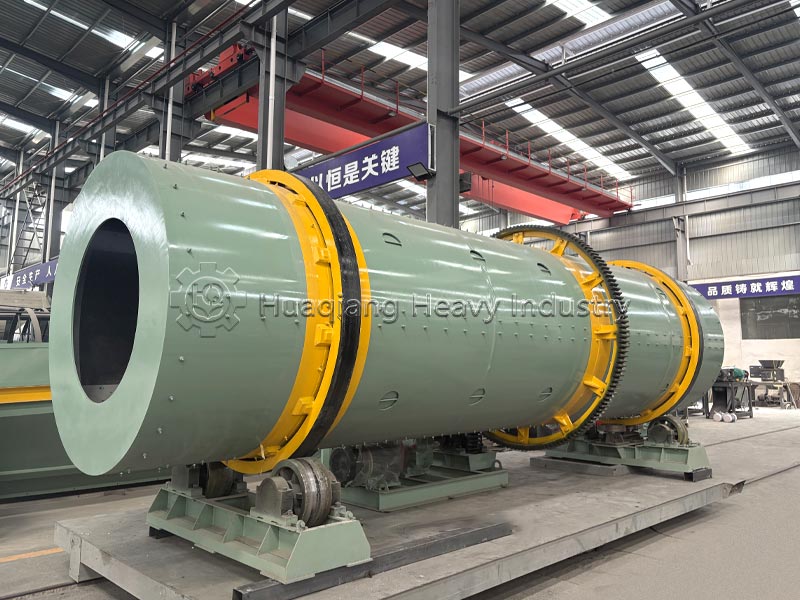
Two key factors must be carefully managed during urea processing: First, raw material pretreatment involves pulverizing the urea to a uniform fineness and incorporating an appropriate amount of inert filler to regulate hygroscopicity, thereby preventing wall adhesion and caking during granulation. Second, equipment parameters must be carefully controlled; this entails reducing the drum’s rotational speed, appropriately adjusting its inclination angle, and regulating the granulation temperature to prevent the urea from melting and being lost.
Rotary drum granulators offer flexible adaptability, capable of processing pure urea fertilizers as well as producing urea-based compound fertilizers (NPK blends) to meet diverse production requirements. Their continuous operation mode enhances granulation efficiency and minimizes material loss, while the resulting granules are uniform and compact, facilitating ease of storage, transportation, and application.
In summary, rotary drum granulators are indeed fully capable of processing urea fertilizers. Provided that specific adjustments are made to the pretreatment process and equipment parameters, the technology can be effectively tailored to the unique properties of urea, enabling efficient and high-quality granulation.