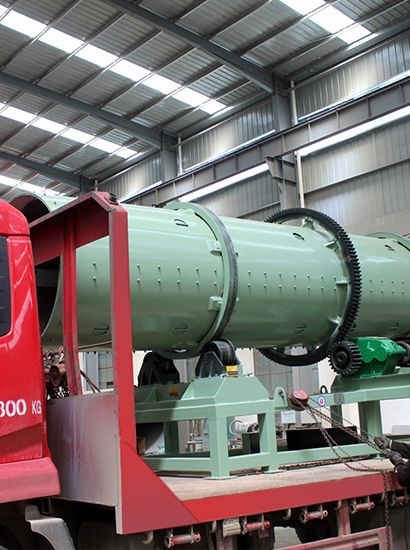
Small-scale organic fertilizer production lines are characterized by low investment requirements, a low barrier to entry, and high operational flexibility, making them an ideal investment choice for industry newcomers, small-to-medium-sized livestock farms, or family-run farms. When configuring such a line, it is essential to balance practicality, cost-effectiveness, and scalability to avoid redundant equipment setups that result in wasted capital.
The core equipment configuration primarily comprises five major components: a fermentation windrow turner, a semi-wet material crusher, a mixer, a granulator (optional), a rotary screening machine, and an automatic packaging machine. Specifically, for the fermentation windrow turner, it is recommended to select a self-propelled or small-scale trough-type model to suit limited site spaces. The semi-wet material crusher must be a model designed to handle high-moisture materials effectively, thereby preventing clumping that could hinder subsequent processing stages. Furthermore, if the goal is to produce powdered organic fertilizer, the granulator can be omitted to reduce initial investment costs.
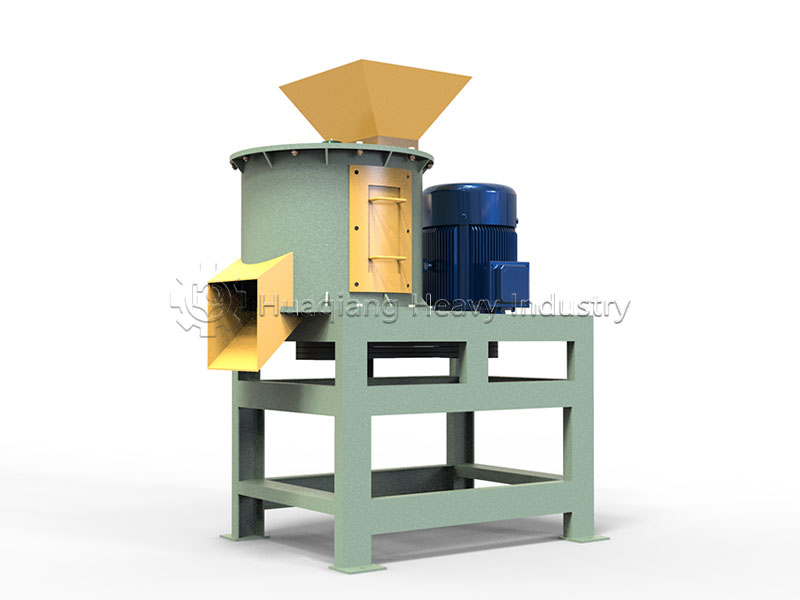
Regarding site requirements, a small-scale organic fertilizer plant with an annual output of 5,000 tons typically requires a footprint of 1,000 to 1,500 square meters. This space must accommodate a fermentation zone, a production area, a raw material warehouse, and a finished product warehouse; it is also advisable to reserve some additional space to facilitate future production expansion. In terms of investment budget, a complete set of equipment for a small-scale powdered organic fertilizer production line costs approximately 150,000 RMB. The operation requires minimal labor, with a team of just 3 to 5 people sufficient to manage the entire production process.
When making an investment decision, priority should be given to securing a reliable supply of raw materials—specifically, ensuring that the available volume of local livestock manure, crop straw, and similar inputs meets or exceeds production requirements. Concurrently, one should assess local market demand to determine whether to produce powdered or granular organic fertilizer. By rationally configuring equipment and effectively controlling investment costs, investors can achieve rapid profitability while simultaneously contributing to the sustainable resource utilization of agricultural waste.