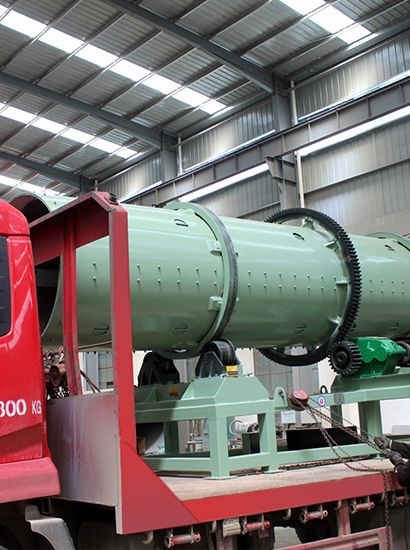
Rotary drum granulation is a traditional and efficient method in NPK fertilizer production lines, utilizing the principle of rolling to form granules and suitable for various fertilizer formulations. The process requires wet granulation, and the equipment includes a rotary drum granulator, a humidification system, a drying furnace, and a cooling machine.
Raw materials are refined by a cage mill, and N:P:K ratios are measured by a belt scale. A mixer, such as a pan mixer, uniformly blends the materials, and a binder is added to prepare the wet material.
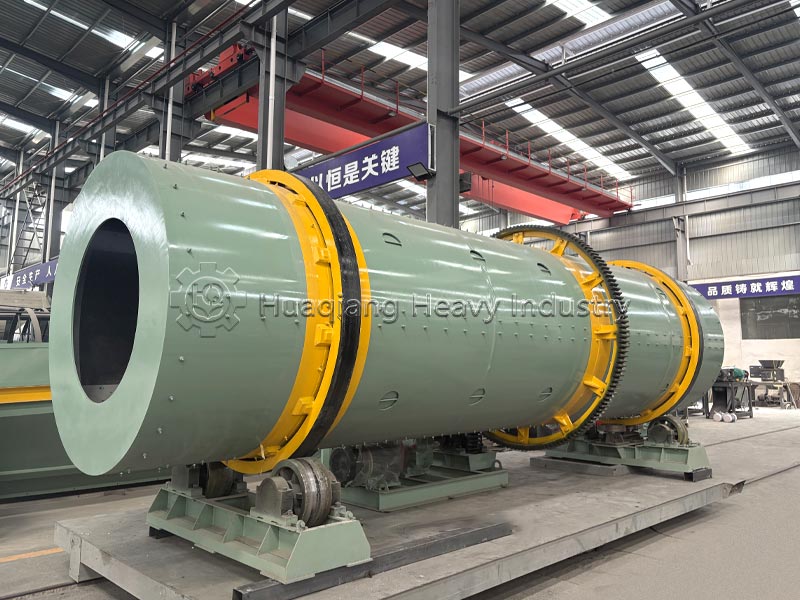
The rotary drum granulator is the core equipment, with a diameter of 2-4 meters, installed at an incline, and equipped with internal scrapers to prevent material from sticking to the walls. The material rolls inside the drum, and a spraying system adds water or steam to control humidity at 10-15%, forming 2-6mm granules.
Subsequent drying equipment, such as a rotary kiln dryer, uses natural gas or electricity as a heat source, with the temperature controlled at 80-100°C to remove moisture. A cooling machine uses a counter-flow cooler for rapid cooling.
The process flow is: mixing and humidification → rotary drum granulation → drying → cooling → screening → packaging. A vibrating screen classifies the granules, and recycled material is reused. An automatic packaging machine measures and seals the bags.
Environmental protection equipment, such as a cyclone dust collector, recovers dust, and a wastewater treatment plant recycles water. An automation system monitors drum speed and humidity through sensors.
The advantages include process flexibility, high granule strength, and suitability for organic compound fertilizers. One production line can produce 100,000 tons annually, suitable for corn-growing regions. In one case study, an Indian factory optimized the rotary drum process, increasing output by 20%. Optimization of rotary drum granulation equipment makes NPK production lines more adaptable to market demands.