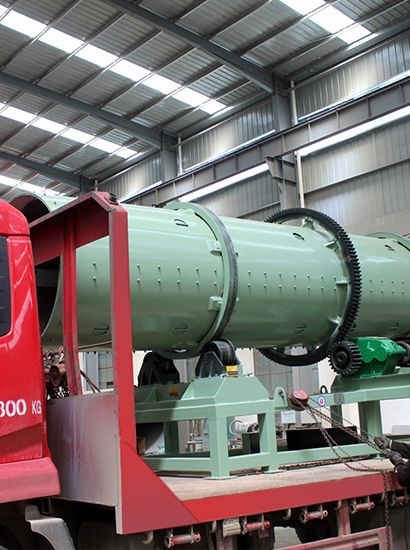
Compound fertilizers—characterized by their balanced nutrient profiles and long-lasting efficacy—are a staple of modern agriculture. Thanks to its advantages in continuous operation and high adaptability, the rotary drum granulation production line has emerged as the preferred technology for the large-scale processing of compound fertilizers. It effectively resolves key industry challenges related to the uniform blending of diverse nutrients and the stable formation of granular products.
The rotary drum granulation production line employs a highly efficient, closed-loop process for manufacturing compound fertilizers. The process begins with the precise proportioning and pretreatment of raw materials: nitrogen, phosphorus, and potassium sources are combined with micro- and trace elements as well as conditioning agents; after being pulverized according to the specific formula, the mixture is fed into a double axis paddle mixer for thorough blending.
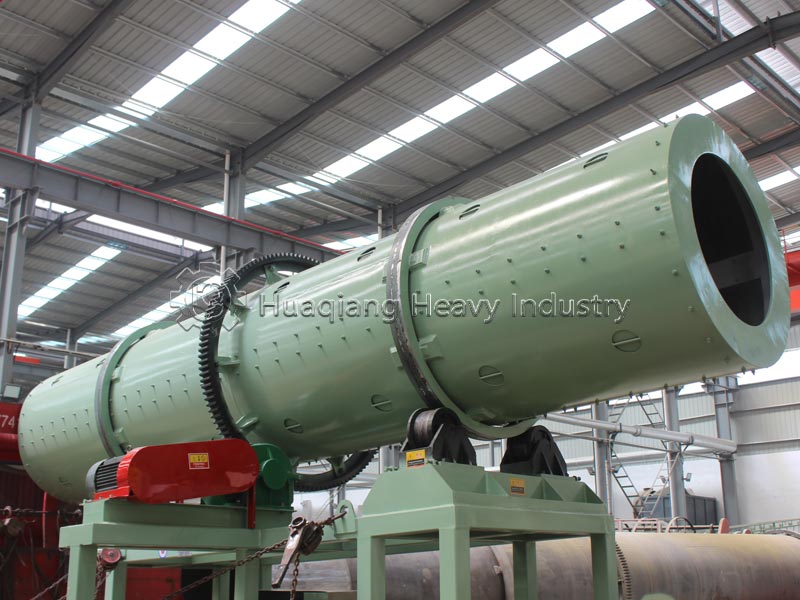
The material then proceeds to the core rotary drum granulation stage. The blended raw materials are introduced into the interior of an inclined, rotating rotary drum granulator. Through the application of steam for humidification and the spraying of binding agents, the material is kept in a state of continuous tumbling and agglomeration, gradually forming into uniform, regular-shaped granules. The drum’s rotational speed and inclination angle can be flexibly adjusted to accommodate a wide variety of nutrient formulations.
Upon completion of granulation, the granules undergo a sequential series of drying, cooling, and screening processes to remove excess moisture and enhance granule hardness. After screening out fine particles and dust, the final compound fertilizer product is obtained. The entire production line operates continuously, ensuring stable output capacity and minimizing production losses.
The rotary drum granulation production line boasts exceptional versatility, capable of accommodating diverse formulations ranging from general-purpose NPK fertilizers to specialized slow-release fertilizers. Furthermore, the production environment is well-sealed, resulting in low dust emissions, while the finished granules are compact and highly durable. Consequently, this system represents an ideal choice for the industrial-scale processing of compound fertilizers.