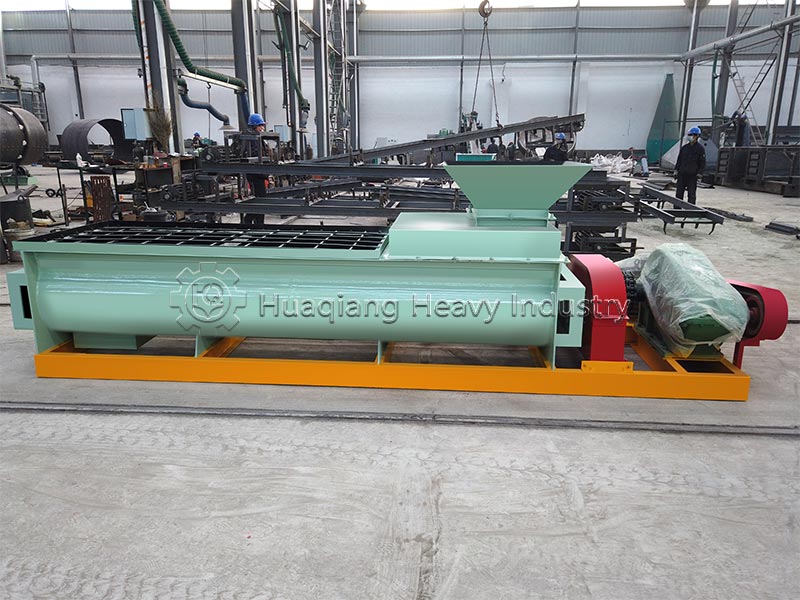
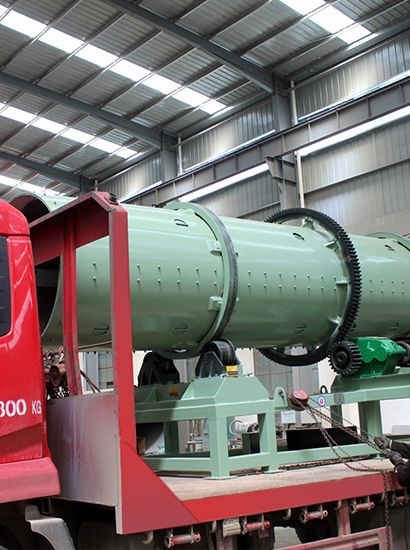
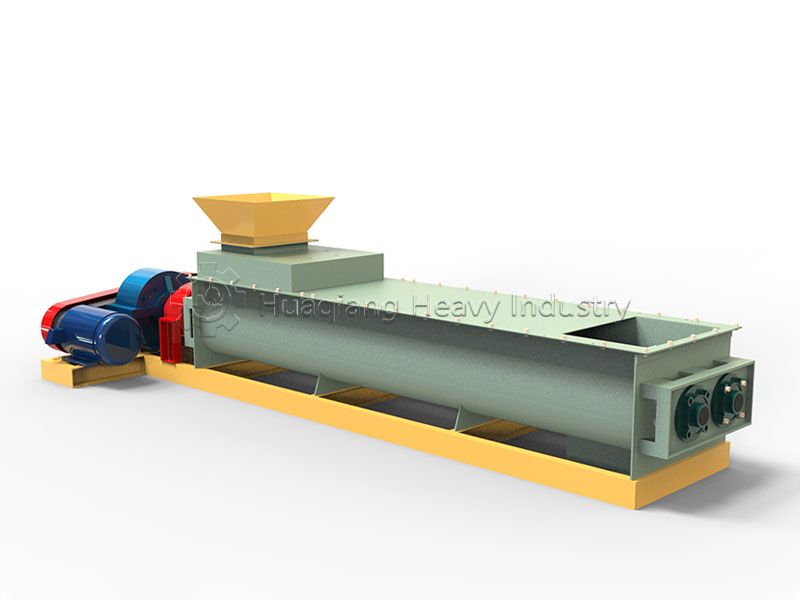
The double shaft paddle mixer is a piece of equipment that utilizes two horizontal shafts to drive rotating paddles for material mixing; it is widely used in the production of organic and compound fertilizers to rapidly and uniformly blend various raw materials. Through the staggered arrangement of paddles on the two shafts, the machine subjects materials to intense convective and shear mixing, achieving high uniformity in a very short time. Featuring high processing capacity and rapid mixing speeds, it is a highly efficient component of the ingredient mixing stage in organic and compound fertilizer production lines.
Two horizontal main shafts rotate in opposite directions, with paddles mounted on the shafts at specific angles. After materials enter the mixing trough through the top inlet, the paddles on the two shafts push the materials axially in both directions while simultaneously generating radial shear and dispersion. A zone of intense convective circulation forms between the two shafts, causing component particles to constantly shift positions and achieve a uniform mixture within tens of seconds to a few minutes. Once mixing is complete, the bottom discharge doors are opened to release the material.
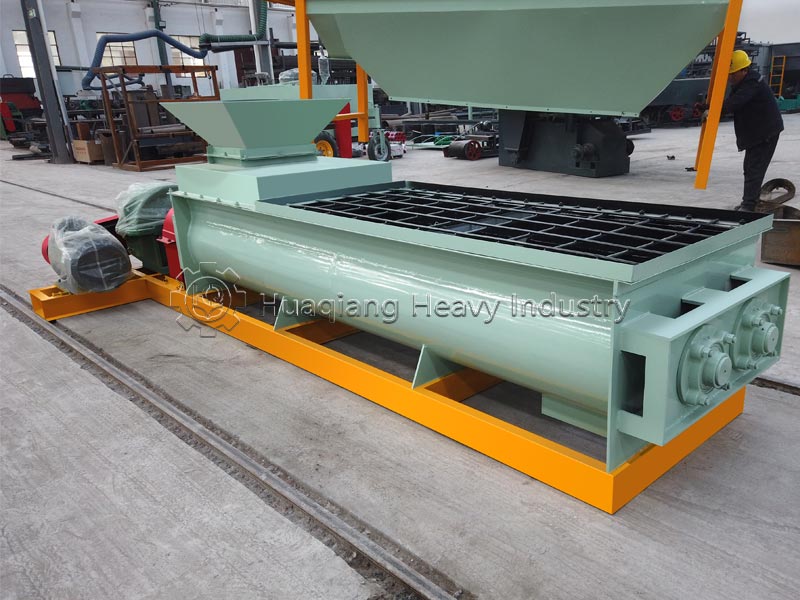
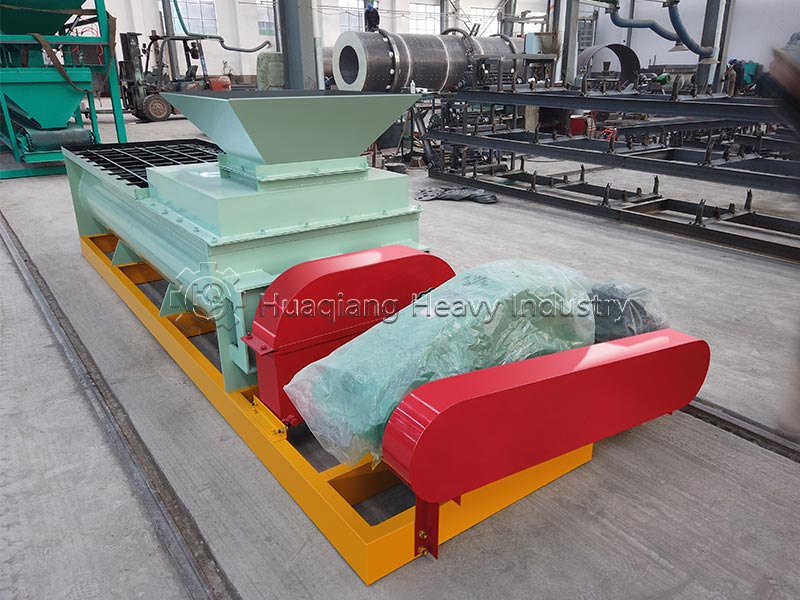
Mixing Trough: W-shaped or double-U-shaped trough; welded steel plate construction; equipped with dual discharge doors at the bottom.
Twin Main Shafts and Paddles: Multiple paddles are mounted in a staggered arrangement on two horizontal shafts; paddles are made of wear-resistant materials.
Drive System: A motor drives the twin shafts to rotate synchronously in opposite directions via a gearbox; gear transmission ensures smooth and reliable operation.
Discharge Device: Pneumatic or manual dual-opening doors at the bottom; ensures rapid and thorough discharge.
Frame: Welded structural steel base supporting the mixing trough and drive system.
Rapid Mixing: High efficiency in twin-shaft convective mixing; short batch mixing times.
High Uniformity: Materials are repeatedly exchanged between the two shafts, resulting in better mixing uniformity than single-shaft equipment.
High Processing Capacity: Large mixing trough volume due to the twin-shaft structure; high single-batch processing capacity.