
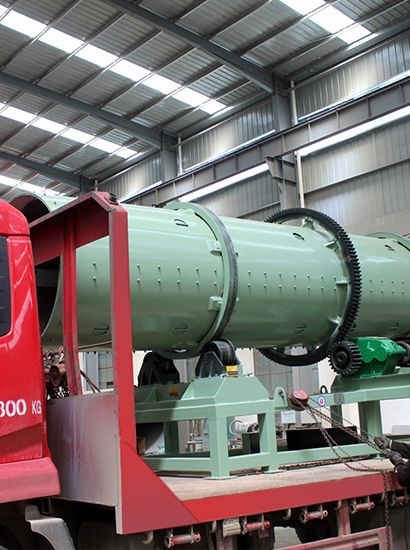
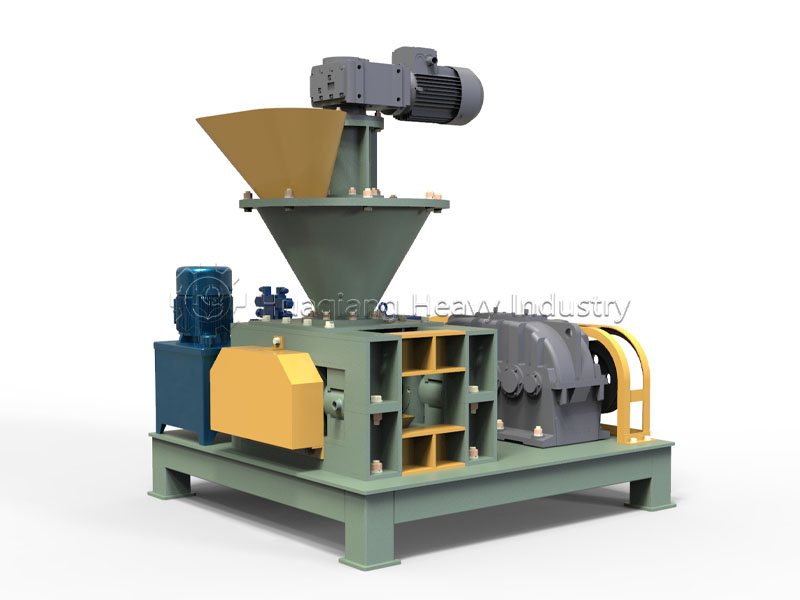
The hydraulic roller granulator is a type of dry granulation equipment that demands precise process control. It utilizes an independent hydraulic station and hydraulic cylinders to actively apply pressure; pressure values can be accurately set and monitored in real-time via the control panel. This active pressurization method renders the granulation process quantifiable and reproducible—meaning granules produced with specific pressure settings today will meet the same quality standards when the same parameters are used tomorrow. The equipment offers distinct advantages when processing materials that require high granule density, such as high-purity chemical powders, high-strength compound fertilizer granules, and cold-pressed metallurgical powders. For enterprises prioritizing product consistency and process standardization—and willing to invest in equipment that ensures stable quality—the hydraulic roller granulator provides a highly controllable dry granulation solution.
The core of the hydraulic roller granulator’s operation lies in the synergy between the hydraulic system and the twin-roll extrusion mechanism. After entering the gap between the two rolls, the material is drawn into the progressively narrowing compression zone by the rotating rolls. During this process, high-pressure oil from the hydraulic station acts upon the roll bearing housings via hydraulic cylinders, maintaining a constant, preset pressure between the rolls. As the material advances toward the point of minimum clearance, air is expelled and the distance between particles decreases; the material reaches peak pressure at this narrowest point, causing irreversible mechanical interlocking and cold welding. The material is compressed into a dense slab and molded into the pockets on the roll surfaces. After passing the centerline, the slab is released and subsequently crushed, granulated, and screened to produce the final granules.


Hydraulic system maintenance: Check the hydraulic station oil level daily before startup; the level should be between the upper and lower limits marked on the gauge. Inspect all hydraulic lines and fittings weekly for leaks, and promptly tighten connections or replace seals at leak points. Clean the hydraulic station cooler and filter monthly to maintain heat dissipation and filtration efficiency. Test hydraulic oil quality quarterly by sampling to observe color and transparency; replace the oil immediately if it turns black or milky white, or emits an unusual odor.
Pressure roll and drive system maintenance: Pressure roller bearings are lubricated via a centralized lubrication system; check grease consumption weekly and replenish as needed. Check the oil level of the synchronization gearbox every 500 hours of operation; perform the first oil change at 500 hours, and subsequently change the gear oil every 2,000 hours or every six months. Inspect gear mesh surfaces monthly for wear; schedule replacement if pitting or spalling appears on the gear teeth. Check the wear level of the pressure roller surfaces weekly.
Conduct a comprehensive inspection of the entire machine quarterly. Inspect frame welds for cracks and tighten all anchor bolts and connecting bolts. Check the parallelism of the pressure roller axes; misalignment can lead to uneven roller surface wear and inconsistent granule quality. For the electrical control system, check the tightness of wiring terminals and the accuracy of sensor signals.

Large-scale compound fertilizer enterprises with strict requirements for granule strength and consistency. These enterprises serve national or export markets, where granules undergo multiple loading and unloading cycles during long-distance transport and multi-stage distribution; insufficient strength leads to significant powdering and product returns. The constant pressure output of hydraulic models ensures highly consistent granule density and crush resistance across batches, meeting the quality control standards of premium fertilizer brands.
Enterprises engaged in chemical powder granulation and metallurgical powder cold-press molding. These materials often possess high added value, or downstream processes impose strict quality requirements; variations in granule density can compromise downstream performance. Hydraulic models allow for precise pressure adjustment and locking, offering excellent process repeatability—ideal for industrial settings requiring standardized operations.
Modern factories prioritizing production automation and data-driven management tend to prefer hydraulic models. Hydraulic pressure signals can be integrated into central control systems for real-time monitoring and data logging, facilitating quality traceability and process optimization analysis—aligning with the trends of smart manufacturing and refined management.
