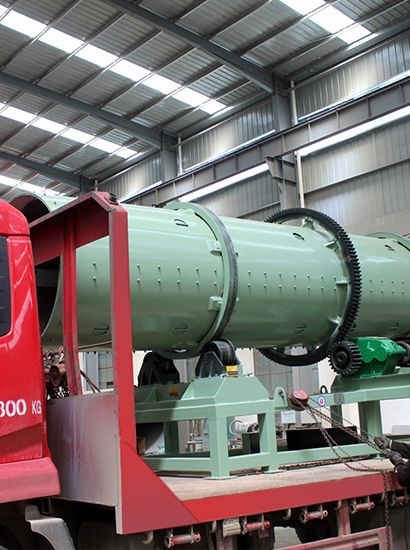
The coating process is the core step in achieving the slow-release effect in NPK fertilizer production lines. By coating the surface of fertilizer granules with an environmentally friendly coating material, the rate of nutrient release is slowed, fertilizer utilization is improved, and nutrient loss is reduced. This process is suitable for the production of various slow-release NPK fertilizers.
Coating raw materials are mainly divided into two categories: inorganic coating materials (such as kaolin and gypsum powder, which are low-cost and environmentally friendly) and organic coating materials (such as polyvinyl alcohol and modified starch, which have good slow-release effects). In actual production, a composite coating of “inorganic + organic” is often used to balance cost and effectiveness. The coating process principle is as follows: Qualified NPK fertilizer granules are fed into a coating machine. A spraying device evenly sprays the coating material solution onto the granule surface. Simultaneously, the rotation of the coating machine and hot air drying cause the coating material to form a dense protective film on the granule surface, achieving slow nutrient release.
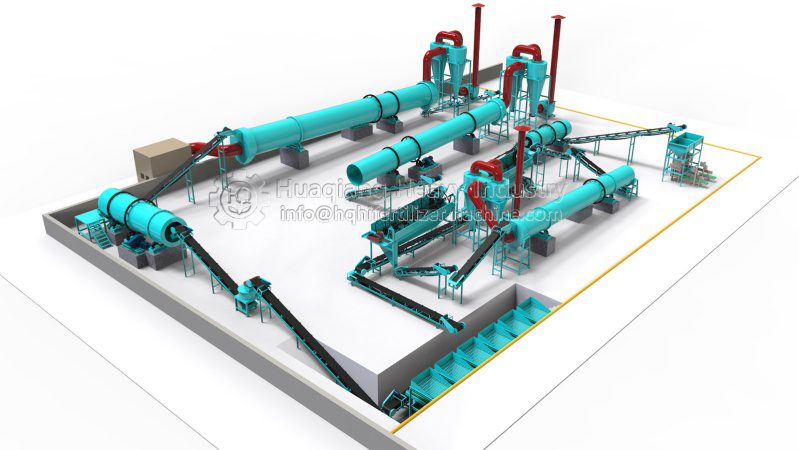
The coating process of a NPK fertilizer production lines involves the following steps: First, coating solution preparation: Dissolve the coating material (e.g., polyvinyl alcohol + kaolin) in water according to a specified ratio, stirring until homogeneous and free of sediment (concentration 8%-12%). Second, preheating: Raise the coating machine temperature to 80-90℃ and adjust the rotation speed to 25 r/min. Third, coating and drying: Feed qualified granules into the coating machine, simultaneously spraying the coating solution, controlling the spraying speed and granule feeding speed to ensure each granule is evenly coated, and continuously dry with hot air to solidify the coating layer. Fourth, finished product cooling: Send the coated granules to a cooler (cooling to room temperature) to prevent the coating layer from cracking.
Key control points: The coating solution concentration and spraying speed must be matched to avoid coatings that are too thick (increasing costs) or too thin (poor slow-release effect); the drying temperature must be stable, as excessively high temperatures can lead to carbonization of the coating layer, while excessively low temperatures will prevent the coating layer from solidifying. NPK fertilizers treated with a coating process can have their nutrient shelf life extended by 30%-50%, significantly improving fertilizer utilization.