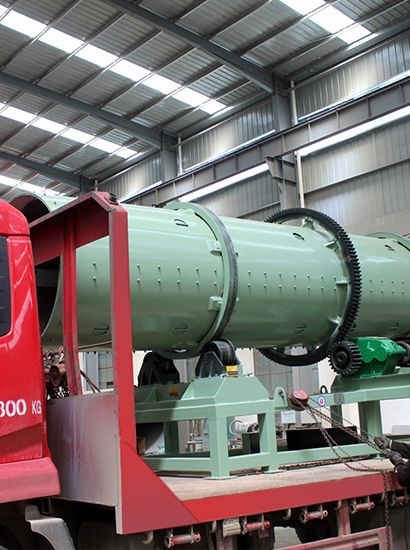
Composting livestock manure is a crucial method in the processing of organic fertilizers; however, practical production often faces issues such as low granulation rates, loose particles, and inconsistent particle sizes—problems that not only compromise product quality but also lead to increased raw material wastage. The rotary drum granulator offers a targeted solution to these specific pain points.
First, the pre-treatment of the compost must be optimized. The fully matured livestock manure should be pulverized to remove impurities and large clumps. It is then blended with appropriate amounts of conditioning agents—such as straw powder and bentonite—to adjust the material’s moisture content to between 50% and 60%. This prevents the material from sticking to the drum walls if it is too wet, while ensuring it can properly agglomerate rather than remaining loose and powdery if it is too dry.
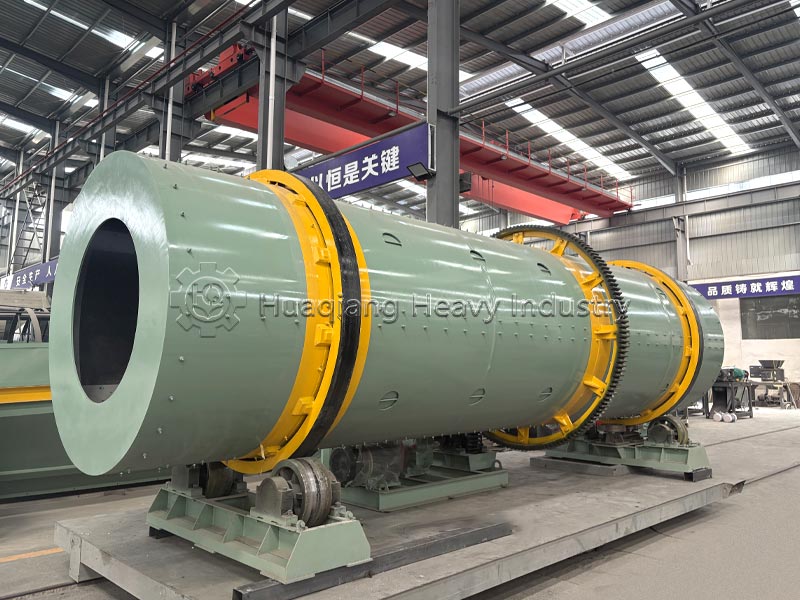
Second, the operating parameters of the rotary drum granulator require precise control. Based on the specific viscosity of the livestock manure compost, the drum’s rotation speed and inclination angle must be carefully adjusted. This prevents particles from scattering if the speed is too high, while ensuring proper granule formation—which would be hindered if the speed were too low. This precise control ensures that the material tumbles and binds thoroughly within the drum, resulting in uniform, compact granules.
Finally, auxiliary processes should be integrated to enhance overall effectiveness. During granulation, an appropriate amount of binder should be sprayed evenly to increase particle cohesion. Following granulation, the material should immediately proceed to drying and cooling stages to remove excess moisture and boost granule strength. Additionally, the inner walls of the drum should be cleaned periodically to prevent material buildup and ensure continuous, uninterrupted granulation operations.
By optimizing pre-treatment, precisely adjusting parameters, and refining auxiliary processes, the rotary drum granulator effectively resolves the issue of low granulation rates in livestock manure composting. It yields uniform, compact granules, thereby not only enhancing product value but also successfully realizing the resource-efficient utilization of livestock manure.