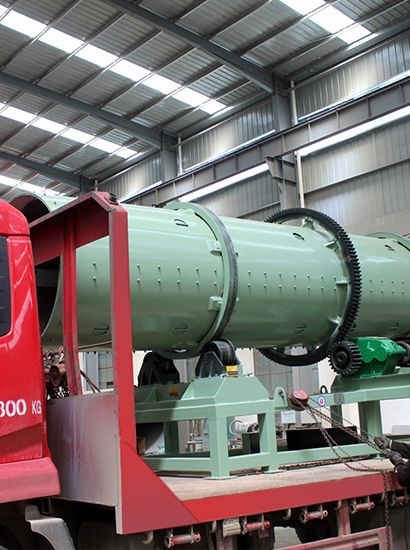
Rotary drum granulators and disc granulators are mainstream equipment in organic fertilizer processing. Their core differences lie in the scale of production line adaptation, supporting processes, and production scenarios.
Disc granulators are suitable for small to medium-sized lightweight production lines. They are simple to integrate, requiring no complex large equipment, have a small footprint, and low investment costs. The equipment is highly flexible, allowing frequent switching of raw material types, and is suitable for multi-variety, small-batch production modes. It is suitable for start-up workshops and small processing plants, and is often used for producing high-quality and functional organic fertilizers.
Rotary drum granulators are designed for large-scale, fully automated mass production lines, suitable for large-scale, standardized processing. The equipment has high throughput, can operate continuously for extended periods, and can connect to complete closed-loop production lines for crushing, mixing, drying, and screening. It has strong automation and linkage, suitable for single-category, large-volume, routine production, and is the mainstream choice for large fertilizer plants.
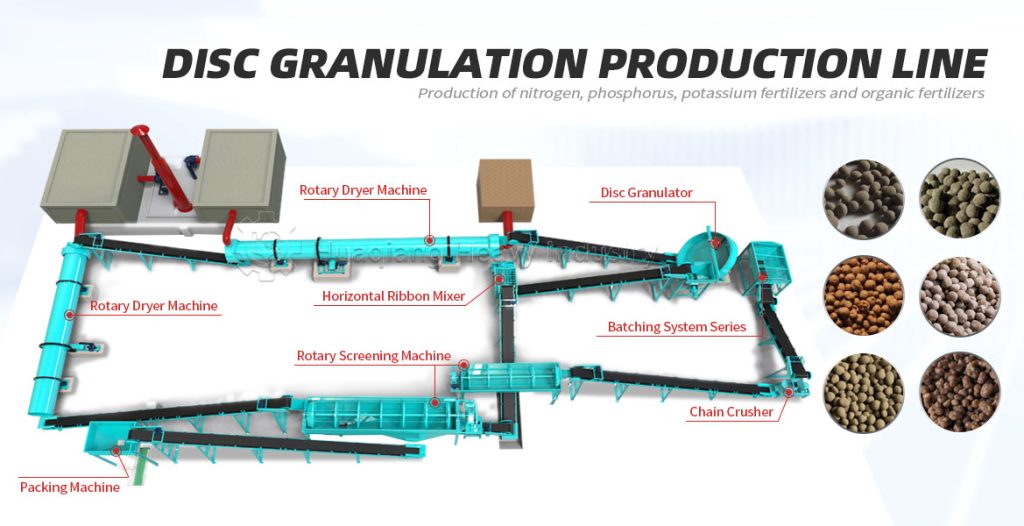
In terms of material adaptability and tolerance, the two types of equipment differ significantly. Disc granulation has strict requirements on raw material moisture and fineness, and is suitable for thoroughly decomposed raw materials with few impurities, resulting in better-quality finished granules. Drum granulation, on the other hand, is more forgiving, can handle common raw materials containing a small amount of coarse fiber, operates stably, and is less prone to material blockage.
In summary, disc granulation production lines are suitable for small-scale production with low investment and multiple product categories, while rotary drum granulation production lines are more suitable for large-scale production with high capacity and stable output. Selecting the appropriate model based on specific needs can effectively improve the overall cost-effectiveness of production.