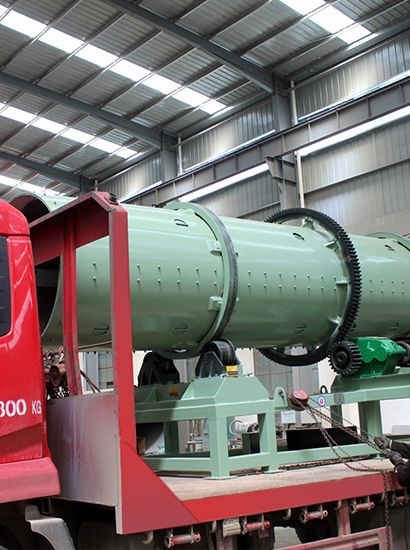
With its advantages of high granulation rate, stable operation, and strong adaptability, the rotary drum granulation production line breaks through the limitations of single-material granulation and can cover various raw materials such as organic fertilizers, inorganic fertilizers, and compound fertilizers. It is a widely used and highly efficient granulation solution in the industry.
Various organic fertilizer raw materials, such as well-rotted livestock and poultry manure, crop straw, humic acid, and oilseed cake, can be processed with the addition of appropriate conditioning agents. The rotary drum granulation production line is adaptable to the characteristics of organic materials with high moisture content and uneven viscosity, easily producing compact and full organic granular fertilizers.
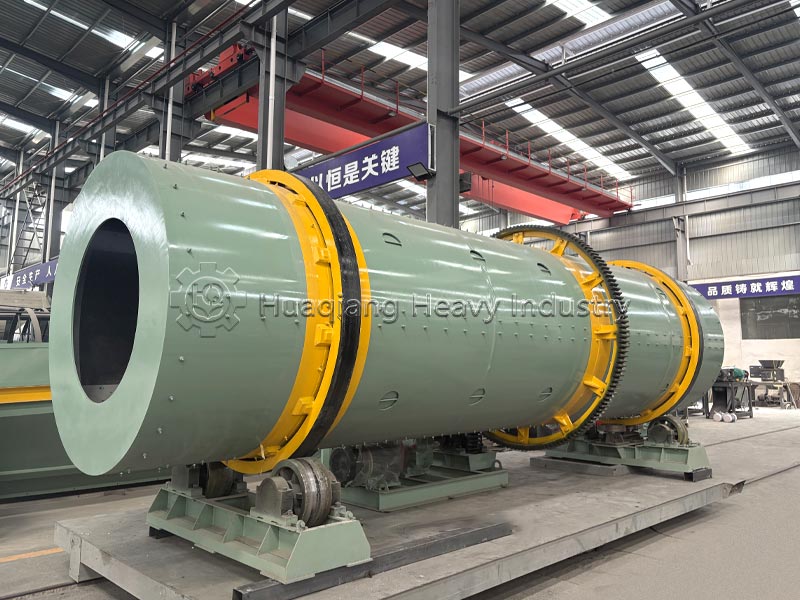
Single inorganic fertilizer raw materials, such as nitrogen fertilizer base materials like urea and ammonium chloride, potassium fertilizer base materials like potassium sulfate, and phosphate fertilizer base materials like superphosphate and calcium magnesium phosphate, can all be fed into the line for granulation after pretreatment. It is especially suitable for inorganic fertilizers with high hygroscopicity.
Raw materials for compound fertilizers and blended fertilizers, including NPK ternary compounds, micronutrient mixed fertilizers, and slow-release fertilizer base materials, can be pre-treated and mixed before being formed into granulated fertilizers in a single step, producing nutrient-balanced granules to meet the diversified fertilizer needs of modern agriculture.
Furthermore, special fertilizer raw materials such as bio-fertilizers and mineral fertilizers can also be adapted to this production line with proper parameter adjustments. Overall, the rotary drum granulation production line has extremely high material compatibility; only minor adjustments to process parameters are needed to achieve large-scale granulation of multiple fertilizer types.