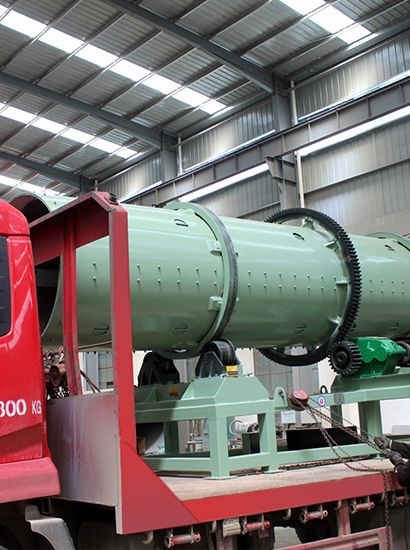
Disc granulation production lines, with their advantages of uniform granulation, high molding rate, and simple operation, are widely used in the production of organic fertilizers and compound fertilizers. The core requirement for raw materials is suitable viscosity and moisture content.
Organic fertilizer raw materials are the core suitable category, mainly consisting of fermented and decomposed organic materials. Common examples include fermented animal manure (chicken manure, pig manure, cow manure, etc.), which, after decomposition, has a loose texture and natural viscosity, allowing for molding without excessive binders; fermented agricultural waste is also suitable, such as crushed and fermented corn stalks, wheat stalks, and rice husks, which need to be mixed with manure-based materials to increase viscosity; in addition, industrial organic waste such as distiller’s grains, vinegar residue, and pharmaceutical residue, after pretreatment to adjust moisture content, can also be adapted to the disc granulation process.
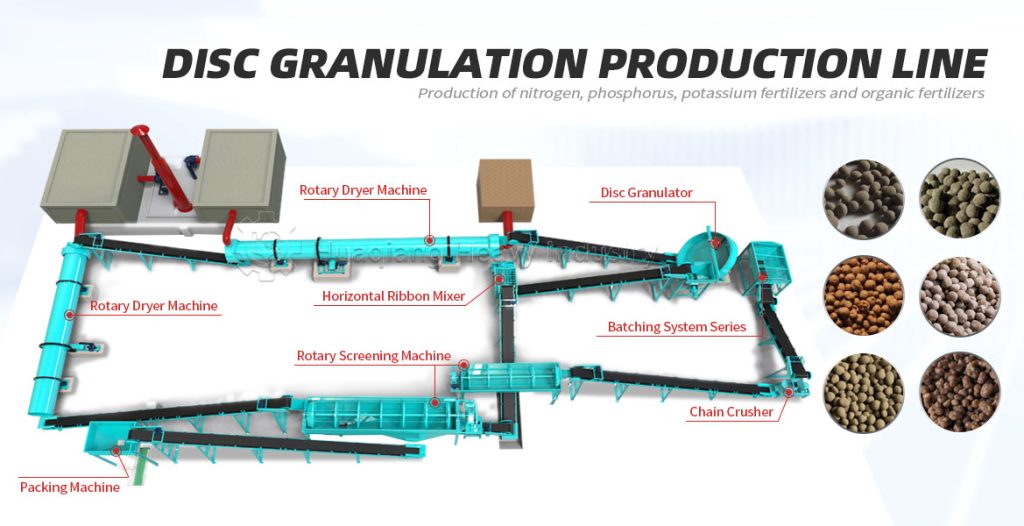
Compound fertilizer raw materials mainly consist of inorganic fertilizers, and are compatible with various basic fertilizers and trace element fertilizers. Basic fertilizers include urea, monoammonium phosphate, diammonium phosphate, potassium chloride, potassium sulfate, etc. These raw materials need to be mixed and their moisture content adjusted to a suitable range, utilizing the centrifugal force and friction of the rotating disc granulator to achieve granulation; trace element fertilizers such as magnesium sulfate, zinc sulfate, and borax can be mixed into the basic fertilizers as auxiliary nutrient raw materials to complete granulation and improve the overall nutrient content of the fertilizer.
Auxiliary raw materials are used to optimize the granulation effect. Common examples include binders (such as bentonite and humic acid), which are added to raw materials with insufficient viscosity to improve particle strength; fillers (such as fly ash and zeolite powder) can adjust the moisture content and specific gravity of the raw materials, preventing particles from becoming too large or too small. When selecting raw materials, it is necessary to reasonably proportion the moisture content and composition of the raw materials according to the type of finished fertilizer and the requirements of the disc granulation process to ensure granulation efficiency and product quality.