
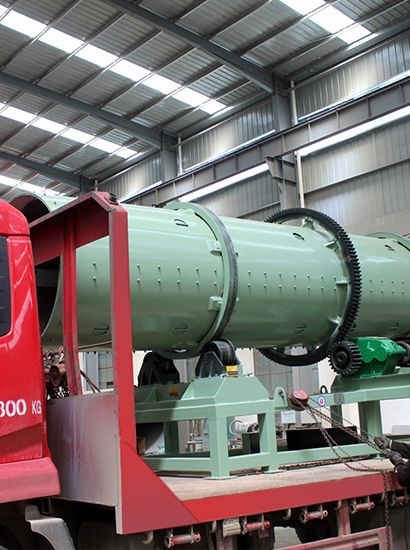
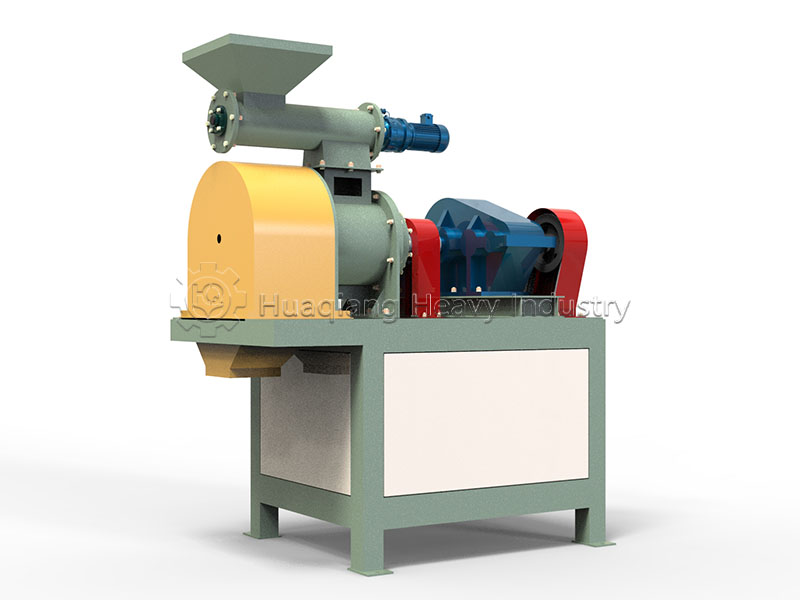
The ring die pelleting machine holds a prominent position in the feed and organic fertilizer processing industries due to its unique structural advantages and mature process system. In the feed industry, ring die pelleting machines are the standard configuration for pelleting compound feed and aquatic feed, and can be found on almost every large-scale feed production line. In the organic fertilizer processing sector, as the industry shifts from scattered small workshops to large-scale factories, ring die pelleting machines are gradually replacing flat die pelleting machines as the preferred model for newly built large and medium-sized organic fertilizer plants. Stable equipment operation, quantifiable control of process parameters, and high product pellet consistency make it a core piece of equipment worthy of serious evaluation by processing enterprises pursuing both production capacity and product quality.
Raw Material Pretreatment Stage. Powdered materials are mixed and then fed into the crushing section. After reaching the required fineness, they are conveyed to the pelleting section. Feed materials typically undergo conditioning before entering the pelleting chamber. Steam conditioning pregelatinizes starch and moderately denatures proteins, resulting in better binding and plasticity of the material. Organic fertilizer materials generally do not require steam conditioning. The moisture content of the fermented material is naturally between 25% and 35%, allowing it to directly enter the granulation chamber.
Quantitative feeding and material distribution. The conditioned material is quantitatively fed into the ring die cavity by a variable frequency speed-controlled screw feeder. The feeding speed is matched to the ring die rotation speed and the total die orifice area. After entering the ring die cavity, the material is evenly distributed along the inner wall of the ring die under the combined action of centrifugal force and gravity, forming a material layer of uniform thickness, laying the foundation for subsequent uniform extrusion.
Extrusion molding. The ring die rotates at a set speed, and the material is carried into the wedge-shaped gap between the pressure roller and the inner wall of the ring die. The pressure roller rotates passively under the action of friction, forcefully crushing the material and squeezing it into the die orifice. The material undergoes three stages in the die orifice: compression and densification, shaping and retention, and extrusion release.
Pelletizing and cooling. The cutter on the outside of the ring die cuts the continuously extruded strip. The particle length is adjusted by the cutter spacing. Freshly extruded pellets are at a high temperature, with feed pellets reaching 75-90℃ and organic fertilizer pellets around 40-60℃. They must immediately enter a cooler for ventilation and cooling to reduce the temperature to slightly above room temperature and the moisture content to below safe storage standards before proceeding to screening and packaging.

Leading production efficiency. The ring die pelleting process features a large effective working area with densely packed die holes along the entire inner wall of the ring die. Material is extruded simultaneously from the inner cavity of the ring die to all sides, resulting in a significantly higher pellet output per unit time compared to flat die pelleting machines of the same specifications.
Uniformity and stability of pellet quality. Precision machining of the ring die holes ensures accurate and consistent hole diameter and compression ratio. Combined with quantitative feeding and uniform material distribution, this guarantees a high degree of consistency in the processing conditions experienced by each pellet. The product exhibits minimal deviations in pellet diameter, length, density, and nutrient content.
Rapid switching capability for multiple specifications. As a replaceable wear part, the ring die can be replaced with dies of different hole diameters and compression ratios within hours. A single ring die granulation line can flexibly switch to produce granules of different sizes according to order requirements, achieving multi-purpose use and improving equipment utilization and market responsiveness.

In organic fertilizer production lines, fermented organic materials are crushed and directly fed into the ring die pelleting machine. The extruded wet granules are cooled and dehumidified by a cooler before being screened, and qualified products are packaged and stored. Compared with traditional flat die granulation lines, ring die lines have a larger single-line capacity and a higher degree of automation, making them suitable for organic fertilizer projects with an annual output of over 10,000 tons.
In organic-inorganic compound fertilizer production lines, ring die pelleting machines can complement disc granulators or rotary drum granulators. Organic materials are mixed with inorganic fertilizers and then fed into the ring die pelleting machine. Room temperature extrusion preserves the activity of organic matter, resulting in granules that combine the long-term soil-improving function of organic fertilizers with the fast-acting nutrients of inorganic fertilizers.
Cooling System Matching. The extruded granules are at a high temperature and must be cooled promptly to ensure granule hardness and storage stability. Organic fertilizer pellets typically utilize counter-current coolers, with cooling airflow and time calculated based on pellet diameter and production capacity. After cooling, the pellet temperature should be no higher than 5°C above room temperature, and the moisture content should be below 20%.
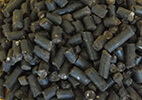
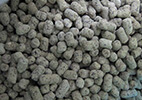
In the feed industry, ring die pelleting machines cover major commercial feed varieties. Livestock and poultry compound feeds are the largest application market; pelleted feed facilitates transportation and storage, reduces grading, and improves feed intake efficiency. Pet food prioritizes pellet appearance and palatability; ring dies can be customized with different aperture sizes and shapes to produce diverse pellet products.
In the fertilizer industry, organic fertilizers and bio-organic fertilizers are the main applications of ring die pelleting. Fermented chicken manure, pig manure, and sheep manure, after ring die extrusion granulation, produce compact and uniform pellets, facilitating mechanized fertilization. Bio-organic fertilizers with added functional microbial agents utilize ring die room temperature extrusion technology, resulting in high microbial agent activity retention. Agricultural waste such as straw powder and rice husk powder are mixed with manure for pelleting, achieving resource utilization of waste. Organic-inorganic compound fertilizers combine the rapid effectiveness of inorganic nutrients with the long-lasting benefits of organic matter. Ring die pelleting machine is well-suited to the processing characteristics of such formulations.
In the biomass energy sector, ring die pelleting machines are used to press biomass pellet fuel, processing agricultural and forestry waste such as sawdust, straw, and peanut shells into high-density, high-calorific-value briquettes to replace coal in industrial boilers and residential heating.
In the chemical industry, some powdered chemical raw materials and additives are granulated using ring die pelleting machine, improving material flowability, reducing dust, and facilitating downstream use.
