
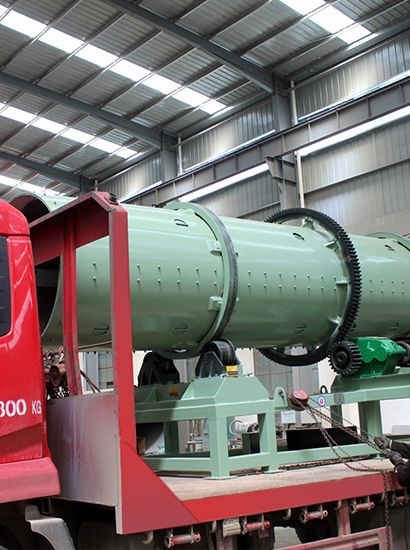
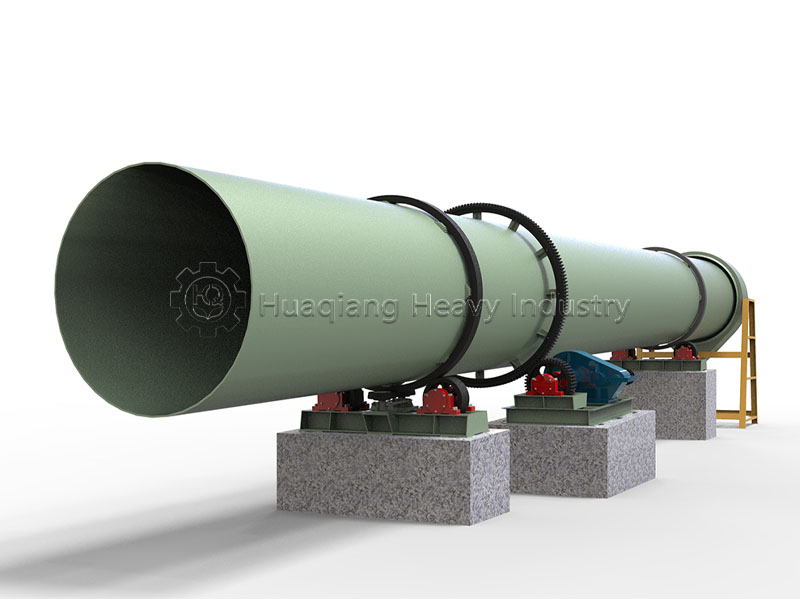
Drum fertilizer coolers are widely used in granular fertilizer production due to their high cooling efficiency and low energy consumption. The internal lifting flights (lifters) are optimized to ensure uniform material dispersion and a dense material curtain, facilitating thorough heat exchange with the cooling air. Airflow and drum rotation speed can be flexibly adjusted based on material characteristics, minimizing energy consumption while ensuring effective cooling. The equipment features a robust, durable design with few wear parts and simple maintenance, making it suitable for continuous cooling operations across various fertilizer production lines.
High-temperature material enters the rotating drum, where lifting flights repeatedly lift and scatter it to form a dense material curtain. Ambient air is drawn into the drum by a fan; as it passes through the material curtain, it absorbs heat from the granules, gradually lowering the material temperature. Simultaneously, residual heat within the granules drives further moisture evaporation, reducing the final moisture content of the product. The heated air is processed through a dust collector before discharge. As the material cools, it moves toward the discharge outlet within the drum.

High Cooling Efficiency: Thorough material dispersion ensures extensive contact with cooling air, resulting in high heat exchange efficiency.
Energy-Efficient: Uses ambient air as the cooling medium; primary energy consumption comes from the fan and drum drive system.
Stable Operation: Features a proven support roller design, ensuring minimal vibration and low noise levels.
Further Dehydration: Residual moisture continues to evaporate during the cooling process, resulting in lower final moisture content.
Comprehensive Specifications: Available in a full range of sizes to match the production capacities of various dryers.

Check for smooth drum rotation and inspect support rollers and thrust rollers for abnormal wear or noise during every shift.
Check the tightness of lifting flights weekly; promptly re-weld or replace any loose components.
Check the meshing of the large girth gear and pinion monthly; replenish lubricant on gear tooth surfaces as needed.
