
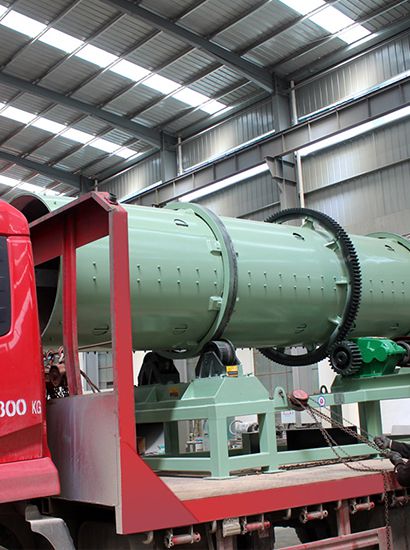
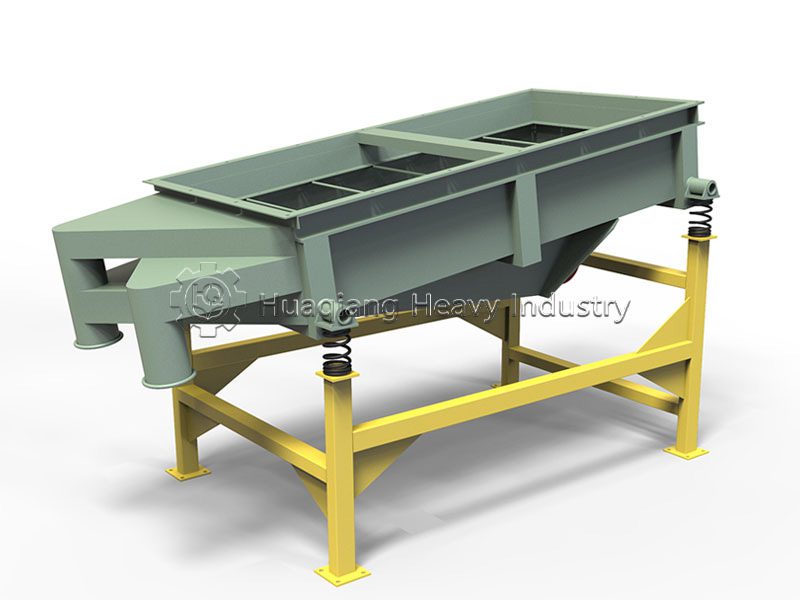
Vibration screener machines are commonly used fine screening equipment in fertilizer production lines. They are simple to operate, easy to adjust, and perform excellently in particle grading and dust removal. They use vibration to make the material bounce and move forward on the screen surface, thoroughly separating fine powder and broken particles, resulting in clean and uniform finished particles. The equipment is highly automated and requires no dedicated personnel for supervision after interlocking with upstream and downstream conveyor equipment. Screen replacement is quick, and daily maintenance mainly involves checking and tightening the vibration motor bolts. For fertilizer companies with high requirements for the appearance and particle size of the finished product, vibration screener machines are practical and efficient fine screening equipment in the screening section.
When the vibration motor is powered on, it generates excitation force, driving the screen box to vibrate at high frequency. After the material falls onto the screen surface from the feed end, it is subjected to vertical and horizontal vibration forces, being continuously thrown up and moving forward. During this throwing and falling process, fine particles and powder pass through the screen holes and become undersize material, while larger particles remain on the screen surface and continue to move forward, exiting from the end. When using two or three layers of screens, the material can be separated into multiple particle size grades, each discharged from different outlets. The amplitude and excitation force can be changed by adjusting the angle of the eccentric block of the vibrating motor to adapt to different materials.

Before starting the machine, check if the screen is intact, if the tension bolts are tight, and if there is any material accumulation on the screen surface. Turn on the power, start the vibrating motor, and run it under no-load for a short while to observe whether the vibration is stable and whether there is any abnormal noise.
Once normal operation is achieved, start feeding material evenly. The feed rate is controlled by the upstream feeding equipment. During operation, check whether the material distribution on the screen surface is uniform and whether the material at each stage at the discharge port is clear. If there are too many coarse particles in the undersize material, it indicates that the screen is damaged; if there is too much fine powder in the oversize material, the feed may be too fast or the screen may be clogged, requiring adjustment of the feed rate or cleaning of the screen.
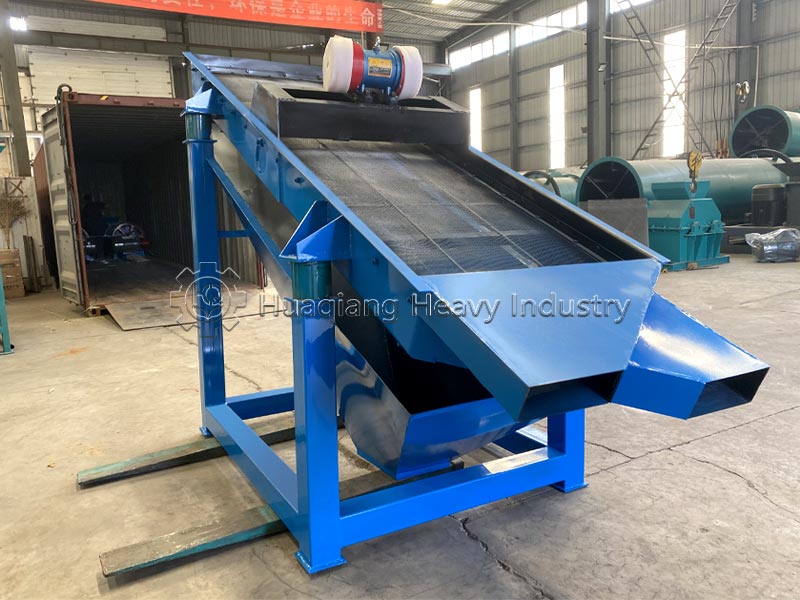
When stopping the machine, first stop the feed, and then stop the vibrating motor after the material on the screen surface has been emptied. Regularly clean the screen and the inner wall of the screen box with compressed air to remove accumulated dust.
