
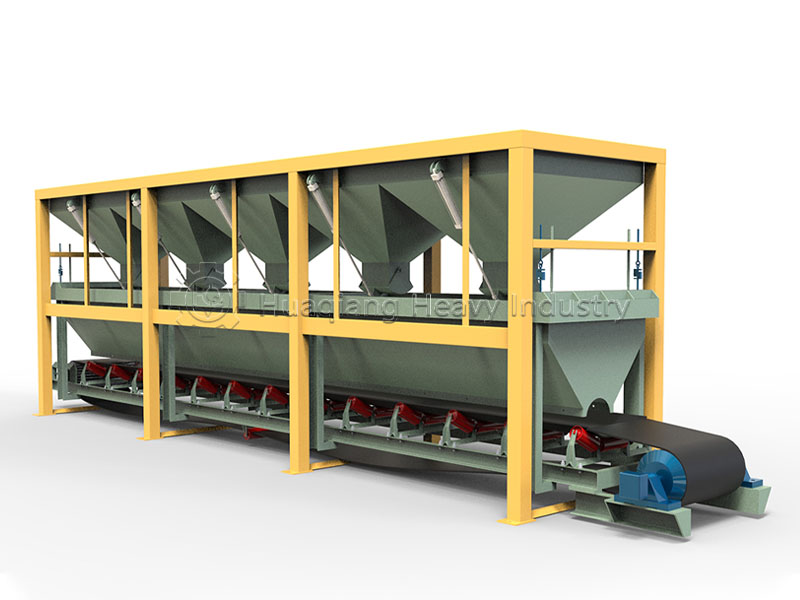
The multiple silos single weigh static automatic batching system with a shared scale serves as the core of the batching stage in small-to-medium-sized fertilizer production lines. It precisely measures various base fertilizers and additives according to scientific formulas and feeds them into the mixer. The system’s weighing accuracy directly determines the compliance rate of nutrient content and batch consistency in the finished fertilizer. Compared to manual batching, this automatic system eliminates human error and enhances both speed and accuracy. By utilizing a shared weighing hopper, the system reduces equipment complexity while maintaining high precision, making it a vital piece of equipment for automating batching in small-to-medium-scale organic, compound, and blended fertilizer production lines.
The system operates automatically based on a preset formula. Raw material bins discharge into the shared weighing hopper sequentially; the feeding screw conveyors operate at high speed initially and slow down as the target weight approaches, with load cells providing real-time weight feedback. Feeding stops once each ingredient reaches its target weight, and the system records the value after the reading stabilizes. Once all ingredients have been measured and accumulated, the hopper’s discharge gate opens, releasing the materials into the mixer or onto a collection conveyor. The system can be interlocked with upstream bin level sensors and downstream mixers to coordinate the batching and mixing processes. Formula data, actual batching values, and batch information are automatically stored to facilitate quality traceability. The static weighing method ensures weight readings are taken while materials are stationary, eliminating interference from vibration or impact and ensuring accurate, stable measurement data.

High batching precision results in minimal nutrient fluctuation and a high product compliance rate.
Rapid automated batching shortens batch cycle times and boosts production efficiency.
Digital formula management allows for easy switching between different product varieties.
Static weighing is stable and reliable, unaffected by changes in material flowability.
Cost-effective equipment investment; ideal for upgrading small-to-medium-scale production lines.
Seamless integration with the mixer ensures a smooth, continuous workflow between batching and mixing.

Determine the number of bins based on the variety and quantity of raw materials (typically 4–8 types). Calculate the feeding screw capacity and weighing hopper volume based on production line throughput; the hopper capacity must exceed the maximum total weight of a single formula batch.
The feeding method is determined by material characteristics: sealed screw feeders are selected for powdery materials, while either screw or belt feeders may be used for granular materials; materials with poor flowability require the installation of arch-breaking devices. When high metering accuracy is required, high-precision load cells and variable-frequency drive (VFD) feeding systems featuring a slow-speed topping-up phase are employed.
