The core of choosing the best fertilizer is not blindly pursuing “high-end,” but rather precisely matching the fertilizer type and nutrient ratio to the soil, crop needs, and planting scenario. Mastering the matching logic and selection techniques can improve fertilizer efficiency, reduce costs, and avoid nutrient waste and soil damage.
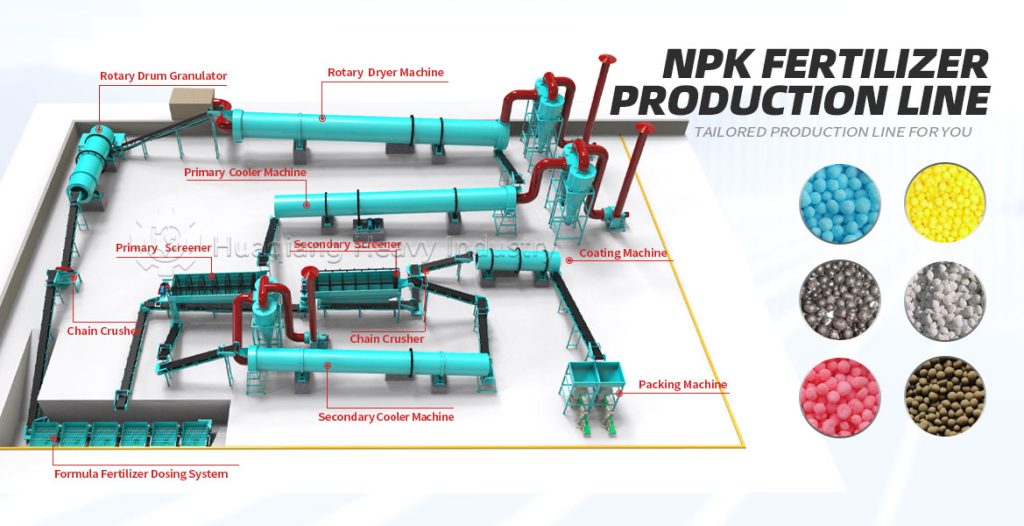
First, clarify the fertilizer type and its suitable application scenario: Compound fertilizers produced by NPK fertilizer production lines have balanced nutrients, containing nitrogen, phosphorus, potassium, and trace elements, suitable for most crops and soils, and suitable for large-scale planting; organic fertilizers processed by organic fertilizer production lines focus on soil improvement and slow release, suitable for compacted and infertile soils, especially for fruits and vegetables; single-element fertilizers are highly targeted, suitable for supplementing single nutrients, and should be combined according to needs.
Master three core techniques: First, consider the soil type: choose alkaline fertilizers for acidic soil and acidic fertilizers for alkaline soil to avoid soil imbalance. Second, consider the crop: leafy vegetables need more nitrogen, fruits and vegetables need more phosphorus, potassium, and micronutrients, and field crops need a balanced nitrogen, phosphorus, and potassium intake. Third, consider the season: choose fast-acting fertilizers during the growing season and slow-release fertilizers as base fertilizers.
In addition, pay attention to a reasonable nutrient ratio, prioritizing fertilizers with uniform granules and easy dissolution. In summary, the key to choosing the best fertilizer is “matching to needs,” combining soil, crop, and season, and matching the fertilizer with the appropriate fertilizer produced by the fertilizer production line to maximize fertilizer effectiveness.