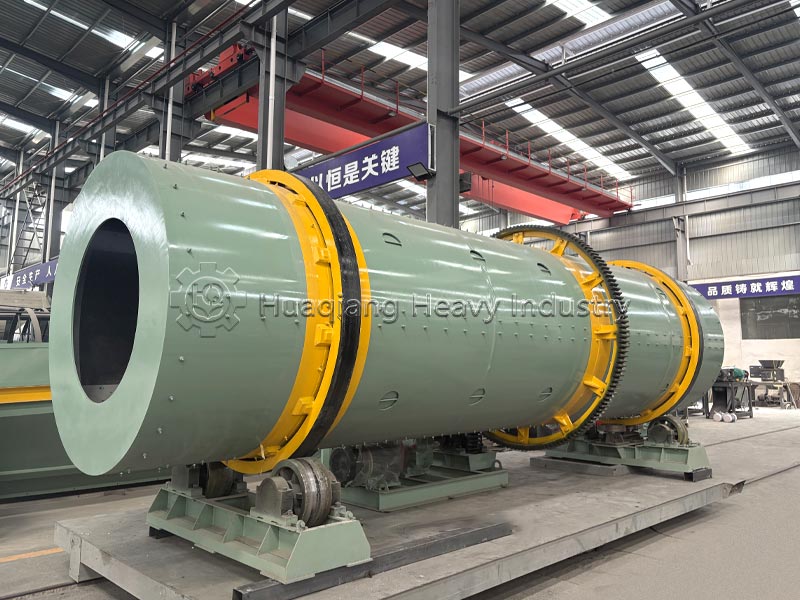
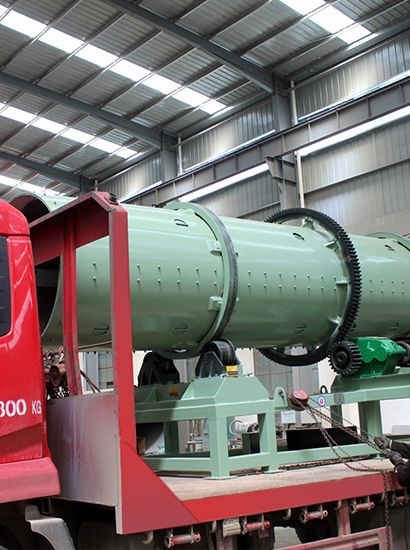
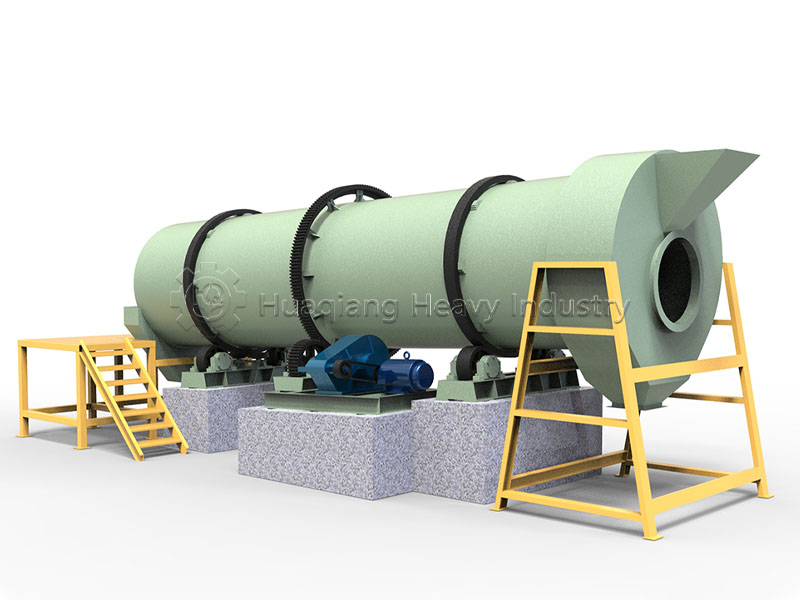
The rotary drum granulator plays a pivotal role—often described as the “mainstay”—in the compound fertilizer industry. It is a core component in the process flow of almost all large-scale fertilizer production lines with daily outputs exceeding several hundred tons. Its widespread adoption stems from its tangible industrial value: it transforms mixed powdered fertilizer into uniform, spherical granules within an enclosed drum in a single pass, ensuring a continuous process and a steady, consistent output. Rather than relying on large amounts of added water, the process ingeniously utilizes steam heat to trigger internal material reactions that generate a binding liquid phase; this results in dense granules and reduces the subsequent drying load.
Batching and Pre-treatment: Various base fertilizers and additives are precisely weighed according to the formula and fed into a mixer, where they are blended until fully homogeneous and the particle fineness meets process requirements. The mixed powder is conveyed via a hoist and metered feeder to the drum’s inlet; the feed rate must be synchronized with the subsequent pelletizing speed to prevent material accumulation or shortages within the drum.
Steam Heating and Liquid Phase Generation: Upon entering the drum, low-pressure saturated steam is evenly sprayed onto the material bed through nozzles, raising the material temperature to 50–70°C. Within this temperature range, components such as urea and ammonium phosphate undergo chemical reactions to generate an optimal amount of liquid phase. The quantity of liquid phase is a critical variable for pellet quality: insufficient liquid leads to loose granules, while excess liquid causes clumping and wall adhesion.
Rolling Agglomeration and Pelletizing: The drum rotates at a set speed, continuously lifting and tumbling the material to form a curtain of falling particles. Powder particles coated with the liquid phase adhere to one another during tumbling and collisions, initially forming tiny “seed” pellets; these seeds then grow larger by continuously accumulating new layers of powder. The drum’s inclination angle and rotation speed determine the material’s residence time and tumbling intensity; the interplay between these factors dictates the final granule size and density.
Discharge and Downstream Processing: Granules that have grown to the specified size move toward the discharge end, driven by the drum’s inclination. They are then conveyed via belt to a dryer for dehydration, a cooler for temperature reduction, and a screening machine for size classification. Oversized, compliant granules proceed to the coating and packaging stages, while undersized fines are returned to the mixer for re-granulation, creating a complete closed-loop production cycle.
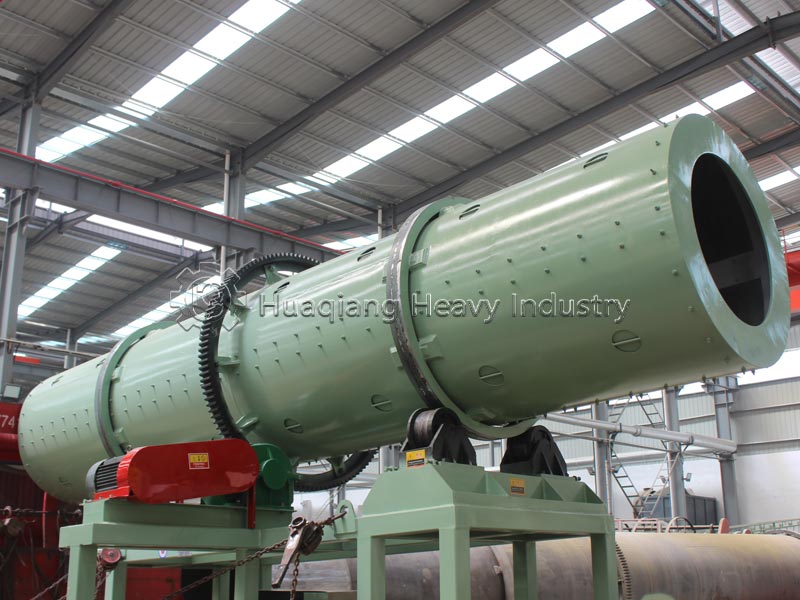
High single-unit production capacity. A rotary drum granulator with a 3-meter drum diameter can achieve an hourly output of 40–50 tons; a single production line can support a fertilizer plant with an annual capacity of 200,000 to 300,000 tons. Such output capability is difficult for other granulation equipment to match.
Self-generated liquid phase reduces the need for external water addition. Rotary drum granulation relies primarily on steam heating to trigger reactions among material components, generating the binding liquid phase internally; unlike disc granulation, it does not require continuous, large-volume water spraying. With low moisture content in the feed material and the resulting granules, the subsequent drying load is significantly reduced.
Consistent and stable granule quality. The drum operates as a closed system where materials undergo a fixed residence time and tumbling path, ensuring that every batch of granules experiences highly uniform processing conditions. The product homogeneity resulting from this standardized operation is crucial for the quality control of branded fertilizers.
Strong continuous operation capability. Rotary drum granulation is an uninterrupted process from feed to discharge—free from batch intervals or start-stop losses—allowing for stable, 24-hour operation. For enterprises aiming to maximize equipment utilization and output, this translates into tangible economic benefits.

In terms of process layout, the rotary drum is typically positioned after the proportioning and mixing stages and before drying and cooling. Uniformly mixed powder is conveyed via a bucket elevator to a hopper above the drum, with the feed rate controlled by a quantitative belt scale. Wet granules discharged from the drum (at approximately 50–65°C) fall directly into the dryer inlet; this minimizes heat loss and enhances drying efficiency.
Steam system integration. A low-pressure boiler generates saturated steam (0.3–0.6 MPa), which is piped to the drum’s feed end and injected evenly into the interior via nozzles. A central control system interlocks steam pressure and flow rate adjustments with feed volume and granulation performance, ensuring stable and controllable liquid-phase generation.
Screening and material return loop. Material discharged from the rotary drum undergoes drying and cooling before entering the screening machine; undersized fines and small particles are conveyed back to the mixer to be blended with fresh raw materials before re-entering the drum. This recirculation loop ensures high pelletization rates and efficient raw material utilization across the entire production line.
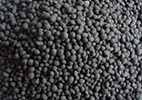
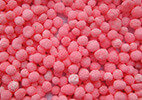
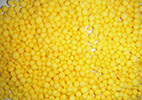
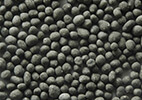
In the organic fertilizer industry, by scientifically blending fermented livestock manure, straw powder, humic acid, and other organic materials with appropriate amounts of inorganic nutrients, rotary drum granulation enables the production of granular fertilizers with high organic matter content. Furthermore, functional microbial agents can be added after the cooling stage to create bio-organic fertilizer products that offer both quick-acting and long-lasting effects. This production process combines the long-term soil-improving benefits of organic fertilizers with the high efficiency and scalability characteristic of rotary drum granulation.
In the compound fertilizer industry, ammonium phosphate-based compound fertilizers represent major application; under steam heating, ammonium phosphate generates a substantial liquid phase, facilitating rapid pelletization and producing granules with excellent strength. High-nitrogen, urea-based formulations also suit the rotary drum process, as the high solubility of urea provides the necessary liquid phase for binding. Organic-inorganic compound fertilizers (with organic matter content not exceeding 30%) can also be granulated using this method, with the liquid phase generated by the inorganic components aiding the pelletization process.
In the chemical and metallurgical sectors, certain chemical powders require agglomeration and granulation to improve flowability and ease of use, and rotary drums offer a solution for large-scale production. Similar drum-type equipment is also employed in the metallurgical industry to pelletize fine ore.