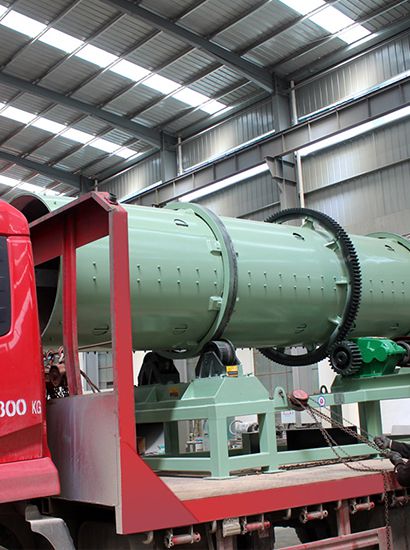
While both bio-organic and NPK fertilizer production lines may appear to follow the same basic sequence—batching, mixing, granulating, and packaging—their underlying operational logic is fundamentally different. The former is essentially about “cultivating microbes,” while the latter is about “formulating salts.” This distinction dictates entirely different processes and equipment requirements.
Fermentation and Maturation: Unique to bio-organic fertilizer production lines. Raw materials for bio-organic fertilizers must undergo aerobic fermentation and a secondary maturation phase to allow beneficial microbes to proliferate and stabilize. This requires specialized infrastructure, such as compost turning machines, fermentation bays, and maturation silos, where the turning process must be gentle and oxygen supply uniform. NPK lines, by contrast, skip the fermentation stage; raw materials are pulverized, measured, and mixed immediately upon arrival, resulting in a much shorter production cycle.
Temperature Control: One is heat-sensitive; the other is not. Bio-organic lines require “low-temperature care” throughout the process. Drying temperatures are typically kept below 60°C, and granulation methods—such as extrusion or low-temperature disc granulation—are chosen specifically to prevent high heat from killing the functional microbes. NPK lines, however, frequently employ high-temperature drying, with inlet air temperatures often exceeding 200°C. The granules are rapidly dehydrated, cooled, and packaged, with no risk of “killing off microbes.”
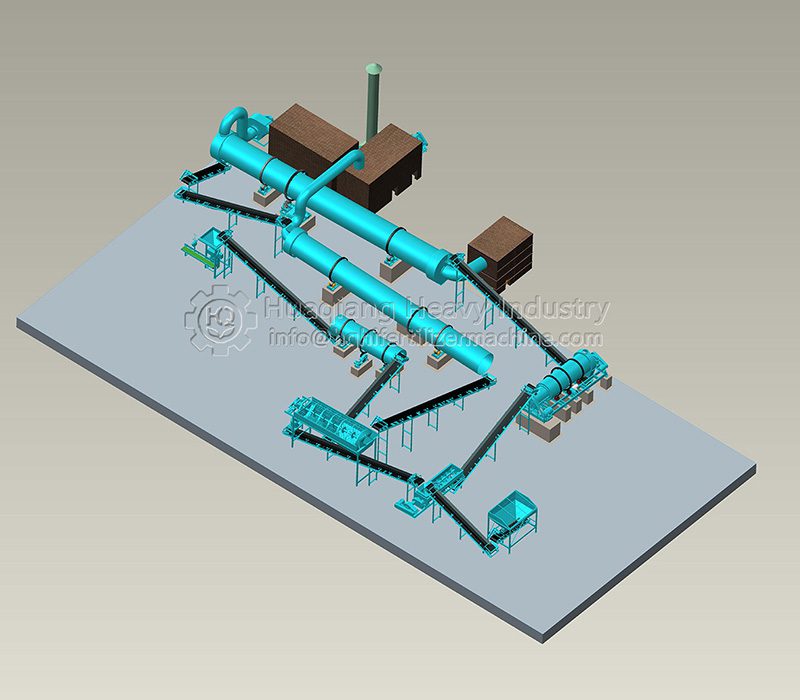
Mixing and Granulation: One focuses on preventing contamination; the other on preventing caking. Bio-organic lines are highly susceptible to cross-contamination by unwanted microorganisms; therefore, equipment interiors must be smooth and easy to clean, with material-contact surfaces often made of stainless steel. Mixing intensity is kept moderate to avoid damaging the carriers that house the microbial populations. Granulation typically utilizes disc or extrusion methods, prioritizing good granule disintegration. NPK lines, conversely, prioritize high-intensity mixing and granule structural integrity—often employing double shaft paddle mixers and rotary drum granulators—with a focus on nutrient uniformity and the prevention of caking.
Facility layout and investment priorities also diverge. Bio-organic production facilities must be partitioned into distinct zones—inoculation, fermentation, and finished product storage—with capital directed toward fermentation systems, low-temperature drying, and contamination control. NPK facilities focus on moisture protection for raw materials, corrosion resistance for equipment, and dust recovery, with investments concentrated on precise batching, high-intensity mixing, and high-temperature drying.
Neither type of production line is inherently “more advanced” than the other; rather, each is designed to serve the specific logic of its respective product. First, decide clearly whether you are producing “live microbial fertilizer” or “mineral fertilizer”—once that is determined, the path forward will naturally become clear.