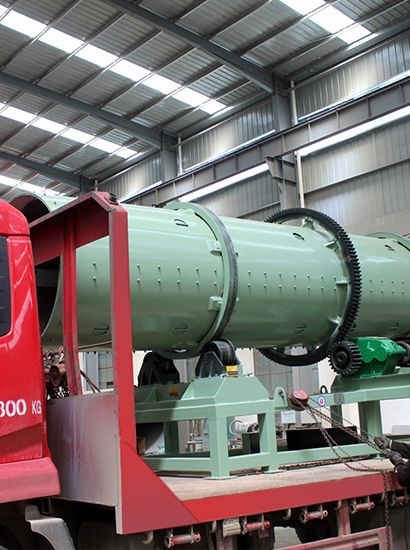
Both bio-organic fertilizer production lines and disc granulation production lines are utilized for processing organic fertilizers; however, they differ significantly in their intended positioning, process priorities, and suitable application scenarios. The fundamental distinction lies in the completeness of the overall workflow and the specific functional emphasis of each system.
Core Applications and Process Priorities: The bio-organic fertilizer production line centers on preserving the viability of beneficial microorganisms. Its comprehensive workflow encompasses every stage—including fermentation, crushing, mixing, and granulation—with a primary focus on precisely controlling fermentation and drying temperatures to prevent microbial inactivation. In contrast, the core function of the disc granulation production line is solely granulation; it does not incorporate a fermentation stage. Compatible with a wide variety of organic fertilizer raw materials, it achieves granule formation through the rolling action of a rotating disc, prioritizing the regulation of rotation speed and tilt angle to maximize granulation efficiency.
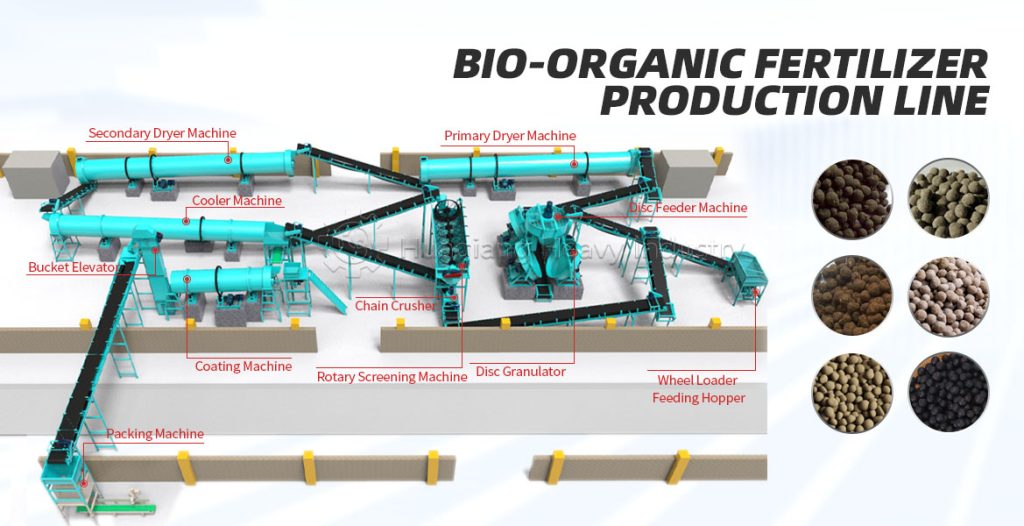
Suitable Scenarios and Flexibility: The bio-organic fertilizer production line features a fixed, integrated workflow, making it ideally suited for large-scale, specialized bio-organic fertilizer processing operations. It necessitates accompanying fermentation facilities and typically entails higher capital investment and a larger footprint. Conversely, the disc granulation production line features a streamlined workflow and is capable of standalone operation, making it well-suited for small-to-medium-scale processing. It offers greater flexibility, capable of granulating both bio-organic fertilizers and standard organic fertilizers without requiring complex ancillary equipment.
In Summary: The fundamental difference between the two systems lies in whether or not they incorporate a biological fermentation stage and whether their primary focus is on preserving microbial viability. By selecting the appropriate system based on specific operational requirements, manufacturers can achieve highly efficient production.