The double axis paddle mixer serves as a core pre-processing unit in fertilizer production, widely utilized for the mixing and conditioning of materials in both organic and compound fertilizer manufacturing. Many industry professionals wonder which type of processing it is better suited for; in reality, however, it holds no absolute bias. Its suitability depends entirely on the specific material characteristics and processing requirements, offering distinct advantages tailored to each type of fertilizer.
When applied to organic fertilizer processing, the core advantages lie in its strong adaptability and high tolerance for variability. Organic fertilizer raw materials are often complex—typically consisting of composted livestock manure, crop straw, and similar substances—and are characterized by uneven moisture distribution, a tendency to agglomerate, and the presence of impurities. The double axis paddle mixer employs a bidirectional, staggered mixing action that effectively breaks up clumps without leaving any dead zones; this ensures a uniform blend even when the condition of the raw materials fluctuates.
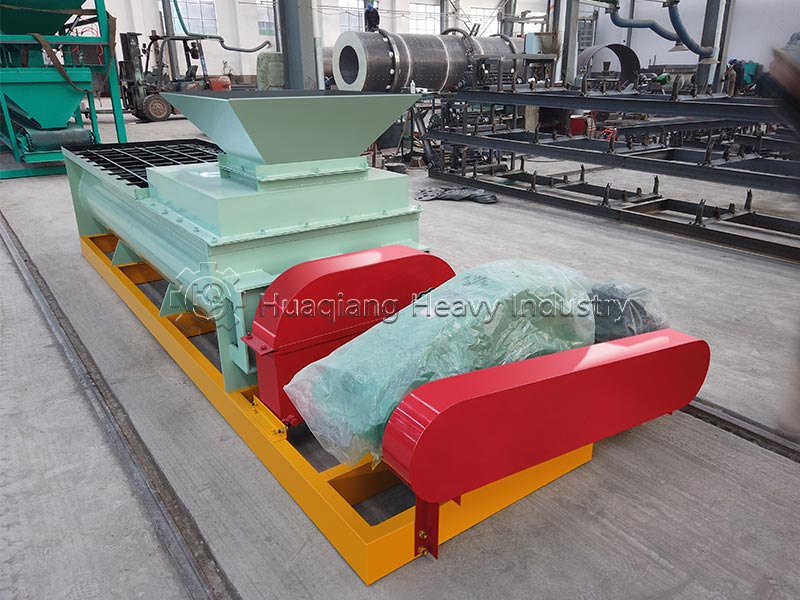
When applied to compound fertilizer processing, the core advantages are precise mixing and controllable conditioning. Compound fertilizers require the blending of nitrogen, phosphorus, potassium, and various macro- and micro-elements according to specific, fixed formulas, placing extremely high demands on mixing uniformity. The double axis paddle mixer delivers high mixing efficiency and sufficient precision, ensuring that raw materials are thoroughly integrated and preventing the localized concentration (or “enrichment”) of specific nutrients.
In summary, the double shaft paddle mixer is highly efficient and well-suited for the processing of both types of fertilizers; there is no absolute “better fit.” Organic fertilizer processing prioritizes adaptability to complex raw materials, whereas compound fertilizer processing prioritizes precise mixing; therefore, the choice of application should be determined based on one’s own specific materials and operational requirements.