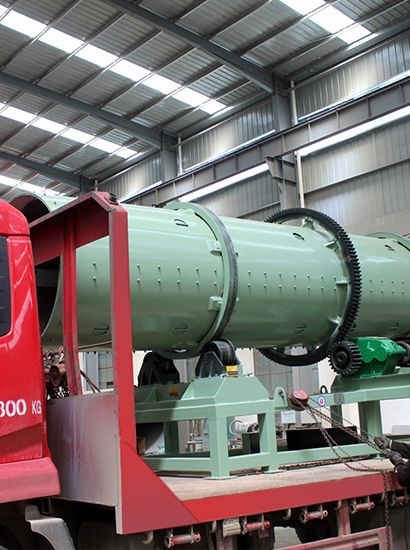
The quality of the finished nitrogen fertilizer granules depends not only on the granulation effect of the fertilizer granulator, but also crucially on the pre-treatment of materials. As the core pre-processing equipment in nitrogen fertilizer granulation, the double axis paddle mixer’s mixing and conditioning performance comprehensively affects granulation efficiency, granule quality, and nutrient stability.
The most critical function of this equipment is to improve the uniformity of material mixing. Nitrogen fertilizer raw materials are mostly in powder form, requiring the addition of binders and conditioning agents to assist in granulation. The double axis paddle mixer can achieve thorough mixing without dead zones, eliminating problems such as nutrient enrichment and uneven distribution of auxiliary materials.
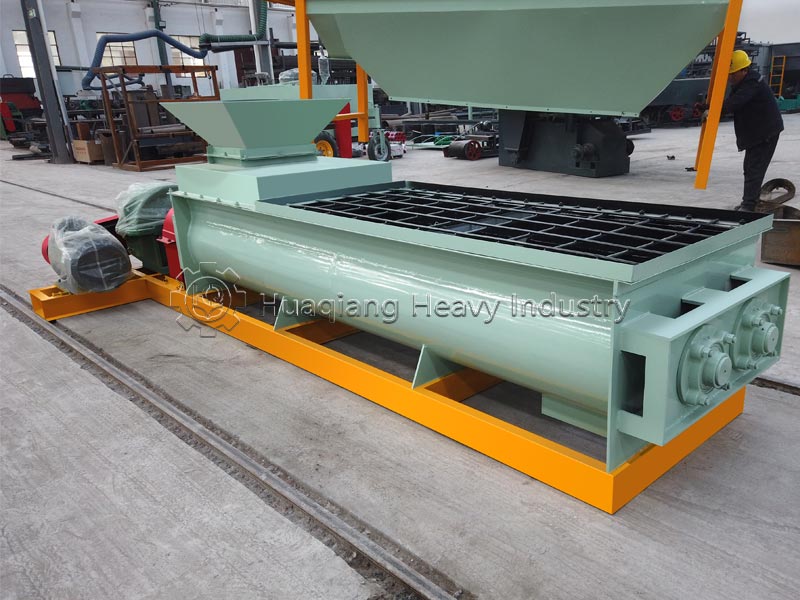
Secondly, it optimizes the conditioning state of the materials. Nitrogen fertilizer raw materials exhibit significant differences in hygroscopicity; materials that are too dry cannot clump together, while materials that are too wet will stick to the equipment and are prone to deterioration. The double axis paddle mixer can precisely control the amount of moisture and auxiliary materials added, adjusting the material’s moisture and viscosity to the optimal granulation state.
In addition, it can stabilize the operation of the granulation production line. Homogenized and conditioned materials feed more smoothly, reducing equipment wear and the probability of malfunctions, minimizing production losses, and ultimately producing compact, uniform nitrogen fertilizer granules with stable nutrient content. This facilitates storage and transportation while ensuring fertilizer effectiveness in the field.
In summary, although the double axis paddle mixer does not directly granulate, it controls material quality from the source, improving nitrogen fertilizer granulation efficiency.