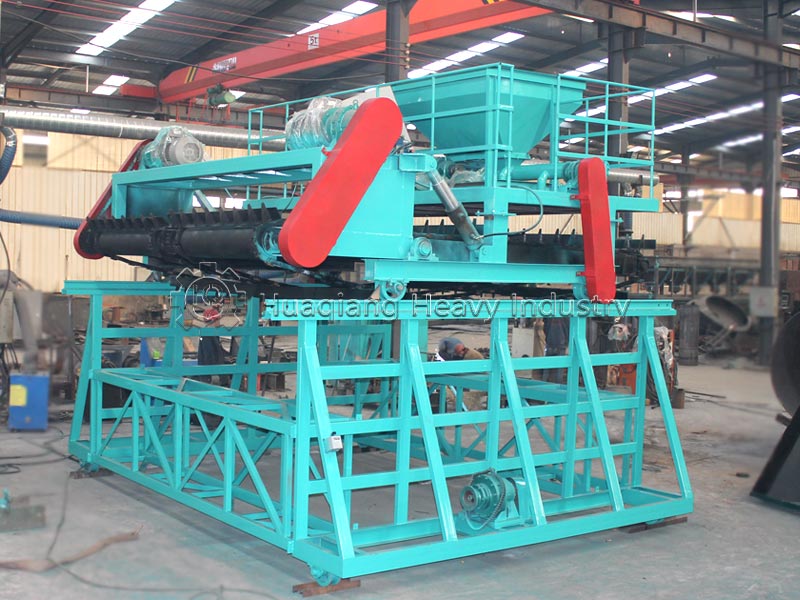
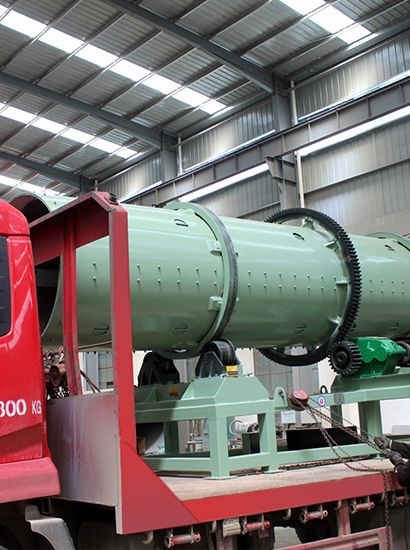
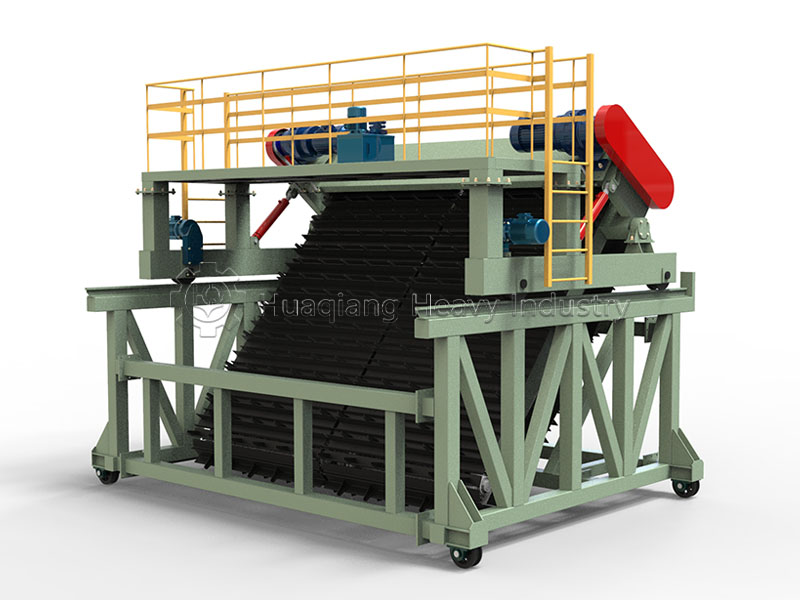
The chain compost turning machine is a specialized piece of equipment used in trough-type aerobic fermentation processes, employing a chain-driven scraper for deep turning of the compost. Its core working principle involves a circular chain driving multiple sets of transverse scrapers to circulate within the material layer, scooping up the entire layer of material from the bottom of the trough and turning it backward. This scraper-type turning action is gentle and orderly, resulting in distinct layers and neat displacement of the material after turning, unlike high-speed toothed rollers which scatter the material everywhere. The equipment has a simple and transparent structure; the chain and scrapers are the main working components, making daily maintenance readily apparent, allowing operators to perform all maintenance themselves. For trough composting projects that prioritize robust and durable equipment and want to minimize maintenance effort, the chain compost turning machine offers a practical turning solution with low operating barriers and low maintenance costs.
The initial stage of the process involves material preparation and trough loading. Livestock manure is mixed with straw powder, rice husks, and other auxiliary materials according to a preset formula, adjusting the moisture content to a state where it can be formed into a ball when squeezed in the hand, but does not drip water between the fingers. The uniformly mixed material is loaded into the fermentation tank from the feed end by a loader and piled to the designed height allowed by the equipment.
Natural heating stage: Aerobic microorganisms rapidly multiply under suitable moisture and nutrient conditions, and the temperature inside the tank rises to above 50°C within two days. During this stage, the pile is not turned, allowing the material to quickly complete its initial heating.
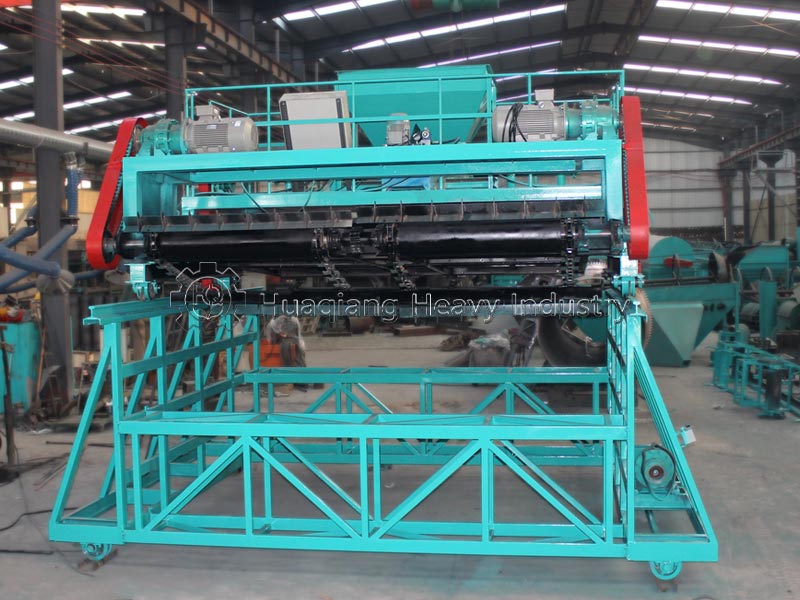
After entering the high-temperature turning stage, the chain compost turning machine begins timed operation. The equipment moves slowly along the tank track, with the chain driving scrapers to circulate within the material layer. The scrapers scoop up the entire layer of material from the bottom of the tank, and after reaching a certain height with the chain, the material flips backward and falls, with the landing point moving a fixed distance towards the discharge end. After turning, the material is loose and aerated, oxygen is fully replenished, and the tank temperature quickly returns to the high-temperature range after a brief dip. During the high-temperature period, the pile is turned once or twice a day for 7 to 10 days, maintaining the tank temperature at 50 to 70°C.
Maturation stage: The temperature gradually decreases, and the frequency of turning is reduced to once every two to three days. The material is steadily pushed towards the discharge end with each turning, completing the entire length of the trough in 15 to 20 days. The fully decomposed organic fertilizer is then removed from the discharge end.
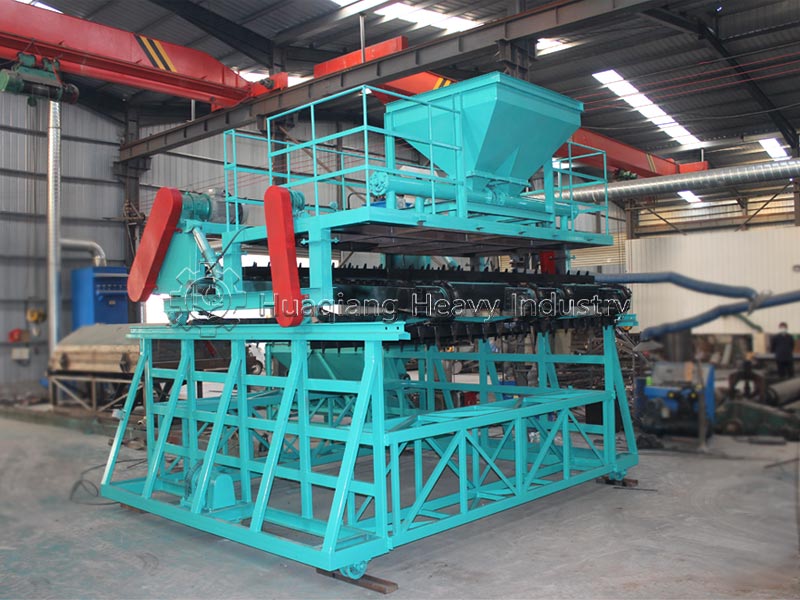
The turning action is gentle, and the material layers are clearly defined. The scraper scoops up the material layer by layer and then flips it down, ensuring orderly material movement and preventing it from being loosened and scattered. The material gradient from the inlet to the outlet is clear, and the fermentation days are precisely controllable. This feature simplifies process management—operators only need to record the inlet date and turning frequency for each trough to accurately monitor the material’s decomposition progress.
It is highly adaptable to long-fiber materials. Long-fiber auxiliary materials such as straw and rice husks are less prone to tangling during the scraper’s pushing process, and there are no small gaps between the chain and the scraper that could cause fibers to become embedded and jammed. The chain compost turner can operate continuously for extended periods with formulas containing high straw content.
It has low operating energy consumption and maintenance costs. Chain drive is highly efficient; the power required for scraper pushing is less than that of spiral shearing and toothed roller spreading, resulting in lower power consumption for the same processing capacity. Only the scraper and chain are vulnerable parts, making replacement simple and parts inexpensive. Routine maintenance does not require specialized technicians; operators can handle it.
It provides uniform oxygen supply and eliminates anaerobic dead zones. The scraper scrapes material from the bottom of the trough, thoroughly turning over the bottom layer and preventing long-term accumulation and anaerobic foul odors. After the entire layer of material is turned over, it comes into full contact with air, allowing oxygen to penetrate evenly throughout the material layer, resulting in consistent fermentation within the trough.