
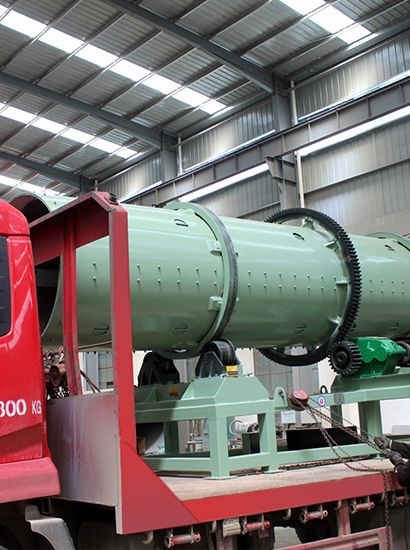
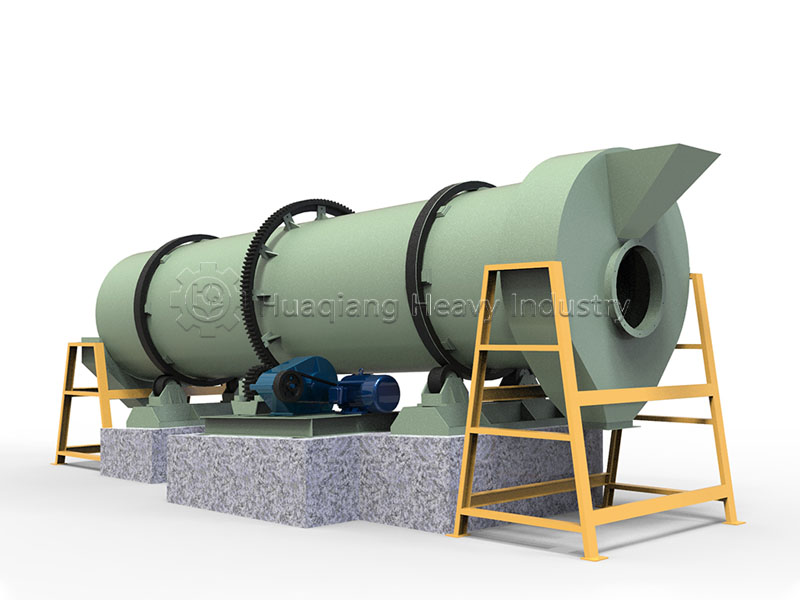
The fertilizer coating machine is a critical piece of post-processing equipment in granular fertilizer production lines, situated between the screening and packaging stages. It applies a protective coating to the finished granules. Although granular fertilizers meet factory standards after drying, cooling, and screening, they remain susceptible to caking, moisture absorption, and dust formation during storage and transport. By forming a protective layer on the granule surface, the coating machine effectively blocks moisture and air, reduces inter-granule adhesion, and enhances the product’s appearance—making the granules glossier and smoother. This process is essential for increasing the fertilizer’s commercial value and market competitiveness.
The coating process utilizes a continuous drum-based method. Screened granules are fed into the machine’s inlet via a belt conveyor. A liquid coating agent is evenly sprayed onto the tumbling granules using metering pumps and nozzles; powdered coating agents can also be added for a synergistic effect. Inside the drum, the granules are continuously tumbled and rubbed against each other, ensuring the coating agent evenly covers every granule to form a protective layer.
After coating, the material exits the machine and undergoes a brief curing period before packaging. Process parameters—such as drum rotation speed, liquid spray volume, powder addition rate, and processing time—are adjusted based on the specific fertilizer type and coating requirements.

Excellent anti-caking performance; the fertilizer remains loose and free-flowing even after more than six months of storage.
Glossy, attractive granule surfaces enhance the product’s visual appeal and market positioning.
Reduced dust generation; no airborne dust during application, ensuring a better user experience.
Allows for the addition of trace elements or functional additives, imparting extra capabilities to the fertilizer.
Simple process that integrates seamlessly with screening and packaging stages, resulting in high production efficiency.

Selection should be based on production line capacity; the coating machine’s throughput must match the screening machine’s output. Drum diameter and length are determined by hourly production volume and required coating time (organic fertilizer granules typically require shorter coating times, whereas compound fertilizer granules require longer durations).
