
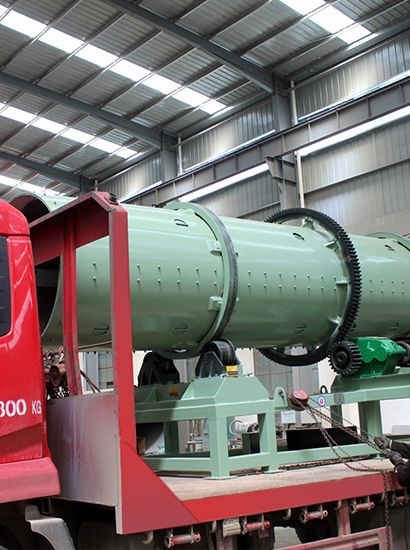
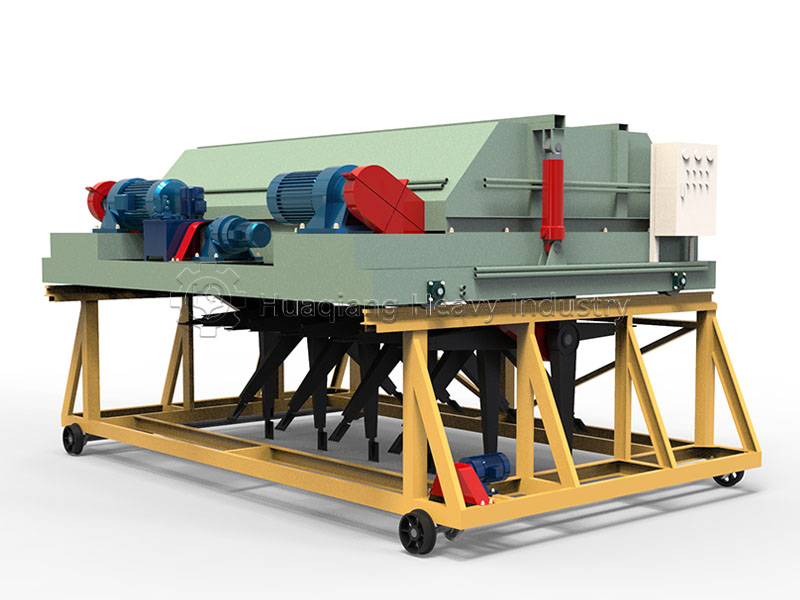
The hydraulic compost turner is the core turning equipment for the aerobic fermentation stage in industrial fertilizer production lines. Designed for large-scale, continuous production, it replaces traditional mechanical direct-drive structures with a fully hydraulic transmission system, enabling flexible control over turning depth, travel speed, and load protection. The machine integrates with the production line’s master control system to synchronize with production pacing. While retaining the advantages of high space utilization and a stable decomposition environment inherent to channel-type fermentation, it significantly enhances automation and operational reliability, making it a preferred choice for upgrading modern fertilizer production lines.
During operation, the equipment dynamically adjusts its parameters based on the material’s fermentation state in different sections of the channel: In the fresh material zone at the feed end, a deeper turning depth and slower travel speed are employed to thoroughly break up high-viscosity, high-moisture materials and incorporate air, rapidly activating aerobic microorganisms.
In the central high-temperature reaction zone, a stable turning frequency is maintained; the turning action dissipates excess heat and exhaust gases, sustaining a high-temperature (55–70°C) environment for pathogen elimination while ensuring the oxygen supply required for microbial metabolism.
In the maturation zone at the discharge end, the turning roller is raised and travel speed increased; light turning maintains pile aeration, promoting gradual cooling and maturation of the material into humus.
The process can be supplemented with a channel-bottom aeration system for additional oxygen supply; combined with the hydraulic equipment’s flexible adjustment capabilities, this enables a continuous assembly-line workflow for material feeding and decomposition.

Stable and controllable decomposition cycle: The enclosed channel offers excellent thermal insulation. Combined with the hydraulic turner’s precise parameter adjustment, fluctuations in pile temperature and oxygen levels are minimized. The fermentation cycle is stably controlled at 15–20 days—nearly half the time required for open-air windrow composting—resulting in consistent decomposition across batches and uniform product quality.
More thorough sanitization: High temperatures (above 55°C) can be stably maintained for 7–10 days, effectively eliminating pathogens, parasite eggs, and weed seeds. Full-trough turning ensures no “dead zones” and high material homogeneity, making it easier for the finished fertilizer to meet industry sanitization standards.
Higher land utilization efficiency: Utilizing a vertical trough-style stacking method allows for material depths of up to 1.5 meters. The processing capacity per unit of land area is 2–3 times that of windrow composting, significantly reducing the footprint of the fermentation facility—an ideal solution for sites with limited space.
Lower environmental control costs: Fermentation takes place within enclosed troughs, allowing for the integration of negative-pressure gas collection and biological deodorization systems. This minimizes fugitive emissions and dust, concentrates dust generation points for easier collection and treatment, and substantially lowers investment in environmental compliance.
Flexible production capacity: Processing scale can be easily adjusted by adding or removing fermentation troughs or modifying turning frequency. The stepless speed regulation of the hydraulic system allows for rapid adaptation to varying raw material properties and seasonal temperature fluctuations, offering far greater operational flexibility than mechanical drive systems.
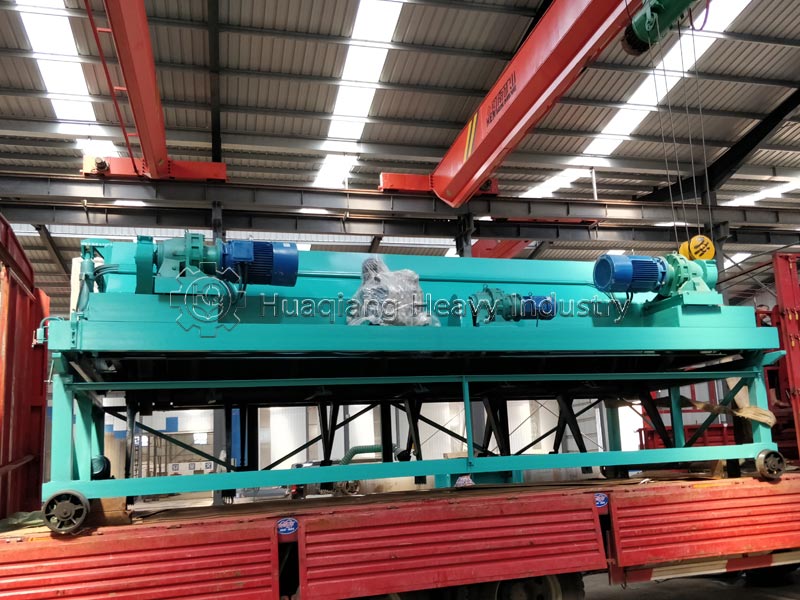
The hydraulic trough-type compost turner operates at the core fermentation stage of the fertilizer production line. Situated between raw material pre-treatment and the post-treatment of decomposed material, it is a critical component determining the quality of organic fertilizer decomposition and the overall line capacity.
During operation, raw materials—conditioned by crushers and mixers—are evenly fed into the fermentation troughs by distribution equipment. The hydraulic turner performs turning operations on a preset cycle, ensuring material decomposition proceeds in sync with the production rhythm. The equipment integrates with the production line’s central control system, coordinating with upstream distribution machinery and downstream discharge conveyors to match the overall production pace, thereby preventing capacity loss caused by process misalignment.
Equipment can be flexibly configured to suit fertilizer production lines of varying capacities: small-to-medium lines can utilize a setup where a single machine serves 2–3 fermentation channels—switching between channels via a transfer carriage—to minimize initial equipment investment; large-scale lines can employ a “one-machine-per-channel” configuration integrated with automatic material feeding and discharge systems to achieve a fully automated fermentation process.
