
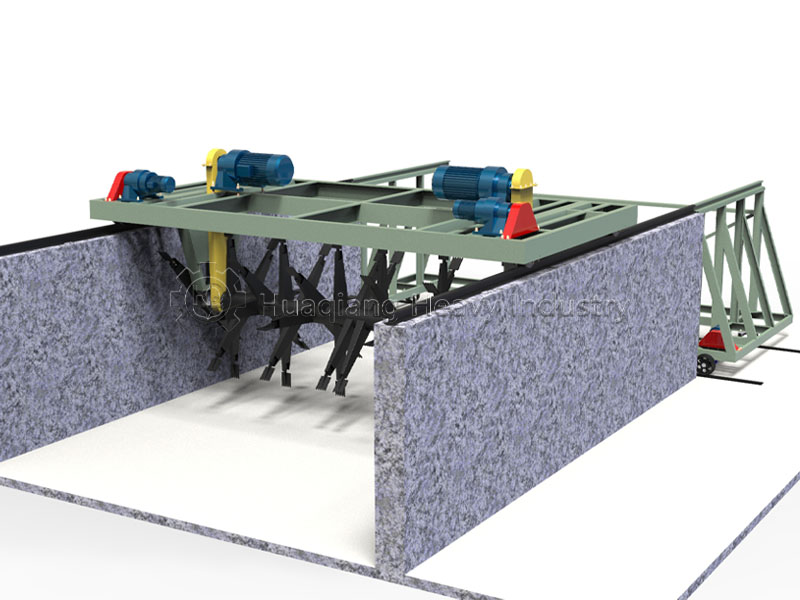
The simple trough-type turner is a core piece of equipment in the aerobic fermentation process for organic fertilizer. It is responsible for periodically turning, aerating, and shifting the organic materials piled within the fermentation trough. Mounted on rails running along both sides of the trough, the machine travels back and forth; its high-speed rotating tined roller scoops material from the bottom, breaks it up, and throws it backward, causing the material to shift toward the rear as it resettles. A single unit can serve multiple parallel troughs, switching flexibly between them via a transfer carriage, thereby ensuring high equipment utilization. Featuring a compact structure, reliable drive system, and ease of operation and maintenance, this equipment is available in models ranging from capacities of a few tons to over a hundred tons per day. It is a practical choice for small-to-medium-scale composting projects seeking to control fermentation quality and shorten the maturation cycle.
Step 1: Raw material preparation and loading. Livestock manure is mixed thoroughly with bulking agents—such as straw or rice husks—to achieve the optimal carbon-to-nitrogen (C/N) ratio and moisture content. The mixture is then loaded into the fermentation trough and piled to the equipment’s design height. Once loaded, the material sits in a static pile, allowing aerobic microorganisms to naturally proliferate under suitable moisture and nutrient conditions.
Step 2: Temperature rise and high-temperature maintenance. Within 24 to 48 hours of loading, microbial metabolic heat causes the material temperature to rapidly exceed 50°C, marking the start of the high-temperature fermentation phase. During this stage, the turner travels the full length of the trough once or twice daily; the rotating tined roller lifts material from the bottom and throws it backward, ensuring full contact with the air before it settles back into the trough.
Step 3: Maturation and displacement. As the turner operates on a daily schedule, the entire mass of material shifts backward by approximately two to three meters with each turning cycle. After 15 to 20 days of continuous turning, the material gradually moves from the feed end to the discharge end, passing through stages of high-temperature decomposition and subsequent maturation; organic matter is thoroughly degraded, while pathogens and weed seeds are effectively inactivated by the sustained high temperatures.
Step4: Involves discharge and post-processing. The matured material is removed from the discharge end and—following crushing and screening—can serve as raw material for subsequent granulation and packaging processes or be used directly as powdered organic fertilizer.
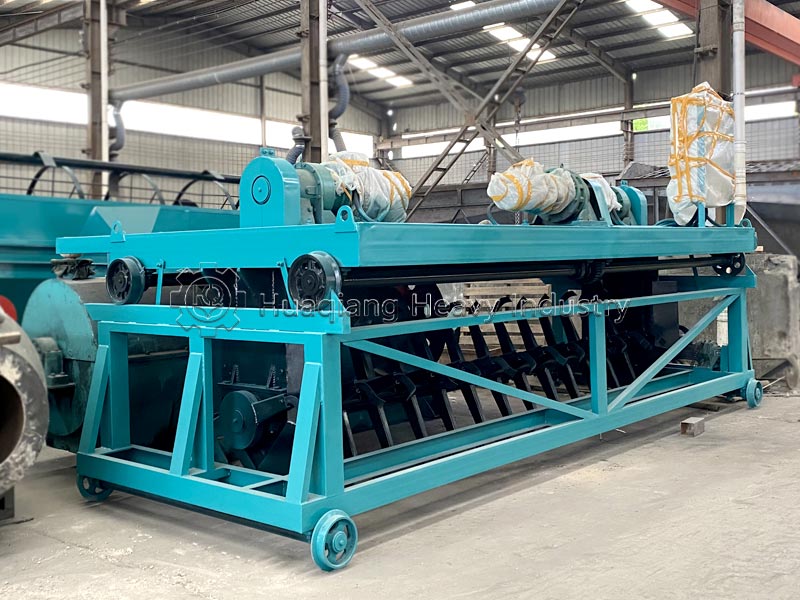
Controllable and efficient fermentation. Parameters such as turning frequency, travel speed, and ventilation conditions can be flexibly adjusted based on the material’s state and the specific fermentation stage. Turning the material once or twice daily during the high-temperature phase ensures sufficient oxygen supply, while reducing frequency during the maturation phase lowers energy consumption. The material undergoes a thorough and uniform high-temperature phase within the trough; the fermentation cycle is more than 50% shorter than that of natural composting, resulting in a high degree of maturity and consistent product quality.
Simple operation and low labor requirements. These turners can be configured with automatic reciprocating and timed operation programs, allowing a single operator to manage daily turning across multiple fermentation troughs. Operation is straightforward—requiring only brief training for workers to operate independently—and labor costs are significantly lower compared to windrow composting methods that require frequent equipment relocation.
Minimal heat loss and excellent heat retention. Materials are densely packed within the trough, with exposure to air limited to the top and sides; the material spends little time airborne during turning, resulting in minimal heat loss. This characteristic allows trough fermentation to maintain high temperatures even during the cold autumn and winter seasons, making production less susceptible to seasonal impacts than open-air windrow composting.
Clean workshop environment and controllable odors. Fermentation takes place within fixed troughs, preventing material spillage during turning. When combined with trough-bottom ventilation and workshop exhaust/deodorization systems, the process ensures a clean working environment with minimal odor, reduces the impact on the surrounding area, and facilitates compliance with environmental regulations.
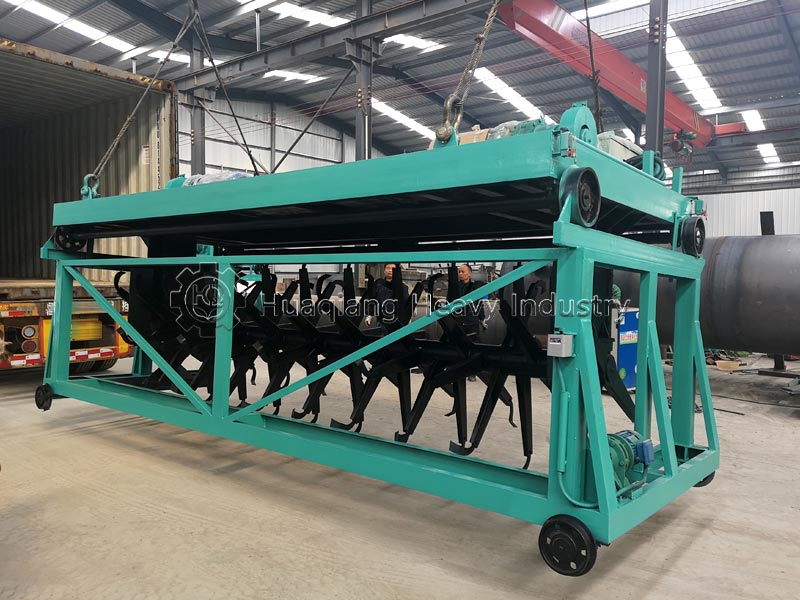
In an organic fertilizer production line, the fermentation stage utilizing a simple trough compost turning machine is situated after raw material pre-treatment and before the crushing and granulation stages. The turner travels along the channel at scheduled intervals each day to turn the material; within the channel, the material undergoes a high-temperature fermentation and maturation process lasting 15 to 20 days. By the time it is discharged, the moisture content has dropped to 30%–35%, and the organic matter has fully decomposed.
Once discharged, the fermented and matured material enters a half-wet material crusher to break up clumps, followed by a rotary screen to remove large, undecomposed pieces and impurities. The screened material constitutes qualified organic fertilizer powder, which can either be packaged and sold directly or proceed to the granulation stage.
Within the fermentation section, the simple trough compost turning machine can be used in conjunction with a channel-bottom aeration system. Blowers supply oxygen to the material through aeration pipes laid at the bottom of the channel, complementing the mechanical turning action of the machine; this setup is particularly suitable for processing materials with high moisture content or high bulk density.

| Model | Main Motor | Walking Motor | Lifting Motor | Mobile Car Motor |
| FD3 | 7.5kw*2 | 1.5kw | / | 1.5Kw |
| FD4 | 11kw*2 | 1.5kw | / | 1.5Kw |
| FD5 | 15kw*2 | 2.2kw | 0.75kw | 1.5Kw |
| FDT3 | 7.5 kw*2 | 1.5kw | 0.75 kw | 1.5Kw |
| FDT4 | 11kw*2 | 1.5 kw | 0.75 kw | 1.5Kw |
| FDT5 | 15kw*2 | 2.2 kw | 0.75 kw | 1.5Kw |