
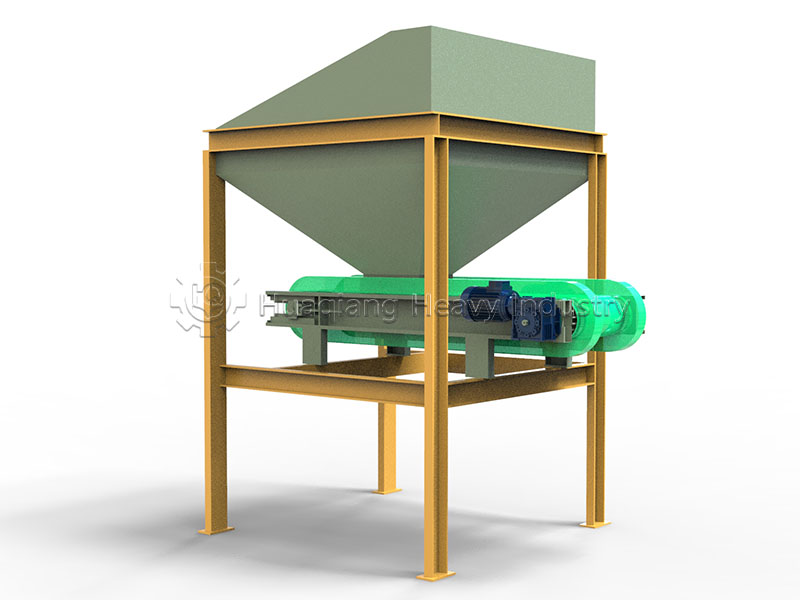
The single silo single weigh dynamic automatic batching system, with its economical investment and reliable operation, has become the preferred solution for small and medium-sized fertilizer enterprises to achieve automated batching. Unlike multi-bin, multi-weighing systems, it does not require high investment; instead, it reduces equipment investment and civil engineering requirements with its simple single-silo, single-weighing structure while ensuring metering accuracy. The system can automatically complete the metering and feeding of various raw materials according to preset formulas, significantly reducing the labor intensity of batching workers and eliminating human measurement errors. For organic fertilizer, compound fertilizer, and blended fertilizer manufacturers with limited funds but who pursue stable product quality, this batching system is an economical and practical choice to improve the automation level of the batching process and ensure the nutrient qualification rate of the finished product.
During operation, the feeding screws of each raw material bin sequentially feed materials into their respective weighing hoppers according to the formula sequence. The weighing sensor in each weighing hopper transmits the weight signal to the control system in real time. The dynamic weighing module filters the signal to obtain the current material weight. The feeding process is divided into two stages: a fast stage to complete most of the feeding, and a slow stage to precisely replenish the remaining amount. When the target value of the formula is reached, feeding stops and the metering value of that bin is locked. After all raw materials have been metered, the system issues a unified unloading command, and the unloading gates of each weighing hopper open synchronously or sequentially, allowing the material to fall onto the collection conveyor belt and enter the mixing section. The entire process is automatically completed by the PLC; operators only need to monitor the operating status.

Equipment investment mainly includes the purchase costs of components such as raw material bins, feeding screws, weighing hoppers, sensors, control systems, and steel platforms.
Compared to large multi-silo, multi-weighing systems, the single-silo, single-weighing structure eliminates a significant amount of redundant configuration, reducing the number of equipment units and electrical points, resulting in a total purchase cost reduction of approximately 30%-50%.
Installation and commissioning costs are relatively low; due to the modular structure and simple interfaces, installation and operation can generally be completed within a few days. Civil engineering investment is minimal; the system uses a steel structure platform for support, requiring minimal load-bearing capacity of the plant and no special foundations are needed.
Regarding operating costs, the system operates fully automatically, requiring only one operator for monitoring, saving labor costs. In the long run, improved ingredient precision leads to more stable nutrient content in the finished product, reducing returns and quality losses due to nutrient deviations, resulting in significant indirect economic benefits.

This ingredient dispensing system is suitable for fertilizer manufacturers with medium-scale production and 3-8 types of raw materials.
Small compound fertilizer plants and organic-inorganic compound fertilizer processing points are the primary target users. They require precise ingredient dispensing but have limited budgets; the single silo single weigh dynamic automatic batching system can achieve automated dispensing with a lower investment.
