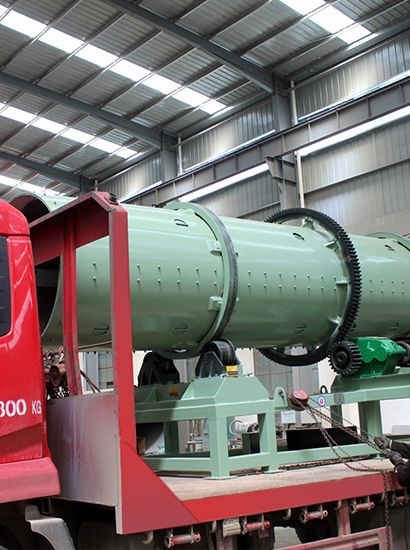
Drying and cooling are crucial processes in the NPK fertilizer production line to ensure finished product quality, directly affecting pellet strength, storage stability, and nutrient retention. These processes follow the pelleting step in the fertilizer granulator. Fertilizer pellets fresh from the granulator have a high moisture content, approximately 15%-20%. If not dried promptly, they are prone to pulverization, clumping, and mold growth, failing to meet factory and storage requirements. Therefore, they must undergo two continuous drying and cooling processes.
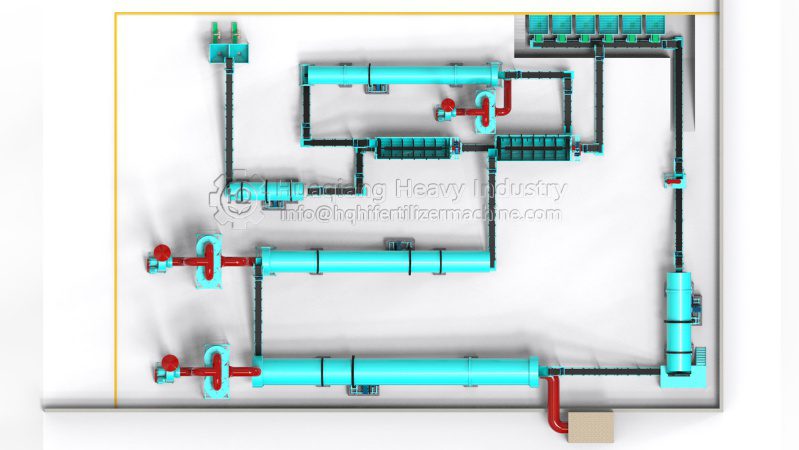
The drying system uses a hot air furnace, with the hot air temperature controlled between 150℃ and 250℃. The material is evenly distributed by the lifting plates within the rotary dryer, ensuring full contact with the hot air and rapid moisture removal. The moisture content of the outlet material must be strictly controlled at 2%-3% to ensure pellet strength. It is important to note that excessively high drying temperatures can lead to urea decomposition and nutrient loss; excessively low temperatures result in incomplete drying, affecting storage stability. For organic raw materials that have been composted by a fertilizer turner, the drying temperature needs to be appropriately reduced to avoid carbonization of organic components.
Following drying, the cooling process occurs immediately. The high-temperature granules are fed into a cooler to rapidly cool to room temperature, preventing them from continuing to react, soften, or clump due to residual heat. This process also further increases granule hardness, reducing pulverization during transport. In the NPK fertilizer production line, the proper control of airflow, air pressure, feed rate, and drum rotation speed is crucial for ensuring effective drying and cooling. A stable drying and cooling process not only improves the appearance of the finished product but also extends its shelf life, enhances market competitiveness, and works efficiently with the fertilizer granulator.