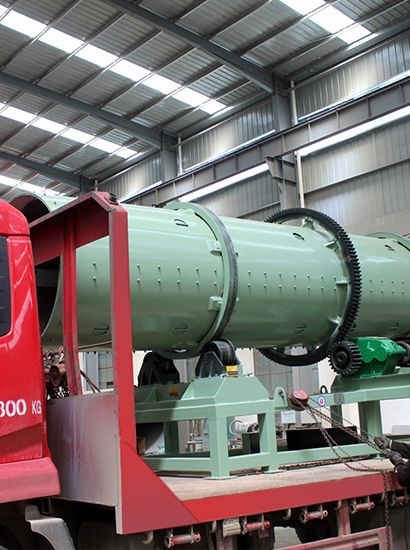
Sludge is the most troublesome by-product of municipal wastewater treatment plants. Dewatered sludge typically has a moisture content of 70%–80%, high organic matter content, a dense structure, and extremely poor permeability; if improperly handled, it not only occupies land but also causes secondary pollution. Transforming it into organic fertilizer requires a complete equipment suite covering everything from fermentation to granulation, with turning and molding serving as the two core stages.
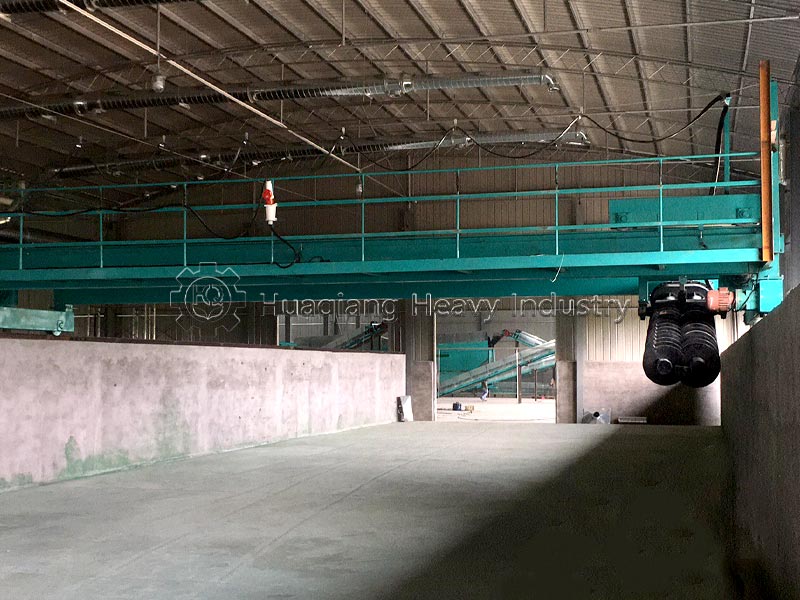
Aerobic fermentation is the first step in sludge composting. Due to the sludge’s high viscosity and tendency to clump, standard turning equipment often fails to break it up thoroughly, leading to the formation of anaerobic zones within the pile; this extends the fermentation cycle and generates significant foul odors. A reliable sludge compost fermentation machine must be capable of handling the unique challenges posed by high-viscosity, high-moisture materials. The double screws compost turning machine addresses this by using two parallel, counter-rotating screw shafts to forcibly lift material from the bottom of the fermentation tank and scatter it to both sides. This process transforms dense, sticky sludge clumps into a loose, porous mass, effectively combining turning, mixing, and aeration into a single operation. With an effective turning depth exceeding 1.6 meters, the system utilizes forced ventilation and uniform mixing to significantly shorten fermentation times and prevent odor generation.
Once the material has fully decomposed, it must be granulated to become a marketable fertilizer. Disc granulation technology is a common choice for sludge organic fertilizer production lines. It achieves a pelletization rate of over 90% and produces smooth, round granules; furthermore, it is highly tolerant of varying material moisture levels, allowing for granulation without the need for intensive pre-drying.
Viewed as a whole, the two systems are seamlessly integrated and mutually indispensable. When selecting equipment, the specifications of the compost turner should be determined based on daily sludge processing volume, followed by the selection of a disc granulator with matching capacity to ensure smooth coordination between the upstream and downstream processes.