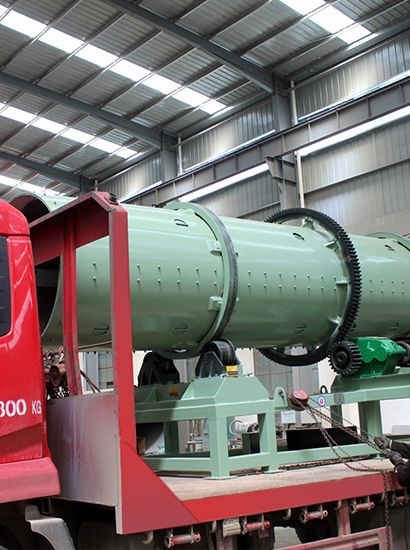
The roller press granulator production line, rotary drum granulation production line, and bio-organic fertilizer production line represent three distinct process logics; understanding these differences is essential for making the right choice.
Roller press granulator production line is a dry process in which materials are shaped by compression between two counter-rotating, high-pressure rollers; it requires no added water, binders, or hot-air drying. The line features minimal equipment and a streamlined workflow, resulting in low investment costs and energy consumption that is only 30%–50% of that required for wet processes. With a single-unit capacity of 1–5 tons per hour, it is suitable for small-to-medium-scale compound fertilizer production using low-moisture raw materials.
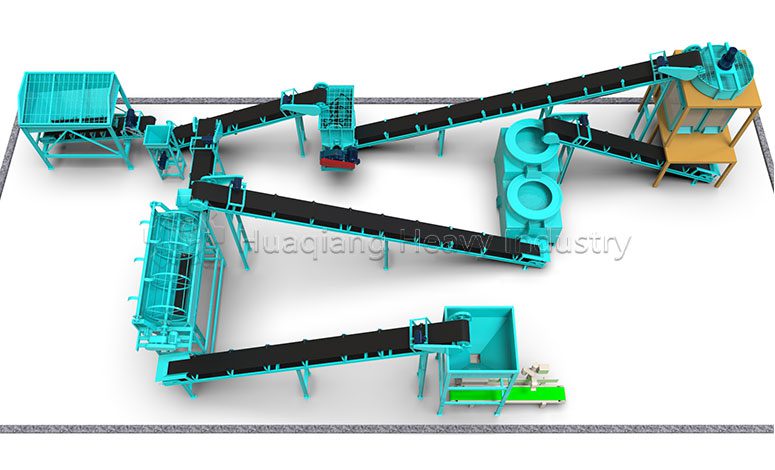
Rotary drum granulation production line is a wet process; steam or water is introduced into a rotating drum, causing powdered materials to roll and agglomerate into spherical granules under liquid-phase conditions, resulting in smooth, round particles. Single-unit capacity can reach 10–20 tons per hour, making it ideal for large-scale continuous production. However, it requires auxiliary drying and cooling systems, leading to significantly higher equipment investment and operating energy costs compared to the roller press method.
The logic behind the bio-organic fertilizer production line differs fundamentally from the other two—the core objective is not merely granulation, but the preservation of live bacteria. Raw materials require thorough aerobic fermentation and maturation, contact components must be made of stainless steel to prevent contamination, and post-granulation drying temperatures must be kept below 60°C to maintain the activity of the microbial agents. The complete line encompasses fermentation, crushing, proportioning, mixing, granulation, low-temperature drying, screening, and packaging; the investment cost is 25%–40% higher than that of a standard organic fertilizer line of similar scale.
Each line serves a specific market niche: the roller press line is suited for small-to-medium-scale projects using dry powder raw materials where low energy consumption is a priority; the rotary drum line is ideal for large-scale compound fertilizer plants seeking spherical granules; and the bio-organic fertilizer line caters to the market segment for high-value-added products containing live bacteria.