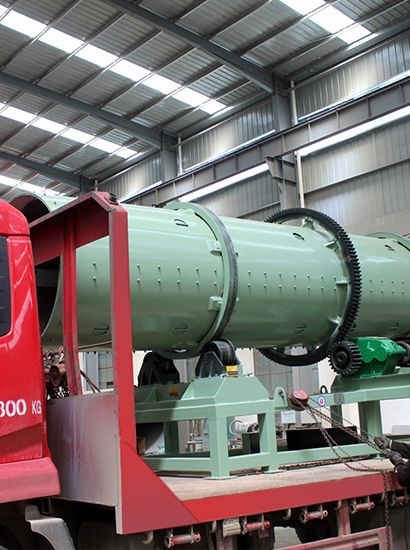
Many investors discover that, despite sharing the name “NPK fertilizer production line,” actual operational performance varies drastically. The issue often lies not with individual machines, but with the coordination of the entire line.
Formulas dictate the process. Different NPK ratios impose vastly different requirements on granulation. High-nitrogen formulas tend to be sticky, while high-potassium ones are slippery; a “one-size-fits-all” production line may not handle every formula effectively. Before selecting equipment, define the nutrient ratios of your flagship products and work backward to determine the appropriate granulation method.
Granulation is the critical dividing line. If a formula contains organic matter or sticky materials, standard NPK fertilizer lines are prone to internal caking, leading to frequent shutdowns for cleaning; robust stirring-tooth or rotary drum structures are required to ensure continuous granulation.
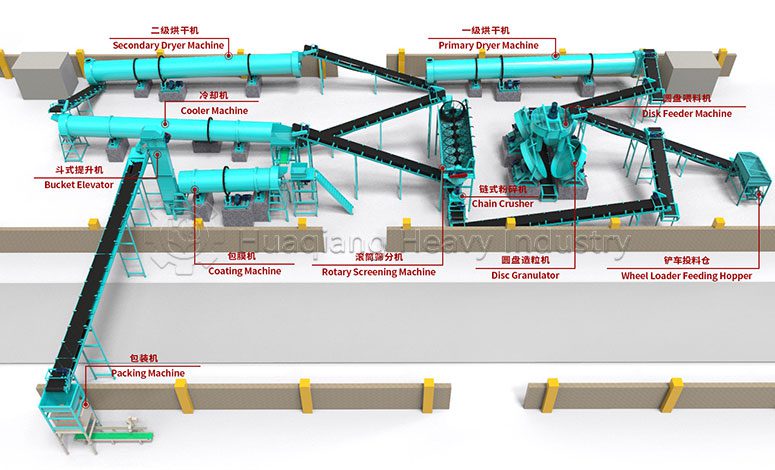
Downstream processing determines marketability. Drying, cooling, screening, and coating—if any of these stages lacks capacity, the entire NPK compound fertilizer production line will face bottlenecks. Inadequate cooling, in particular, inevitably leads to granule caking later on.
Organic-inorganic compound fertilizers present a unique challenge. When incorporating decomposed organic materials, the NPK production line must be tightly integrated with the upstream fermentation process. Excessive moisture or overly long fibers can overwhelm the granulator; therefore, the moisture content and particle fineness of the fermented material must be strictly controlled beforehand.
System-wide synergy matters more than the performance of individual machines. Even a powerful granulator will see its efficiency dragged down if its throughput doesn’t match that of the dryer. When choosing an NPK fertilizer production line, the key is balanced performance across all stages, rather than the sophistication of any single piece of equipment.
In short, efficiency gaps stem not from equipment size, but from an understanding of the process and the coordination of the entire line. A rational investment approach involves clarifying the formula first and selecting the equipment second.