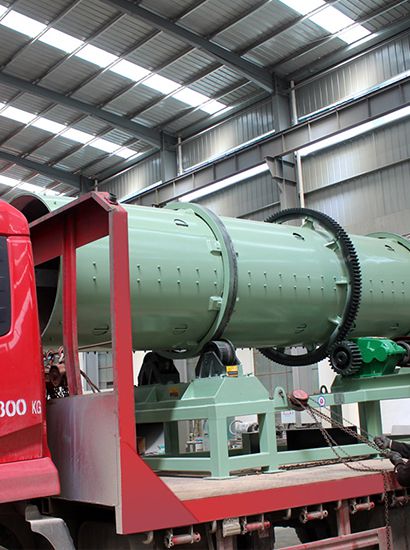
Modern new type organic fertilizer granulators have more precise requirements for raw materials than traditional equipment. Many operators oversimplify material preparation—viewing it merely as “crushing and mixing”—only to encounter issues like die clogging, material sticking to the pan, or low granulation yields. These problems almost always stem from inadequate preparation.
First, consider the degree of decomposition (maturity). Modern granulators aim for high granulation rates and minimal “recycled” material (fines or rejects); therefore, the input must be fully decomposed and stable. If the material contains undecomposed proteins or tough fibrous clumps, these create weak points during extrusion or rolling, causing the granules to crumble during the drying process. Key indicators of maturity include a temperature below 40°C, an earthy (soil-like) odor, and a uniform, dark brown color.
Second, manage moisture content. While different machine models have varying tolerances for moisture, they all struggle with fluctuations. If the moisture content of the material coming from the composting/turning process varies, the granulator cannot produce consistent granules. It is best to include a “homogenization and aging” silo in the preparation stage, allowing the material to rest for 12–24 hours so that moisture can redistribute evenly before entering the granulator.
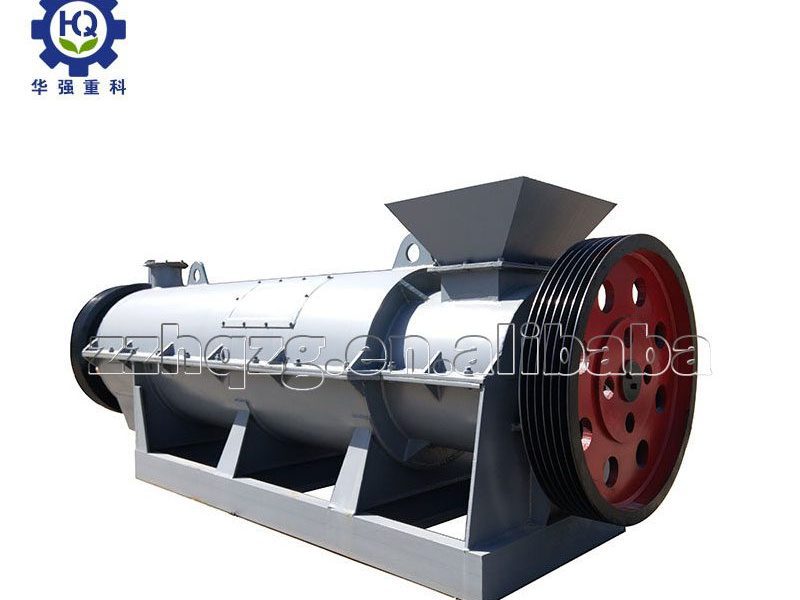
Third, address particle fineness and fiber content. If the material is too coarse, the resulting granules will have a rough surface and poor structural strength; if it is too fine, the material lacks a “skeleton,” making it prone to over-compaction and sticking to the dies. Modern granulators typically require a fineness of 20–40 mesh, while retaining a small amount of short fiber to act as a structural framework. After crushing, use screening to set an upper limit on particle size—finer is not necessarily better.
Fourth, eliminate impurities. Debris such as stones, plastic film, or metal fragments can cause severe wear to dies and roller surfaces; therefore, magnetic separation and screening should be integrated into the preparation phase. Additionally, additives and microbial agents must be thoroughly dry-mixed with the main raw materials before granulation to prevent localized high concentrations.
In short, the core of material preparation is ensuring that the raw materials fall within a stable range regarding decomposition, moisture content, fineness, and purity. Only when the material is properly prepared can a fertilizer granulator operate with maximum efficiency.