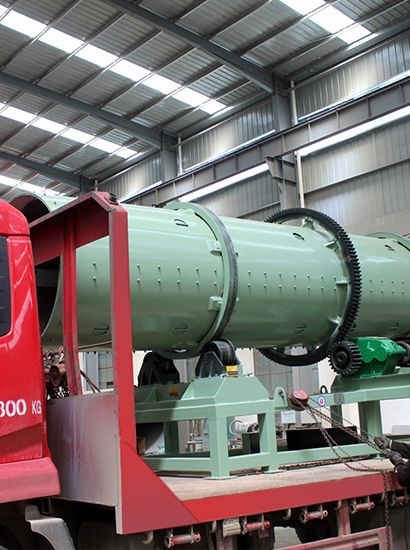
The difficulty of composting pig manure is often underestimated. It has a high moisture content (65%–80%) and a fine, sticky texture; while low in fiber, it tends to form hard clumps, resulting in poor aeration and the release of pungent hydrogen sulfide and ammonia gases from anaerobic fermentation. Improper turner selection leads to issues like cutter drums becoming clogged with wet sludge or material remaining clumped after turning, causing the decomposition cycle to drag on indefinitely.
Anti-sticking and self-cleaning capabilities are essential. Pig manure is extremely sticky; standard cutter drums can become clogged with wet material in under half an hour, causing a sudden spike in load. Prioritize cutter drums with self-cleaning structures (such as staggered teeth that scrape against each other to shed material) or chain-plate designs that lift material over a large area rather than cutting it, thereby minimizing the risk of clogging at the source. If using a cutter drum, ensure the blade spacing and angles are optimized for high-viscosity materials.
Deep turning and material breaking must both be addressed. Pig manure piles often develop a dry, crusted surface while remaining a wet, sludge-like mess underneath; insufficient turning depth leaves the bottom layer in a prolonged anaerobic state. Effective turning depth should exceed 1.2 meters, and the cutter drum must be capable of breaking down compacted clumps to sizes smaller than 5 centimeters. Variable frequency speed control is also highly practical—allowing for high-speed breaking in the early stages and low-speed operation to retain moisture in the later stages.
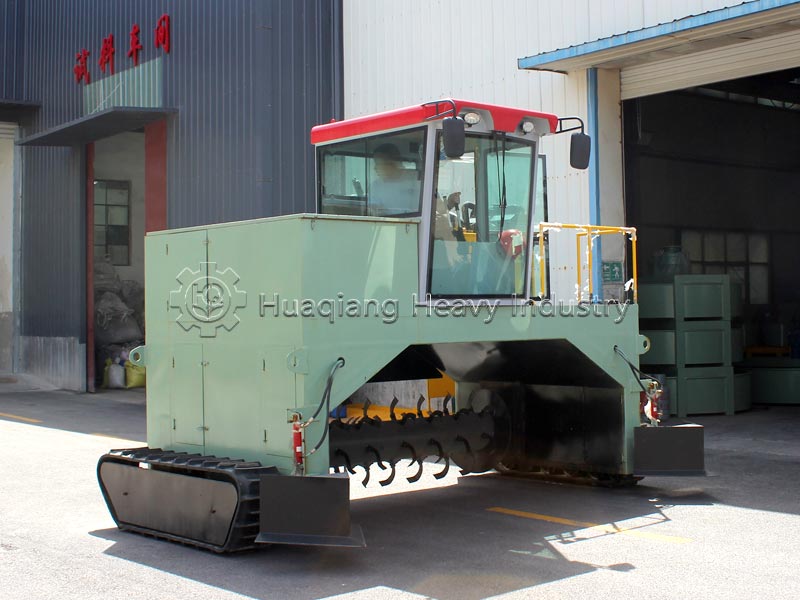
The drive system must suit wet, slippery terrain. Pig manure composting sites often have leachate runoff and muddy ground, making wheeled compost turners prone to slipping or sinking. Crawler-type compost turning machines, with their low ground pressure and superior traction, are the more reliable choice. For in-vessel (trench) composting, ensure the rail foundation can withstand long-term moisture exposure without settling or deforming.
Corrosion resistance and sealing are critical. The ammonia and hydrogen sulfide released by pig manure are highly corrosive; main shaft bearings require high-grade seals, the machine body needs heavy-duty anti-corrosion treatment, and electrical components should use waterproof connectors—otherwise, the equipment’s lifespan will be drastically reduced.
In short, selecting a organic fertilizer compost turner for pig manure composting centers on addressing three key factors: stickiness, moisture, and odor. Preventing adhesion is the prerequisite, deep turning is the key, tracked mobility ensures operation, and corrosion resistance is the baseline requirement. Only by matching the process to the material’s characteristics can pig manure be transformed from a source of pollution into a truly usable raw material for organic fertilizer.