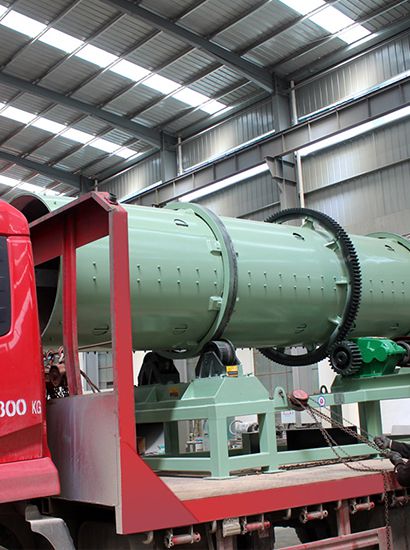
When organic fertilizer plants process materials like crop stalks, mushroom substrate, and vegetable waste, agricultural waste compost making machines face more complex operating conditions than they do with livestock manure—characterized by long fibers, low density, diverse composition, and significant seasonal fluctuations. While existing equipment can handle these tasks, it still falls short in terms of efficiency, durability, and intelligence.
First, the cutter roller design is evolving from “anti-tangling” to “adaptive cutting.” Current dual-shaft shear-type rollers rely on a combination of high and low blades to sever long fibers. Future improvements include introducing differential rotation speeds and biomimetic tooth profiles—allowing independent control of the two shafts and automatically adjusting the shear angle based on the degree of tangling, thereby reducing the energy required for cutting. Some designs incorporate a combing mechanism ahead of the roller to straighten stalks before they enter the cutting zone, effectively preventing tangling at the source.
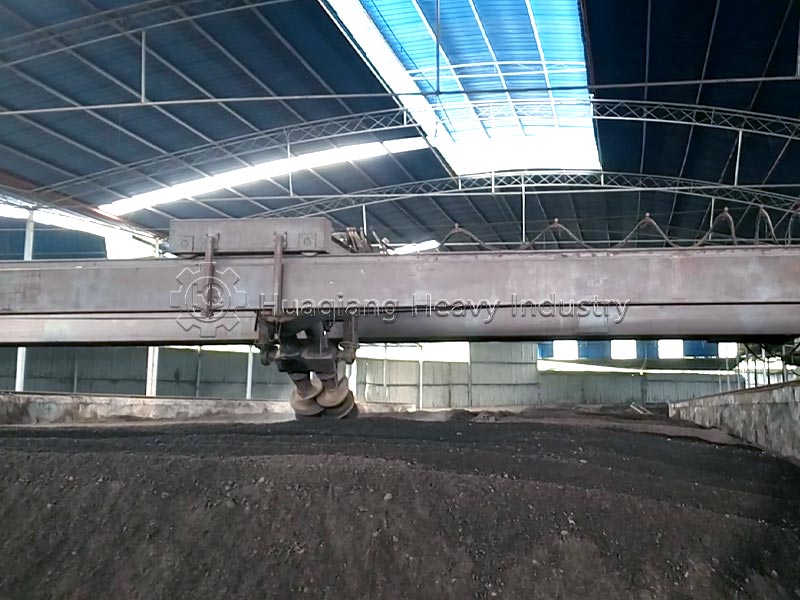
Second, control systems are shifting from “reliance on human experience” to “material-aware sensing.” Because the moisture content and density of agricultural waste vary significantly, fixed rotation and travel speeds are rarely optimal. An improved approach involves integrating resistance sensors and near-infrared (NIR) moisture detectors to provide real-time feedback on material conditions, allowing for the automatic adjustment of roller rotation and machine travel speeds. For instance, the system can reduce speed and increase torque when fiber content is high, or increase the turning frequency when moisture content is low.
Third, the maintenance of wear parts is moving from “complete unit replacement” to “modular, quick-change” systems. Silica particles in crop stalks cause rapid blade wear; replacing an entire integrated roller is costly and leads to significant downtime. The solution is to design blades and tooth mounts as independent modules, enabling individual components to be replaced on-site using standard tools.
Fourth, power systems are transitioning toward “electrification and hybrid configurations.” Diesel-powered units create exhaust issues in enclosed facilities, while purely electric models are often constrained by trailing power cables. Potential solutions include hybrid systems—combining battery packs with range extenders—or the use of ground-level conductor rails (trench-fed power), which offer both operational flexibility and zero-emission performance. Ultimately, the improvements focus on addressing three key pain points—significant fluctuations in raw material quality, the tendency of fibers to cause tangling, and rapid wear and tear—aiming to make the equipment smarter and more durable, thereby truly aligning with the practical needs of organic fertilizer processing plants.