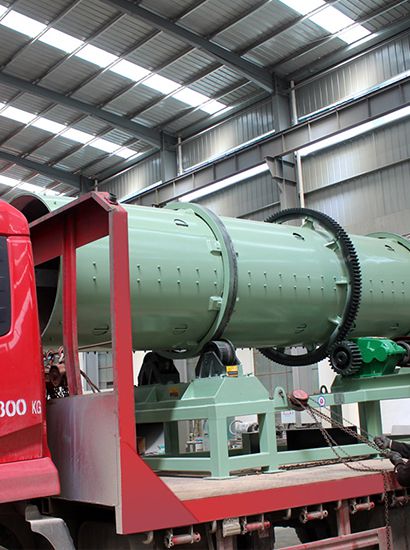
In the production of compound fertilizers, a double roller press granulator forms granules from powdered raw materials through mechanical compression. The quality of the raw material mixture directly impacts the subsequent granulation process. If ingredients such as nitrogen, phosphorus, and potassium are not mixed uniformly, it can lead to inconsistent nutrient distribution in the final product and may even compromise granule strength. Therefore, selecting the appropriate fertilizer mixer is a crucial step in optimizing a roller press granulator production line.
- Double Shaft Paddle Mixers for Diverse Raw Materials
For production lines that handle a wide variety of powdered fertilizer ingredients, a double shaft paddle mixer is highly suitable. The two mixing shafts, equipped with paddles, cause the materials to turn over and intermix; this minimizes localized nutrient concentration and ensures a relatively homogeneous feed for the roller-press granulation stage.
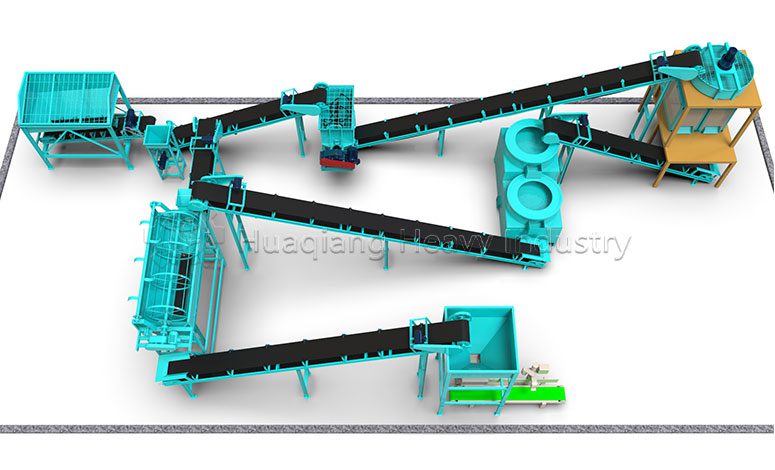
- Horizontal Ribbon Mixers for Continuous Batching
If the production line utilizes a continuous feeding process, a horizontal ribbon mixer is an excellent choice. These mixers operate within a relatively enclosed space and integrate easily with automated batching systems, conveyors, and double roller press granulators, helping to maintain a stable production rhythm.
- Selecting Mixing Configurations Based on Raw Material Characteristics
Compound fertilizer ingredients may vary significantly in terms of particle size and flowability. When selecting a mixer, consider factors such as the paddle configuration, mixing intensity, and required mixing duration. For materials prone to clumping, pre-processing—such as screening or crushing—should be performed to ensure uniform mixing.
In a compound fertilizer production line using roller-press granulation, the fertilizer mixer does more than just blend raw materials; it also influences the stability of the subsequent compression-molding process. Choosing the right equipment—based on your specific formula, raw material properties, and production scale—will improve mixing quality and enhance the overall efficiency of compound fertilizer production.