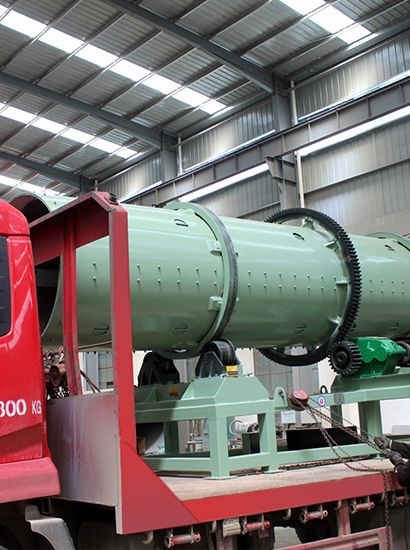
The chicken manure compost turning machine, double axis paddle mixer, and new type organic fertilizer granulator correspond to the three key stages of fermentation, mixing, and granulation, respectively, forming a complete chain that transforms raw chicken manure into marketable granular fertilizer.
Chicken manure has a high moisture content (60%–75%) and high nitrogen levels, and it releases significant amounts of ammonia during fermentation. The compost turner is the core piece of equipment for addressing these challenges; crawler-type models prevent sinking in muddy conditions, while the turning drum lifts material from the bottom to the surface, breaking up clumps and re-mixing the pile. This process supplies oxygen to aerobic microorganisms, releases exhaust gases and water vapor, and promotes uniform pile temperature.
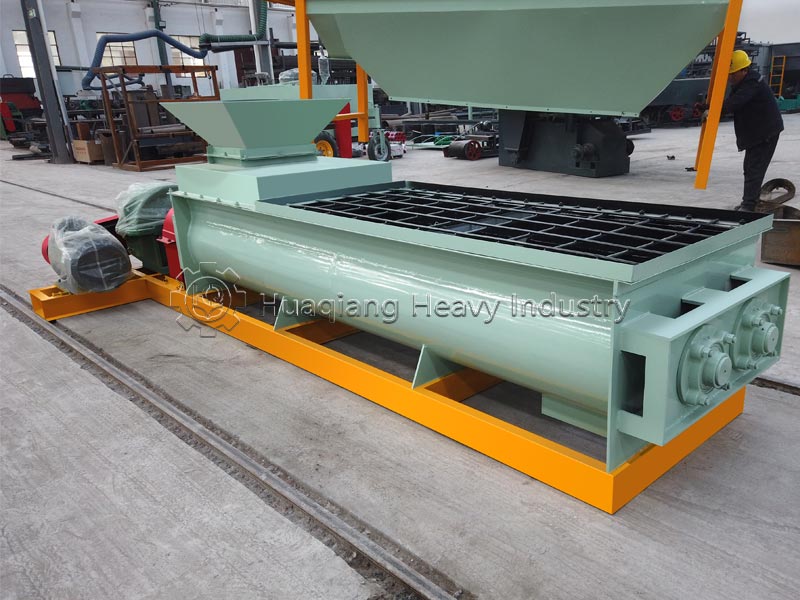
Once decomposed, the material enters the mixing and blending stage. The double axis paddle mixer utilizes two counter-rotating shafts to create convective and shear mixing; a batch can be processed in 30–120 seconds, with the coefficient of variation for mixing uniformity kept under 5%. When producing bio-organic fertilizer, this stage is also critical for adding functional microbial agents; the gentle mixing action effectively preserves microbial activity and allows for rapid switching between different formulations.
The uniformly mixed material then proceeds to the granulation stage. The new type organic fertilizer granulator employs high-speed agitation to continuously granulate and spheroidize fine powder. It accommodates moisture levels of 20%–50% and produces spherical granules without the need for binders, achieving a granulation rate of over 90%. This capability allows fermented chicken manure to be granulated without intensive drying, significantly simplifying the process and reducing energy consumption.
These three machines operate in close coordination; equipment selection should follow the logic of “determining the process based on raw materials and selecting equipment based on the process” to ensure matched production capacities and seamless integration across all stages.