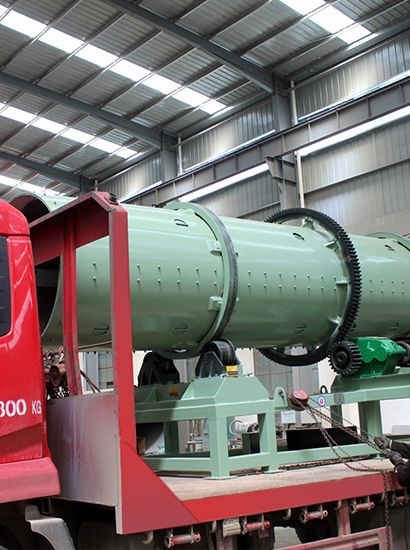
A complete fertilizer composting plant is not composed of a single piece of equipment but rather a combination of multiple stages, ranging from front-end fermentation to back-end deep processing. Within this chain, the self-propelled compost production machine handles the turning and oxygen supply during the initial aerobic fermentation phase, while the vermicompost making machine system undertakes the deep biological transformation of the decomposed material.
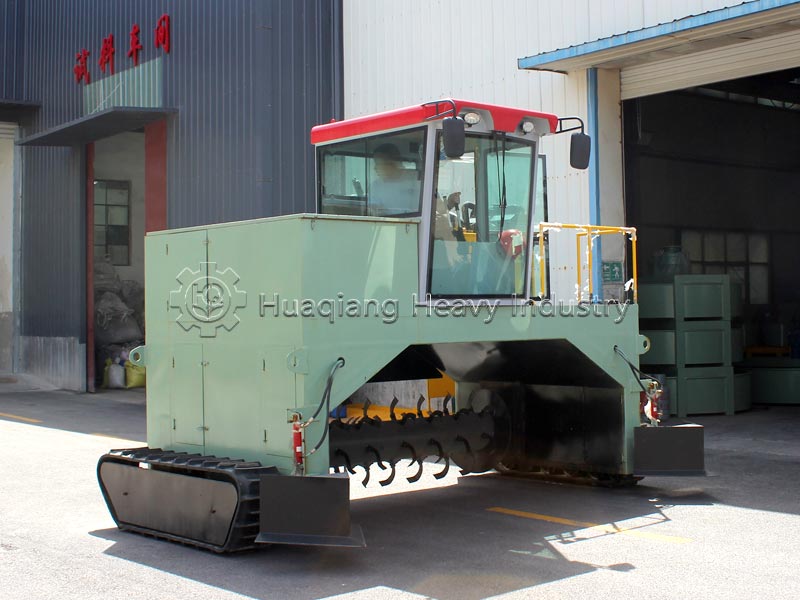
The self-propelled compost production machine is the primary piece of equipment for aerobic fermentation. It operates directly on ground windrows without the need for constructed fermentation tanks, moving via tracks or wheels; its turning drum lifts material from the bottom to the surface, replenishing oxygen and ensuring the continued activity of aerobic microorganisms. For livestock farms with unpaved sites or limited budgets, self-propelled turners effectively reduce civil engineering costs.
However, the self-propelled turner performs only “rough turning”—transforming organic waste into decomposed material. To create high-value-added products, vermicompost making machine must be introduced. The vermicompost system—comprising culture beds, automatic material distribution, temperature and humidity controls, and separation screens—utilizes earthworms to consume the decomposed material and excrete castings. This process yields a humic acid-rich “super” organic fertilizer that typically sells for three to five times the price of standard compost.
In terms of the plant layout, the self-propelled turner is situated in the front-end open-air fermentation area, while the vermicompost equipment is located in a back-end temperature-controlled workshop for refined processing. Crushing and screening equipment must also be installed between these stages to process the decomposed material to the appropriate particle size.
Regarding equipment selection, self-propelled turners offer the best cost-performance ratio for projects with smaller capacities and simpler site conditions; for projects targeting the high-end organic fertilizer market, a vermicompost production line of appropriate scale should be integrated once the turning method has been determined.