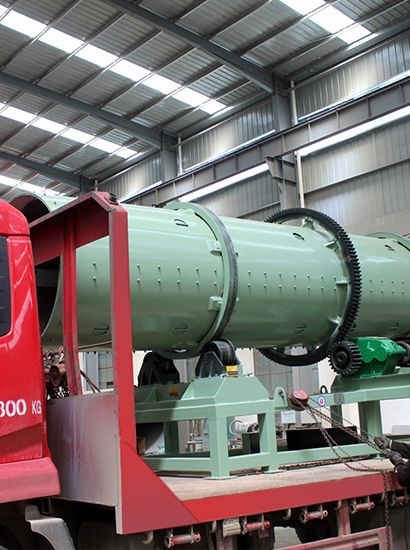
Oil palm fruit bunch compost is a high-quality organic fertilizer raw material. After composting and fermentation, it is rich in organic matter, enabling the resource utilization of waste. Many practitioners wonder if it can be processed using an organic fertilizer disc granulation production line. The answer is yes, but the pretreatment and equipment parameters must be adjusted specifically according to the material characteristics to achieve efficient pelletizing.
After composting, oil palm fruit bunch compost has a loose texture, contains a small amount of fibrous residue, has high moisture content, and moderate viscosity, which meets the pelletizing requirements of a disc granulation production line. Without complex processing, it can be granulated using the centrifugal force and friction of the disc granulator, and the granulated pellets are not easily broken.
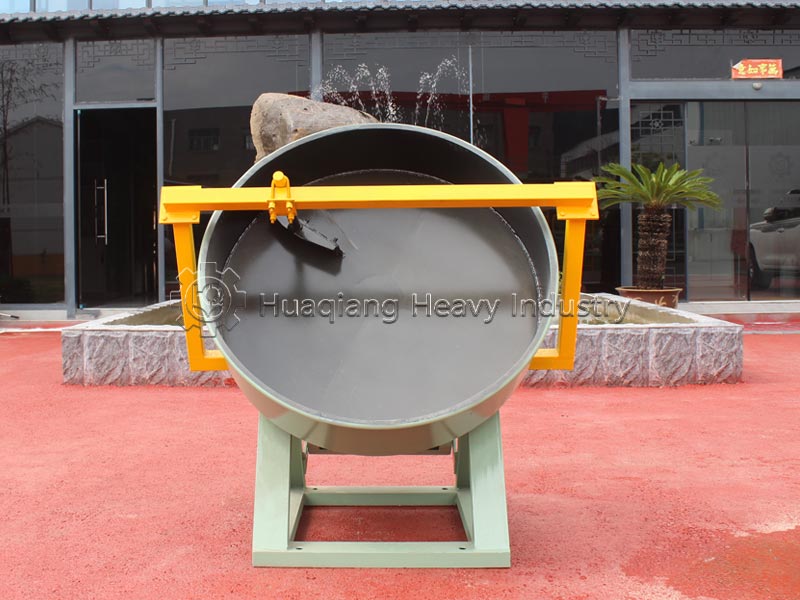
Two adjustments are necessary during processing: First, pretreatment involves crushing the compost, removing coarse fiber residue, and adding a small amount of bentonite or other conditioning agents to adjust the moisture content to 50%-60% to prevent sticking to the disc or loose granules. Second, equipment parameter control involves adjusting the disc inclination angle to 30-40° and reasonably controlling the rotation speed to ensure uniform particle size.
It is important to note that if the compost is not fully decomposed, clumping and uneven granulation are likely to occur. Thorough decomposition must be ensured beforehand. In summary, oil palm fruit bunch compost can be completely processed using an organic fertilizer disc granulation production line. With proper pretreatment and parameter adjustments, loose compost can be transformed into regular granules, ensuring convenient storage and transportation and stable fertilizer efficacy.