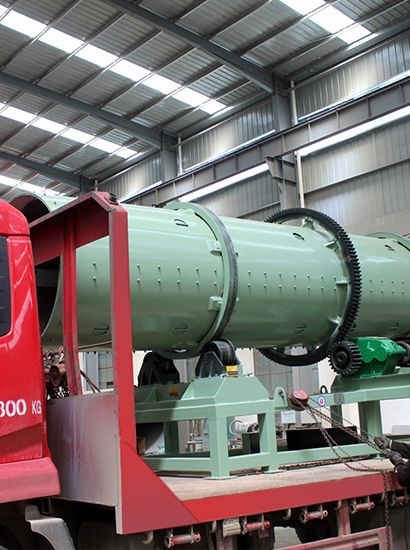
Urea, a commonly used nitrogen fertilizer, has a significant demand for large-scale batch processing. The rotary drum granulation production line, with its advantages of continuous operation and stable capacity, has become the preferred choice for batch urea processing. It can be adapted to the physicochemical properties of urea, efficiently achieving production volumes of tens of thousands of tons.
The core of processing urea with a rotary drum granulation production line is adapting to its strong hygroscopicity and low melting point characteristics, requiring no complex modifications for immediate production. Before processing, the urea raw material needs to be pulverized to a uniform fineness, and a small amount of inert filler is added to adjust hygroscopicity and control the moisture content of the raw material.
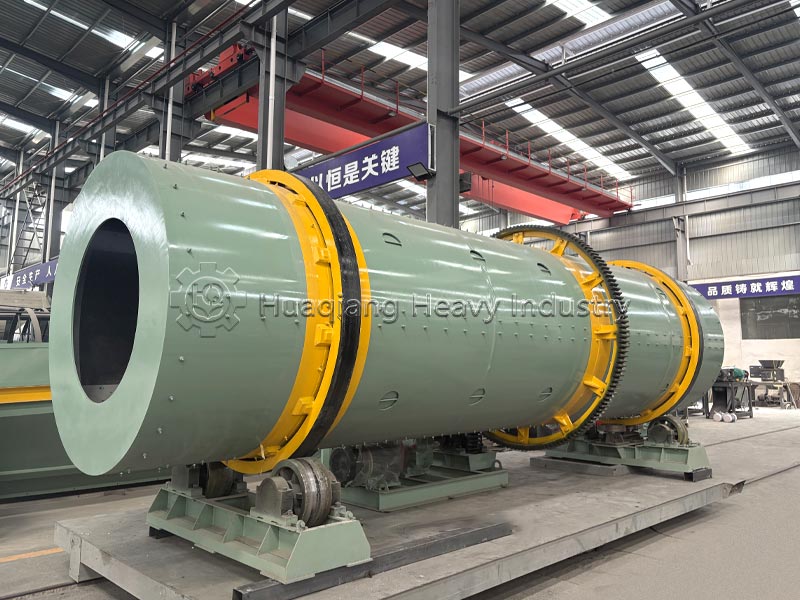
During batch production, the pre-treated raw material is fed into the rotary drum granulator at a uniform speed. Precise control of the drum speed, tilt angle, and granulation temperature prevents urea melting and loss. Centrifugal force is used to bind the material into granules, enabling 24-hour continuous production and significantly improving processing efficiency.
Subsequent drying, cooling, and screening processes allow for secondary granulation of substandard particles, reducing raw material loss and ensuring that the urea granules are uniform, compact, and have stable nutrients, suitable for large-scale storage and transportation. The closed-loop process and simplified operation and maintenance effectively reduce mass production costs.
In summary, the rotary drum granulation production line can efficiently achieve mass processing of urea. By adjusting process parameters to suit the characteristics of urea, it can meet the needs of large-scale mass production while ensuring the quality of the finished product.