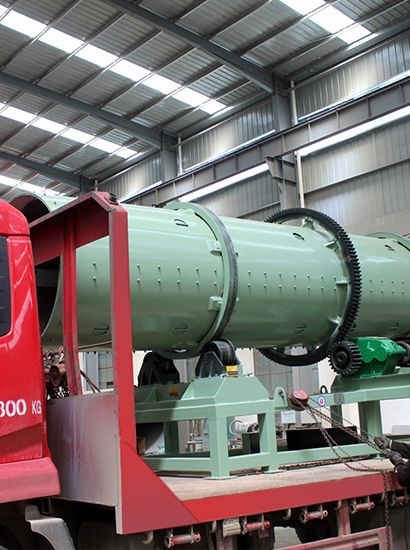
Chain compost turning machines are often regarded as “high-end” equipment—featuring complex structures and higher costs—yet in certain scenarios, they offer an irreplaceable, optimal solution. Understanding their specific application scope is crucial to avoiding errors in equipment selection.
Chain-plate turners offer distinct advantages for materials that are highly viscous or prone to clumping. Materials with high moisture content and strong cohesiveness—such as vermicompost, chicken manure, and municipal sludge—can quickly clog drum-style turners (which use rotating blades), causing them to become encased in “mud logs” and leading to motor overload. In contrast, chain-plate turners use large-surface-area plates to slowly push the material, fundamentally preventing sticking and tangling while preserving the material’s granular structure from shear damage. This “pushing rather than cutting” mechanism makes them the preferred choice for fermenting sticky, wet materials.
They are also well-suited for the post-processing of fully composted material. In the late stages of composting, the material requires gentle loosening and uniform oxygen supply rather than aggressive crushing. Operating at low linear speeds, chain-plate turners exert minimal physical impact, maximizing granule integrity and preventing excessive pulverization that could compromise the product’s appearance; they are also suitable for the pre-mixing stage of organic-inorganic compound fertilizers.
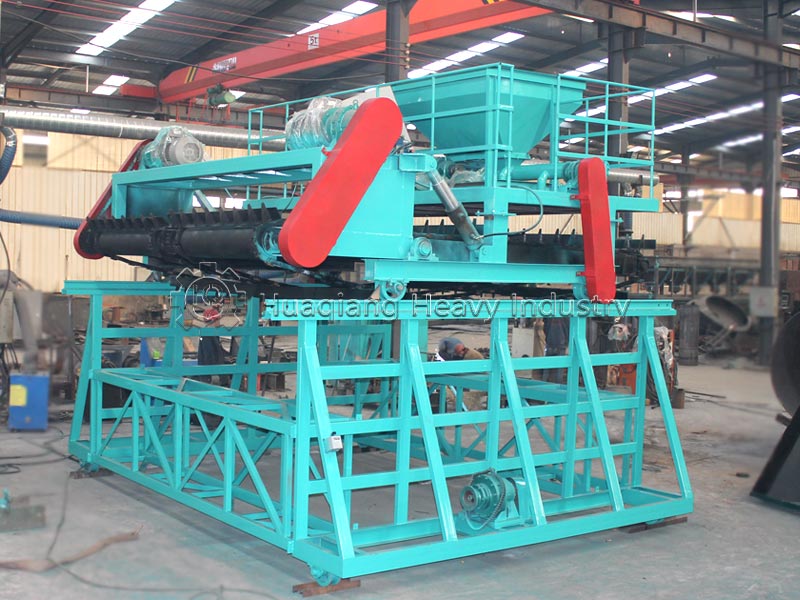
Chain-plate compost turner machines excel in large-span, long-trough facilities. Typically operating on heavy-duty rails, they can cover a width of 4 to 6 meters in a single pass, making them ideal for large-scale, centralized processing. Conversely, small-scale trough or windrow composting sites may not require such complex machinery.
However, chain-plate turners are not a universal solution. For long-fiber agricultural waste like straw or rice husks, the pushing action can actually cause the material to drag and pile up, making it less efficient than the clean cutting action of drum-style turners; specialized agricultural waste compost making machines are better suited for these materials. Additionally, chain-plate equipment entails high investment and maintenance costs and requires a level, hardened site surface—factors that make it difficult for small-scale workshops to justify the expense.
In summary, the ideal application scenarios for chain-plate compost turning machines can be categorized by three factors: “sticky,” “mature,” and “large-scale.” If the material is highly viscous, in the late stages of composting, or processed at a large-scale site—and meets two or more of these criteria—choosing a chain-plate turner is a wise decision.