Organic fertilizer granulation technology has been continuously evolving in recent years, with a clear trend: minimizing harsh material handling while pursuing higher granulation rates and more consistent granule quality.
The core advantage of the chain-plate compost turner is its gentle operation. By using large-area chain plates to move material at low speeds—rather than relying on high-speed shearing blades—it preserves the material’s relatively intact fibrous structure and uniform moisture content. This output profile is highly beneficial for downstream granulators: the material remains loose, clump-free, and optimally moist, allowing it to proceed directly to granulation without the need for additional crushing or drying.
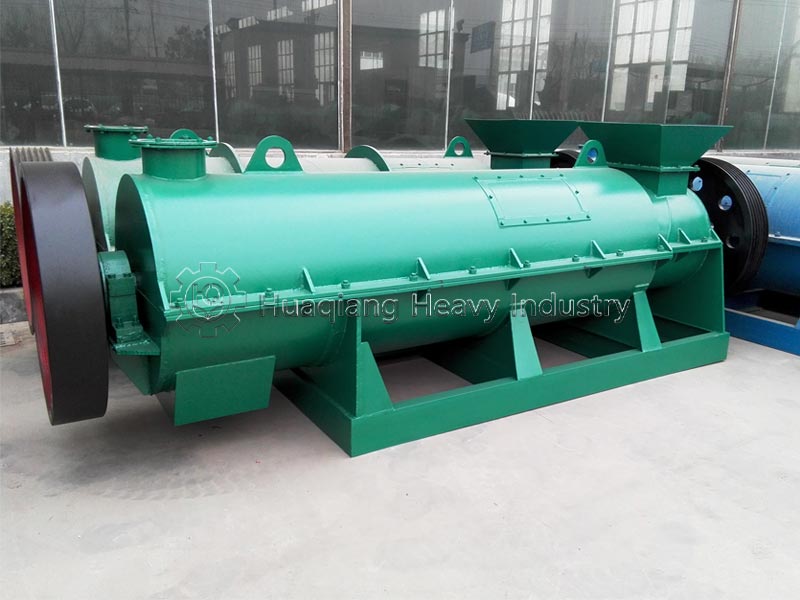
A key improvement in new type organic fertilizer granulators is reduced sensitivity to material moisture content. Certain new models—such as stirring-tooth or extrusion granulators—can achieve stable granulation across a wide moisture range by adjusting extrusion ratios and rotational speeds. The output from chain-plate compost turners exhibits minimal moisture fluctuation and falls squarely within this optimal range; combining the two significantly reduces the volume of material requiring reprocessing (recycle load).
Another point of synergy is fiber preservation. Modern granulators prioritize retaining fiber content to enhance granule disintegration and soil improvement capabilities. Because chain-plate turners move the material en masse without shearing it during fermentation, the fibers remain intact.
In terms of production line layout, pairing a chain-plate compost turner with a modern granulator often eliminates intermediate crushing or aging stages, creating a streamlined “fermentation-to-granulation” process. This not only lowers equipment investment costs but also minimizes moisture loss and dust generation during material transfer.
Ultimately, while new type organic fertilizer granulators aim for low-intervention, high-stability processing, chain-plate compost turners provide the ideal feedstock: material that is minimally damaged and highly uniform.