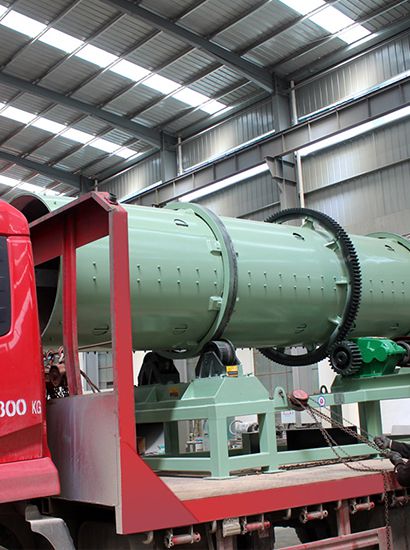
BB fertilizer production process does not involve granulation or drying; it simply entails mixing granular components—such as urea, ammonium phosphate, and potash—according to a specific formula. Choosing an NPK blending machine doesn’t have to be complicated; just focus on three key factors.
First, consider mixing uniformity. Since NPK granules vary in size and weight, poor mixing can lead to inconsistent nutrient content—one bag might be nitrogen-rich, while another is potassium-rich—resulting in unpredictable performance for the end user. For complex formulas, a double shaft paddle mixer is ideal; it achieves convective mixing in mere seconds, ensuring high uniformity. A drum-type mixer, which uses internal lifting flights (baffles) to tumble the material, is gentler and better suited for high-value fertilizers with fragile granules. If your blending facility frequently changes formulas or handles a wide variety of products, a double shaft paddle mixer offers greater versatility. Conversely, if you focus on one or two fixed formulas with high production volumes, a drum-type mixer is sufficient.
Second, consider granule breakage. The appearance of BB fertilizer directly influences its market value; broken granules lower the price and increase the risk of caking. Ideally, you should test your specific materials in the machine to observe the extent of breakage. Drum-type mixers are the gentlest, resulting in minimal breakage—making them perfect for contract manufacturing or high-value controlled-release fertilizers. If you opt for a double shaft paddle mixer, ensure that the paddle angle and rotation speed are specifically calibrated for fragile granules; you cannot simply use settings intended for powdered materials.
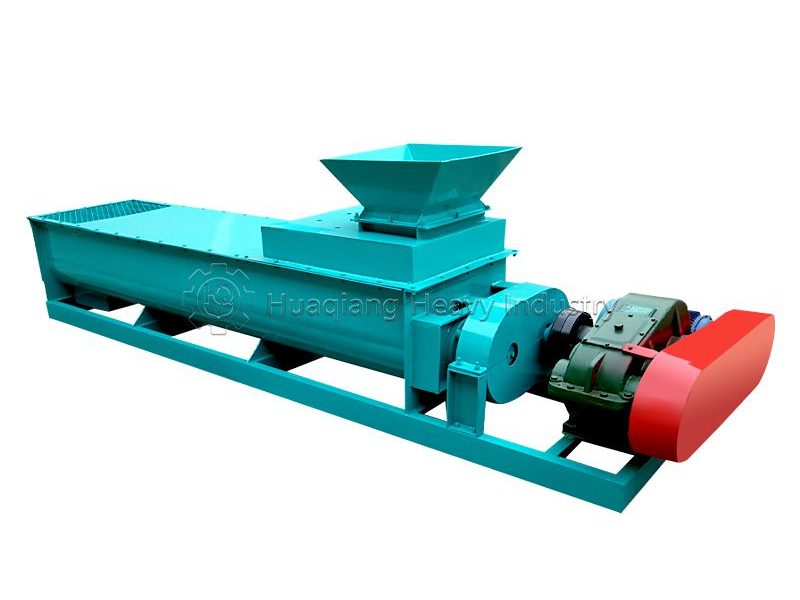
Third, consider residual material when switching formulas. For facilities that handle small batches and diverse product types, the primary concern is cross-contamination—where residue from a previous batch affects the nutrient composition of the next. In such cases, a drum-type mixer with quick-opening access and easy-discharge capabilities is preferable; you can simply reverse the rotation to empty the unit and then purge it clean. For large-scale production of a single formula, a continuous double shaft mixer offers higher efficiency. While it may leave slightly more residue, its faster throughput makes it more cost-effective overall.
Do not simply guess the required capacity; calculate it by working backward from your target production output. In short, for a capacity of 5 tons per hour, choose a volume of about 1 cubic meter; for 10 tons per hour, opt for 2 to 3 cubic meters; and for 15 tons per hour or more, select 4 to 6 cubic meters. Do not overfill the mixer—leave enough space for the materials to tumble, which ensures a uniform blend. If it’s too full, the materials cannot move freely within the drum, which actually reduces mixing uniformity.
Ultimately, prioritize a thorough blend, minimal material degradation, and low residual levels, then size the equipment according to your required output. Stick to these three principles, and you’ll be well-prepared regardless of any changes to your formulas.