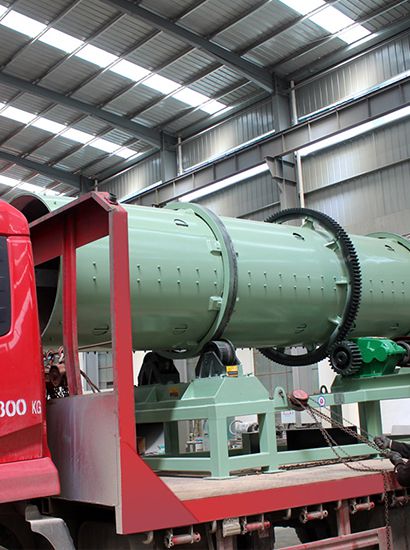
Both standard organic fertilizer production lines and bio-organic fertilizer production lines require a compost turner at the initial stage. However, treating them as identical can lead to a mismatch—the equipment may prove unsuitable for the specific process. This is because while one line prioritizes “thorough decomposition,” the other must adhere to an additional, critical requirement: “keeping the microorganisms alive.”
In a standard organic fertilizer line, the primary function of the compost turner is to provide oxygen, regulate temperature, and control moisture. The raw materials—typically livestock manure, crop straw, or sludge—require consistent, deep turning. The process involves raising the temperature of the compost pile to eliminate pathogens, followed by a gradual cooling phase to ensure complete decomposition. Selection criteria focus on processing capacity, uniformity of the turning process, and operational costs; options such as drum-type, trough-type, or crawler-type compost turning machines can be chosen based on site conditions and production capacity.
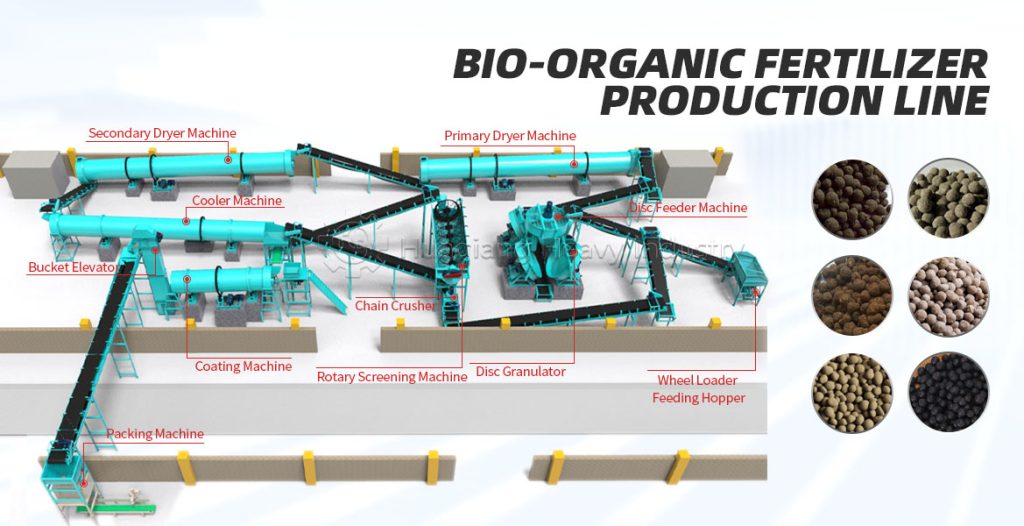
Bio-organic fertilizer lines, by contrast, are different. Since the raw materials are inoculated with functional microorganisms, the compost turner must not only be effective at turning but also gentle enough to avoid damaging the microbial population. Excessive heat can kill beneficial microbes, while overly aggressive shearing can destroy the carriers (substrates) that house these microorganisms. Furthermore, any material left in “dead zones” (hard-to-reach areas) within the equipment could contaminate subsequent batches. Therefore, the turning action must be milder; the rotation speed of the drum should be adjustable, and the depth and frequency of turning must be precisely controlled to prevent the compost pile from remaining at excessively high temperatures for too long. Components that come into contact with the material should be made of easy-to-clean, corrosion-resistant, and non-contaminating materials, with a design that minimizes dead zones to facilitate cleaning and disinfection between batches. Chain-plate or low-speed drum-type turners are generally more suitable than high-speed, high-shear models.
Another key difference lies in moisture control. In standard organic fertilizer production, there is more flexibility regarding the moisture content of the output, as subsequent drying or screening stages can serve as a safeguard. In contrast, bio-organic fertilizer production requires maintaining a moisture level conducive to microbial survival. The compost turner should not focus solely on maximizing evaporation; instead, it must strike a balance between providing sufficient oxygen and retaining enough moisture.
Ultimately, when selecting a compost turner, the priority for a standard organic fertilizer production line is “decomposition efficiency,” whereas for a bio-organic fertilizer production line, the priority is “microbial viability.”