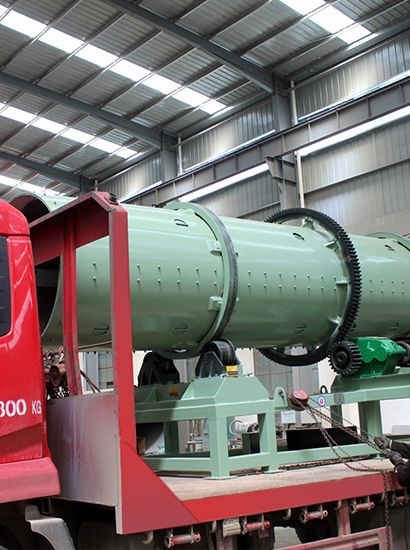
Sheep manure and cow manure fall into the categories of “fine manure” and “coarse manure,” respectively; treating them the same when selecting a turner often compromises results. Differences in material properties dictate vastly different equipment requirements.
Sheep manure: Fine-grained and prone to compaction; the priority is “breaking-up power.” Sheep manure consists of small granules with relatively low moisture content, yet the pile tends to compact and harden, resulting in poor internal aeration. While it does not gum up the blades like chicken manure, it can gradually form a hard crust on the rotor. Consequently, the key requirement for a sheep manure compost turning machine is shearing and disintegration—the rotor needs sufficient crushing capability to break apart compacted clumps and restore porosity. Blade spacing should not be too wide; otherwise, large clumps may slip through the gaps, leaving the material compacted even after turning. Adjustable rotation speed is a plus: high speed is needed initially to break up clumps, while lower speeds suffice later to maintain oxygen supply.
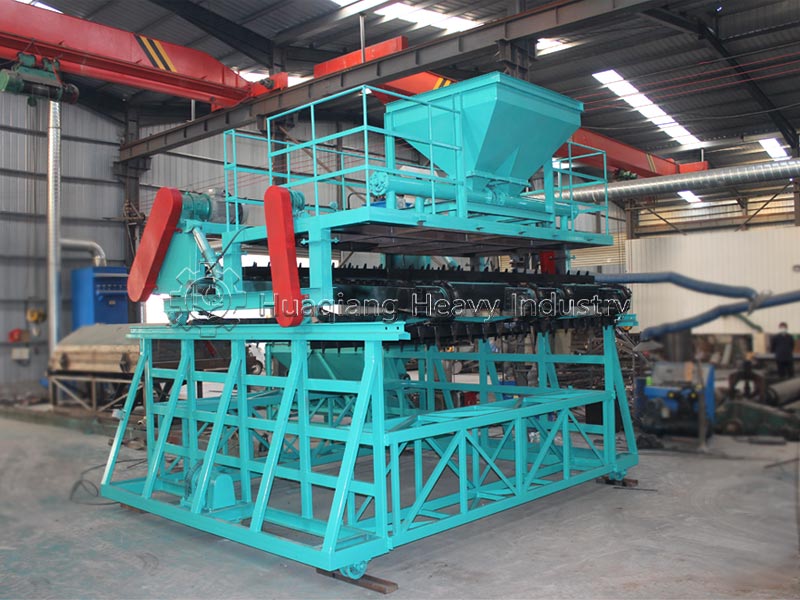
Cow manure: High fiber content and elasticity; the priority is “pushing/shifting power.” Cow manure is rich in coarse fibers, has a loose texture, and retains water well. When turning, blades often “scoop through” without mixing—flinging material aside while leaving the internal structure undisturbed. Therefore, chain-plate compost turning machines are better suited for cow manure compost turning machines; they use large-area pushing rather than cutting to lift, shift, and drop the material, achieving genuine turning and mixing. If a rotor-style turner is used, blade width and pitch must be increased to avoid extremely low efficiency.
Mobility systems also differ. Sheep manure yards are relatively dry and firm, making either wheeled or tracked systems suitable; cow manure yards often have high leachate levels and soft, wet ground, making a tracked chassis the safer choice to prevent sinking or slipping.
The selection decision is actually simple: look at the state of the material after turning. If significant clumping remains after turning, the force used to break up the material is insufficient; if the surface moves but the interior remains undisturbed, the pushing force is inadequate. Material characteristics dictate equipment logic; the right choice ensures a stable and controllable fermentation cycle.