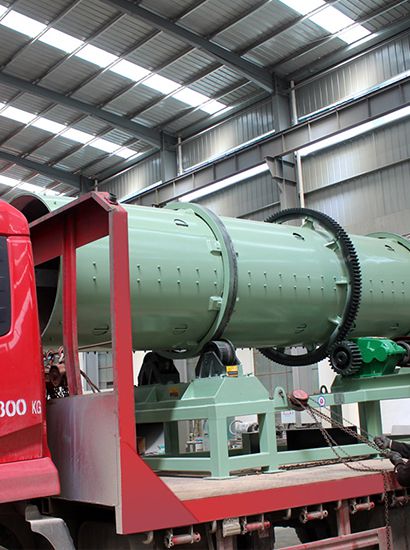
Continuous organic fertilizer production places high demands on material handling, fermentation cycles, and equipment operational stability. A compost turner must not only perform the task of turning and aerating materials but also integrate seamlessly with the fermentation site, conveying systems, and downstream processing stages.
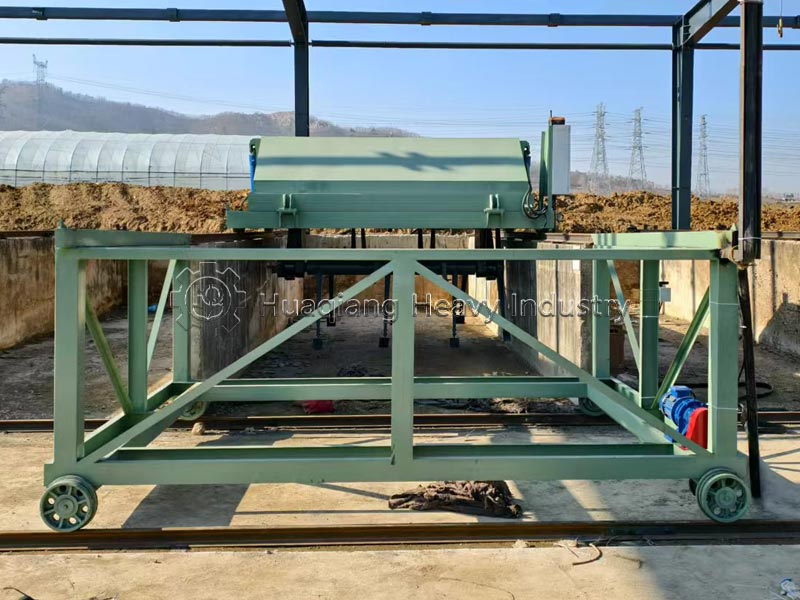
- Trough-typecompost turners are suitable for fixed, continuous fermentation setups
For organic fertilizer plants that utilize multiple fermentation trenches, a trough-type compost turner is an ideal choice. The machine moves along the fermentation trenches, using its turning mechanism to break up, mix, and advance the material. By coordinating the feeding and discharging schedules across multiple trenches, a relatively stable and continuous production rhythm can be achieved.
- Wheel-type compost turners are suitable for large-scale windrow composting
If a facility employs an open-air windrow composting method, a wheel-type compost turner is well-suited for handling large volumes of material. With a wide working span, it is effective for processing raw materials such as cattle manure, poultry manure, and mixtures containing straw. However, maintaining continuous operations requires careful planning of windrow spacing and material transport routes.
- Crawler-type compost turners are suitable for complex site conditions.
For large composting areas where the ground may not be perfectly level, crawler-type compost turners offer superior maneuverability and operational flexibility. They are particularly well-suited for large-scale, open-air fermentation projects; however, the power configuration should be selected based on the specific processing volume and operational frequency.
- Equipment selection must also account for production line integration.
In continuous processing, one cannot focus solely on the capacity of the compost turner itself; factors such as raw material feed rates, windrow dimensions, fermentation cycles, and the logistics of moving finished products must also be considered. The processing capacity of the equipment should be well-matched with the preceding and subsequent stages of the production line to prevent material bottlenecks or equipment downtime.
For continuous organic fertilizer production, selecting the right compost turner—based on site conditions and specific production processes—is essential for maximizing the overall efficiency of the production line.