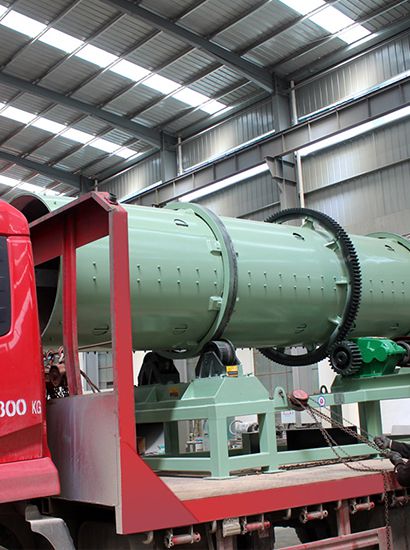
The fermentation logic for vermicompost and livestock manure compost is essentially opposite: one is about “nurturing,” while the other is about “waiting.”
Different Starting Points: One is already matured; the other requires maturation. The primary objective of livestock manure composting is maturation—using high-temperature fermentation to eliminate pathogens and break down organic matter, a process that typically takes 20 to 30 days. Vermicompost, by contrast, is the product of organic matter digested by earthworms; by the time it is harvested from the worm beds, it is already largely matured, possessing a loose structure and a mild odor. Its processing is more akin to “post-maturation” or “aging,” aimed at standardizing moisture content and stabilizing the microbial population—a process requiring only 7 to 10 days.
Different Temperature Logic: One needs to heat up; the other must avoid overheating. Livestock manure composting relies on a high-temperature phase, where the pile must reach and maintain a temperature above 55°C for several days to ensure it is rendered harmless. Vermicompost is the opposite: it contains a wealth of active beneficial bacteria and enzymes, which would be destroyed by high temperatures. The aging process must be kept within a moderate temperature range, requiring less frequent and less intense turning to prevent the material from heating up again. A chain-plate compost turning machine is better suited for this purpose.
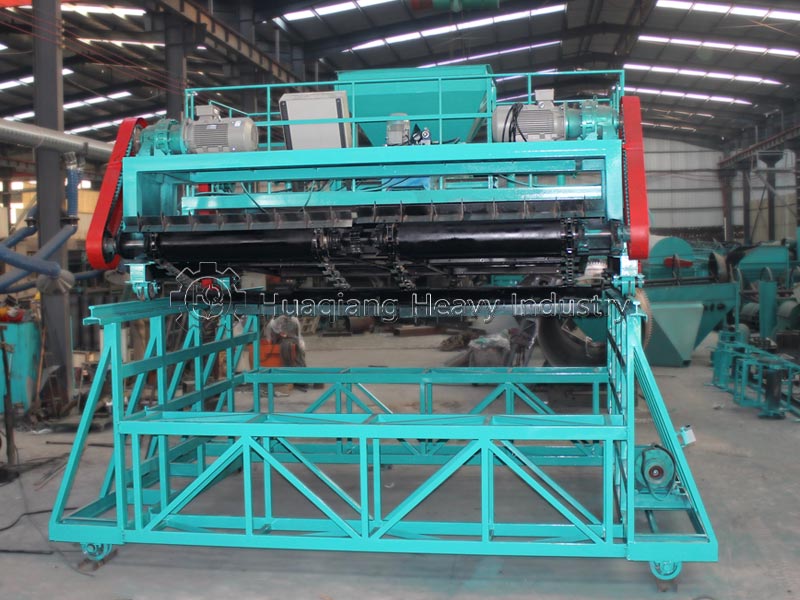
Different Purposes for Turning: One is for oxygen supply; the other is for structural preservation. Turning livestock manure is primarily done to supply oxygen, lower temperatures, and evaporate moisture—the more thorough the turning, the better. Turning vermicompost, however, requires caution; its granular structure is fragile, and excessive handling can crush the particles and compact the pores, ultimately diminishing its commercial value. Organic fertilizer compost turning machines should employ a large-area pushing action rather than high-speed cutting; the turning depth should be shallow, and the rotational speed should be low.
Different Finished Forms: One prioritizes nutrient content; the other emphasizes granular structure. Livestock manure composting focuses on NPK (nitrogen, phosphorus, and potassium) levels and the degree of maturation. For vermicompost, additional attention must be paid to the integrity of the granules and microbial activity, as its market price is largely determined by its natural granular form—if the granules break, the value drops.
Ultimately, composting livestock manure is a transformation from “raw” to “mature,” while vermicomposting (using earthworm castings) serves to transition material from “mature” to “stable.” Although both are referred to as “composting,” they are, in fact, two distinct processes.