People often compare “chain-plate compost turners” with “crawler-type compost turners,” asking which one to choose. This question stems from a slight misunderstanding: the term “chain-plate” refers to the turning mechanism (how it turns the material), while “crawler-type” refers to the undercarriage (how it moves across the ground). They belong to different categories.
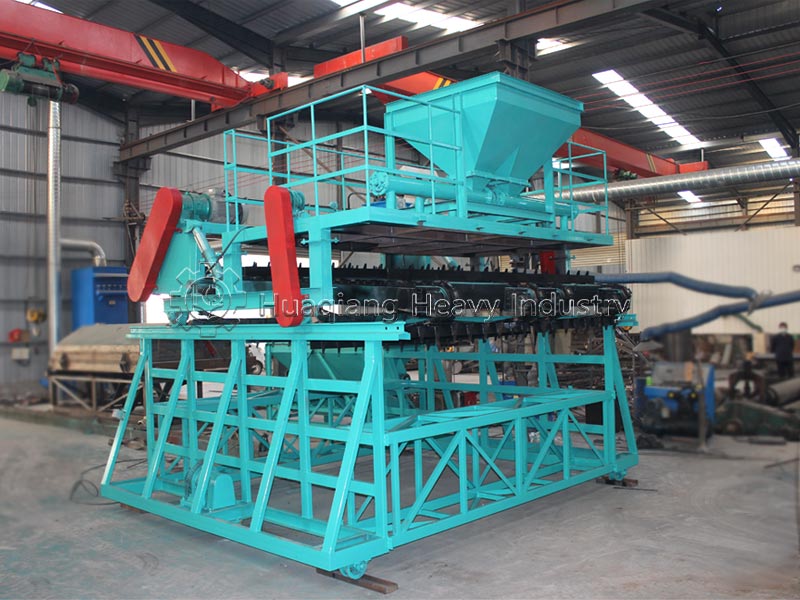
The core of a chain-plate compost turner lies in its turning component. It uses large-area chain plates to push and shift material at low speeds. Unlike high-speed rotary drum turners that rely on cutting blades, this method is gentle—it preserves the material’s granular structure and is less prone to clogging from wet, sticky substances. Consequently, it excels at handling high-viscosity materials like chicken manure, sludge, or vermicompost, ensuring a stable and uniform turning process, though it is less effective at cutting through long fibers.
A crawler-type compost turner, by contrast, is defined by its tracked undercarriage. Wide tracks provide low ground pressure and strong traction, preventing the machine from slipping or sinking in soft, wet, or leachate-heavy environments. They also allow for zero-radius (in-place) turning, making them ideal for challenging site conditions that require frequent repositioning. The undercarriage type does not dictate whether the machine is equipped with a rotary drum or chain plates.
In practice, one can certainly find machines that combine a crawler undercarriage with a chain-plate turning mechanism—offering both the mobility needed for soft, wet ground and the suitability of chain plates for handling sticky materials. Conversely, there are also crawler-mounted models equipped with rotary drums, which are better suited for materials that require cutting or breaking apart.
When selecting equipment, the correct approach is: first, determine the turning mechanism based on the material; then, determine the propulsion/undercarriage type based on the site conditions. If the material is sticky, prone to clogging, or requires the preservation of granular structure, prioritize a chain-plate system. If the material contains long fibers or needs to be broken up, a rotary drum system is more appropriate. For muddy or soft ground, choose a crawler undercarriage; for sites with hard, level surfaces—or where long-distance relocation is necessary—wheeled or rail-mounted systems may be suitable alternatives.