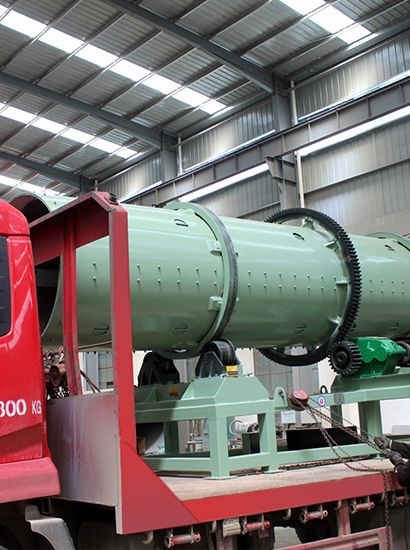
While both are turning equipment, the design logic of machines processing livestock manure differs significantly from those processing straw and vegetable scraps, going far beyond just the name. Applying a general-purpose turning machine directly to agricultural waste often yields less result than better.
Anti-tangling is the first structural hurdle. Livestock manure is viscous but has few fibers, which ordinary cutting rollers can handle. However, agricultural waste, primarily composed of straw and mushroom residue, has long and extremely tough fibers. Conventional cutting rollers become entangled by these long stalks, increasing the load or even burning out the motor. Agricultural waste compost making machines must use dual-shaft shearing cutting rollers to cut the long fibers before turning, preventing tangling at the source. The blades also need to be made of high-toughness alloy steel to withstand abrasion.
Uniform mixing is a core functional requirement. Chicken and pig manure have relatively uniform compositions, and turning primarily provides oxygen and cooling. However, agricultural waste is often a mixture of multiple materials—the carbon source of straw and the nitrogen source of vegetable waste have vastly different densities, and insufficient turning can lead to localized carbon-nitrogen imbalances. Therefore, specialized machines emphasize a large displacement design, pushing the material more than 2 meters with each turning, forcibly mixing components of different densities to ensure simultaneous decomposition.
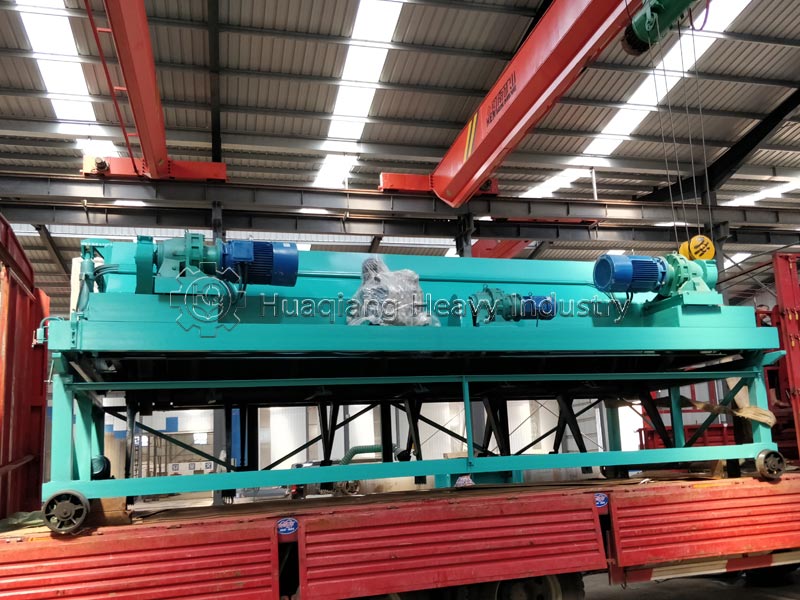
Directional water control is more refined in its process. While turning livestock manure primarily involves “draining water,” turning agricultural waste involves “water regulation”—straw retains moisture internally and is difficult to dry, while vegetable waste is prone to acidification due to surface moisture. Turners are equipped with variable-angle guide plates to guide wet vegetable waste into full contact with dry straw, achieving dynamic moisture balance.
Pre-treatment is indispensable. Agricultural waste often contains hard impurities such as stones and plastic film, requiring pre-crushing and impurity removal chains, while this step can almost be omitted in livestock manure treatment.
In short, agricultural compost production machines are not “fine-tuned” versions of general-purpose machines, but rather redesigned equipment addressing four major challenges: fiber anti-tangling, component mixing, water balance, and impurity removal.