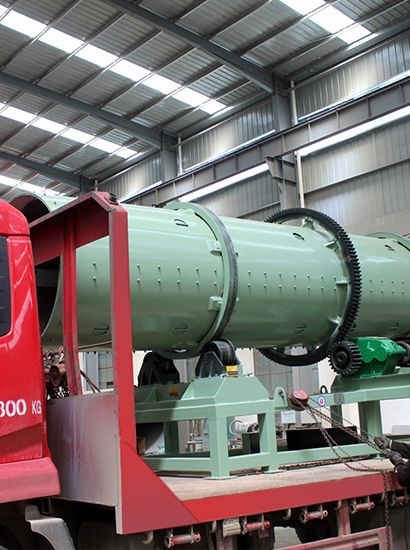
When choosing granulation equipment, rotary drum granulators and disc granulators each have clear applicable scenarios. The key is matching the production scale and process requirements.
Rotary Drum Granulator: The First Choice for Large-Scale Continuous Production
Rotary drum granulators are commonly found in large-scale production lines with an annual output of tens of thousands of tons or more. They have a large processing capacity, stable operation, and can adapt to long-term continuous operation, showing significant advantages in large-scale compound fertilizer or organic-inorganic compound fertilizer production. These projects often involve materials with complex compositions and high moisture content. The large volume design of the drum can effectively accommodate highly viscous raw materials, ensuring granulation results.
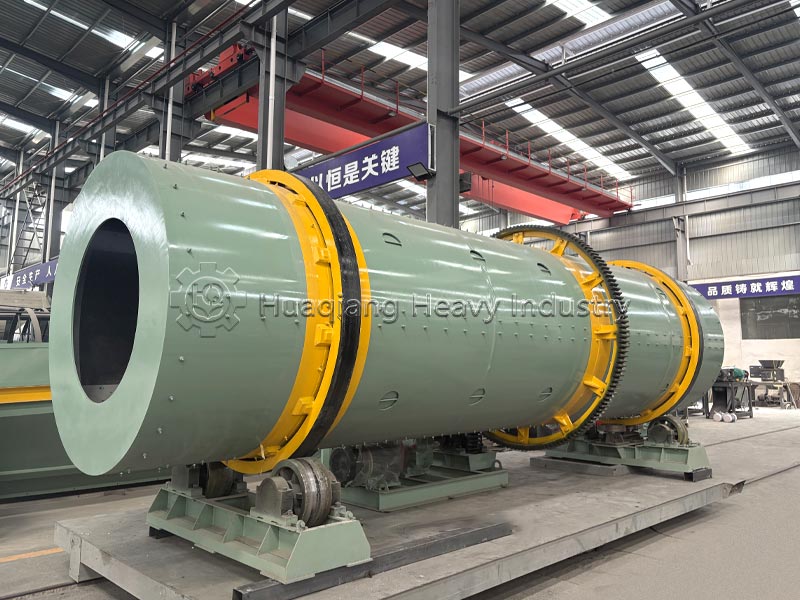
At the same time, rotary drum granulation production lines are easy to integrate with subsequent equipment such as drying and cooling systems, forming a complete continuous process. Although the initial investment for a single machine is higher, the unit cost is actually lower under large-scale production, making it suitable for enterprises seeking long-term stable output.
Disc Granulator: A Powerful Tool for Small-Scale and Flexible Production
Disc granulators are active in small and medium-sized organic fertilizer plants, livestock farms, or specialty fertilizer workshops. These scenarios share common characteristics: low production volume, diverse raw material sources, and frequent formula adjustments. Operators can quickly clear and change materials, rapidly switching batches and avoiding cross-contamination. In soil testing and fertilizer application stations or regional production sites, this flexibility means a rapid response to market changes. Furthermore, discs are also commonly found in pilot-scale research workshops, facilitating researchers’ observation of the granulation process and accumulation of process data.